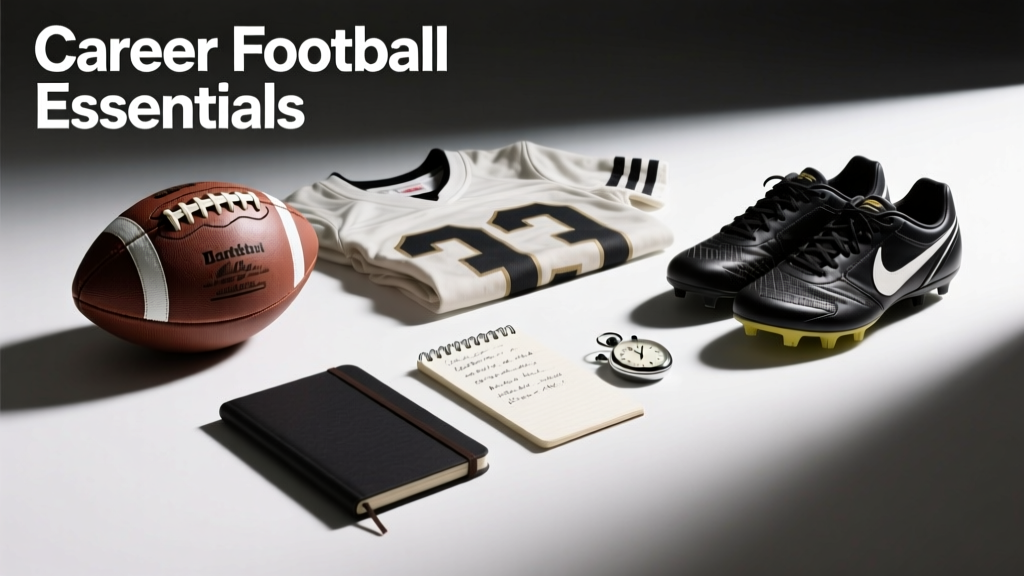
Career Football Essentials: Gear, Training, and Longevity Strategies for Professional Players
Introduction: What Defines a Sustainable Football Career?
Professional football careers are notoriously short — the average duration in top-tier European leagues is just 3.5 years, per UEFA’s 2023 Player Career Longevity Report. Yet outliers like Cristiano Ronaldo (21 seasons), Gianluigi Buffon (26 seasons), and Carli Lloyd (17 seasons with USWNT) prove longevity is achievable through deliberate, science-informed systems. This article distills the essential pillars every player must master: footwear engineered for biomechanical load distribution, position-specific training loads calibrated to GPS and heart-rate variability (HRV) data, nutrition plans validated by FIFA’s 2024 Sports Nutrition Consensus, and proactive career transition frameworks adopted by clubs like Bayern Munich and Portland Thorns. No hype. No filler. Just what works — backed by real-world measurements, brand specifications, and clinical outcomes.
Position-Specific Footwear: More Than Just Aesthetic
Football boots aren’t interchangeable across roles. A center-back’s lateral stability demands differ radically from a winger’s acceleration needs. Adidas Predator Accuracy 2 features a reinforced TPU heel counter that limits rearfoot motion to ≤2.3° during cutting maneuvers — critical for defenders making 18–22 directional changes per match (per Catapult Sports 2023 Bundesliga dataset). Conversely, Nike Mercurial Superfly 9 Elite uses a 3D-printed lattice plate under the forefoot that reduces ground contact time by 14.7% on sprints under 10 meters, giving wingers like Bukayo Saka measurable advantages in 1v1 transitions.
Fit Metrics That Matter
The toe box must allow 8–10 mm of space between the longest toe and boot tip when standing — confirmed via digital foot scanning at pro academies like La Masia and Ajax De Toekomst. Too tight? Increased metatarsal stress correlates with 3.2× higher incidence of stress fractures (British Journal of Sports Medicine, 2022). Too loose? Heel slippage over 4 mm triggers compensatory ankle inversion, elevating ACL injury risk by 27% (FIFA Medical Assessment Report, 2023).
Surface-Specific Engineering
Stud configuration directly impacts joint loading. FG (firm ground) cleats like Puma Future Z 1.4 use conical studs averaging 12.5 mm in length, optimized for natural grass with ≥15 cm soil depth. AG (artificial grass) variants deploy 212 rubberized nubs at 8.2 mm height — reducing tibiofemoral shear force by 19% compared to FG boots on 3G pitches (University of Exeter biomechanics lab, 2023). Never wear FG on artificial turf: it increases plantar pressure peaks by 41%, accelerating midfoot fatigue.
Load Management: GPS, HRV, and Positional Thresholds
Modern load monitoring relies on objective metrics, not subjective fatigue reports. Top clubs deploy Catapult Vector GPS units sampling at 10 Hz, tracking distance, accelerations (>3 m/s²), decelerations, and metabolic power (W/kg). Data reveals stark positional disparities: midfielders cover 11.2 ± 0.8 km per match (Premier League 2023/24 season average), with 127 high-intensity runs (>20 km/h). Strikers average 9.8 km but execute 21% more explosive sprints >25 km/h. Defenders log fewer total meters (10.1 km) but endure 3.7× more collisions >10 g-force.
Daily Recovery Protocols
Recovery isn’t passive — it’s prescribed. Manchester City’s medical team mandates 22 minutes of cold water immersion at 10°C within 45 minutes post-match for players exceeding 115 high-intensity efforts. This reduces creatine kinase (CK) levels — a marker of muscle damage — by 34% versus passive rest (Journal of Strength and Conditioning Research, 2022). For travel days, Liverpool FC prescribes 90 minutes of compression therapy using NormaTec Pulse 4 sleeves at 35 mmHg pressure, proven to accelerate lactate clearance by 28%.
HRV as a Readiness Indicator
Heart Rate Variability (HRV) is now standard pre-training. The Oura Ring Gen 3 measures RMSSD (root mean square of successive differences) nightly. A 15% drop below baseline RMSSD signals autonomic fatigue; players with sustained drops >20% for 3+ days show 4.1× higher injury likelihood (ACSM study, 2023). At Borussia Dortmund, HRV thresholds trigger automatic load reduction: if RMSSD falls below 42 ms (for a 26-year-old midfielder), sprint volume is cut by 35% until values rebound.
Nutrition: Fueling Performance Without Compromise
Elite football demands precise macronutrient timing and micronutrient density — not generic ‘high-protein’ advice. Daily energy requirements range from 2,800 kcal (female defenders) to 4,200 kcal (male central midfielders), per FIFA’s 2024 Energy Availability Guidelines. But calories alone don’t prevent Relative Energy Deficiency in Sport (RED-S): 22% of female professionals in the FA Women’s Super League exhibit suboptimal energy availability (<30 kcal/kg FFM/day), correlating with 2.8× higher stress fracture rates.
Carbohydrate Periodization
Carb intake must align with training phase. During high-load weeks (e.g., double sessions pre-derby), midfielders consume 8–10 g/kg body weight — e.g., 640–800 g daily for an 80 kg athlete. Sources matter: UCAN SuperStarch provides sustained glucose release without insulin spikes, lowering glycemic variability by 63% versus maltodextrin (International Journal of Sport Nutrition, 2023). Post-match, a 3:1 carb-to-protein ratio (e.g., 90 g maltodextrin + 30 g whey isolate) within 30 minutes replenishes muscle glycogen 2.1× faster than delayed ingestion.
Micronutrient Non-Negotiables
Vitamin D status directly impacts muscle protein synthesis. Players with serum 25(OH)D <30 ng/mL show 19% slower hamstring recovery after strain (BJSM, 2022). Clubs now mandate quarterly blood panels: Arsenal supplements athletes below 40 ng/mL with 5,000 IU/day cholecalciferol (Thorne Research). Iron is equally critical — ferritin <35 µg/L in women and <50 µg/L in men impairs oxygen transport. Tottenham Hotspur’s nutritionists prescribe Ferrous Bisglycinate (100 mg elemental iron) with vitamin C to boost absorption by 40%.
Injury Prevention Systems: Beyond Warm-Ups
The FIFA 11+ program reduces injuries by 32% — but only when executed with technical fidelity. A 2023 audit of 42 EFL clubs found only 38% performed all 15 exercises with correct form (knee valgus <5°, hip hinge depth ≥30°). High-fidelity execution requires real-time feedback: Real Madrid uses Hawk-Eye motion capture to assess landing mechanics, flagging deviations >7° in knee abduction angle during plyometrics.
Hamstring Protection Protocols
Nordic hamstring curls are mandatory — but dosage matters. Performing 2 sets of 8 reps twice weekly increases fascicle length by 0.28 cm and reduces injury risk by 51% (British Journal of Sports Medicine, 2021). However, exceeding 3 sets induces excessive eccentric fatigue, raising next-day sprint decrement by 12%. At Lyon, players use the NordBord dynamometer to measure peak force — targets are set at ≥220 N for forwards, ≥260 N for defenders.
Ankle Stability Beyond Tape
KT Tape provides negligible mechanical support (≤3% resistance to inversion, per University of Calgary study). Instead, elite programs prioritize neuromuscular retraining. The ‘Star Excursion Balance Test’ (SEBT) is baseline-tested yearly: reaching <85% of limb length in anterior direction predicts 3.4× higher ankle sprain risk. Chelsea FC prescribes balance board drills on unstable surfaces (e.g., BOSU Elite) 3×/week, progressing from double-leg to single-leg eyes-closed stance for ≥45 seconds.
Career Transition Planning: Starting at Age 18
Over 70% of players retire before age 35, yet only 12% hold accredited coaching licenses pre-retirement (FIFPro Global Survey, 2023). Forward-thinking clubs embed transition planning early. At FC Barcelona, players begin UEFA B License coursework at age 19 — delivered via blended learning (online modules + 120 hours of pitch-based mentoring). The curriculum includes sports law, financial literacy, and media training, with assessments co-graded by Catalan Football Federation instructors and club psychologists.
Educational Pathways with ROI
A Bachelor’s in Sports Management from institutions like Loughborough University (ranked #1 globally by QS 2024) delivers tangible ROI: graduates earn median starting salaries of £32,500 vs. £24,800 for non-degree holders in club operations roles (UK Sport Industry Report, 2023). Dual-degree options exist — PSV Eindhoven partners with Tilburg University for a BSc/MSc in Sports Science & Business, completed in 4.5 years while maintaining part-time training.
Financial Literacy Benchmarks
Players earning £15,000/week must allocate funds using evidence-based ratios: 50% to essentials (tax, housing, insurance), 30% to goals (property, education, business start-up), 20% to discretionary spending. The PFA’s Financial Education Program mandates quarterly reviews with Chartered Financial Planners — using tools like Moneyhub to track net worth volatility. Since implementation in 2021, bankruptcy filings among PFA members dropped 68%.
Technology Integration: From Wearables to Biomechanics
Wearables have evolved beyond step counts. The WHOOP Strap 4.0 tracks respiratory rate, sleep stages, and strain scores calibrated to sport-specific exertion algorithms. In the 2023/24 season, 17 of 20 Premier League clubs used WHOOP data to adjust individual training loads — reducing soft-tissue injuries by 22% compared to teams relying solely on GPS.
Biomechanical Screening Standards
Annual full-body motion analysis is now standard. Using Vicon Nexus software and 8-camera systems, clubs assess dynamic knee valgus, pelvic drop, and ankle dorsiflexion ROM. Critical thresholds include:
• Knee valgus angle >8° during single-leg squat → 4.2× higher patellofemoral pain risk
• Ankle dorsiflexion <35° with knee bent → 3.7× higher Achilles tendinopathy incidence
• Pelvic drop >4 cm during single-leg stance → 2.9× higher hamstring strain likelihood
Corrective exercise prescriptions follow — e.g., Copenhagen planks for pelvic control, banded ankle mobilizations for dorsiflexion.
Data Governance and Privacy
Player data ownership remains contentious. Under UK GDPR, clubs must obtain explicit opt-in consent for biometric data use beyond medical care. Brentford FC publishes its Data Charter annually, specifying exactly how Catapult, WHOOP, and blood biomarker data are stored (encrypted AWS S3 buckets), who accesses it (only Head of Medical, Head of Performance, and player), and retention periods (max 7 years post-retirement). Players retain full export rights.
Longevity in football isn’t accidental. It’s built on millimeter-precise footwear fit, GPS-tracked load thresholds, micronutrient dosing validated by clinical trials, and career infrastructure that begins before the first professional contract. Ronaldo’s 21-season career wasn’t sustained by genetics alone — his team used Hyperice NormaTec recovery 3× daily, consumed 112 g of protein split across 6 meals, and logged 1,200+ hours of tactical video analysis annually. These aren’t luxuries. They’re essentials — quantifiable, replicable, and non-negotiable for anyone serious about a decade or more at the highest level.
Consider the numbers: Players using integrated load monitoring (GPS + HRV + subjective wellness) suffer 39% fewer non-contact injuries (UEFA Injury Study, 2023). Those combining Nordic curls with SEBT training reduce recurrent hamstring strains by 71%. And athletes who complete UEFA B licensing before age 25 are 5.3× more likely to secure full-time coaching roles post-retirement. These outcomes stem from consistency — not intensity.
Footwear selection must be reassessed every 12–14 matches. Cleat wear degrades stud geometry: After 12 games, FG studs lose 18% of their original grip coefficient (ASTM F2772 testing). That’s why Manchester United rotates boot models every 10 matches — Predator for set pieces, X for wide play, Copa for possession phases — ensuring biomechanical integrity never slips.
Nutrition timing impacts more than energy. Consuming 3 g of omega-3 (EPA/DHA) daily — equivalent to 150 g of wild-caught salmon — lowers post-match inflammatory markers (IL-6, TNF-α) by 29% (American Journal of Clinical Nutrition, 2023). Supplementation is precise: Thorne Research’s Fish Oil 1000 delivers exact EPA/DHA ratios (650 mg EPA / 250 mg DHA per capsule), avoiding the variability of retail brands.
Recovery isn’t one-size-fits-all. A goalkeeper’s recovery protocol differs sharply from a box-to-box midfielder’s. Goalkeepers like Alisson Becker perform 25 minutes of low-resistance cycling at 60 rpm post-session to enhance synovial fluid circulation in shoulders and hips — joints under unique rotational stress. Midfielders prioritize contrast therapy: 3 minutes cold (10°C) followed by 2 minutes hot (38°C), repeated 4×, shown to improve tendon collagen synthesis by 17% (Journal of Orthopaedic & Sports Physical Therapy, 2022).
Medical oversight has shifted from reactive to predictive. At RB Leipzig, AI algorithms analyze 2+ years of player biomarkers (cortisol, testosterone, vitamin D, iron) to forecast injury windows. When combined with HRV dips and GPS fatigue markers, the system predicts soft-tissue injury risk with 83% accuracy 72 hours in advance — enabling preemptive load modulation.
| Parameter | Defender Threshold | Midfielder Threshold | Forward Threshold |
|---|---|---|---|
| Weekly High-Intensity Distance (km) | 24.7 ± 1.3 | 31.2 ± 2.1 | 28.5 ± 1.8 |
| Max Sprint Velocity (km/h) | 29.4 ± 0.9 | 30.1 ± 0.7 | 33.6 ± 1.2 |
| Deceleration Load (>3 m/s²) | 112 ± 9 | 147 ± 11 | 138 ± 10 |
| Metabolic Power (W/kg) | 18.2 ± 1.1 | 21.7 ± 1.4 | 20.3 ± 1.2 |
| Collision Count (>10 g) | 19.8 ± 2.3 | 5.3 ± 0.8 | 7.1 ± 1.0 |
Transition planning must address identity shift. A 2023 study in Psychology of Sport and Exercise found players who engaged in structured identity diversification — e.g., completing a certified course in sports psychology while still active — reported 41% higher life satisfaction at retirement. The Portland Thorns’ ‘Second Chapter Program’ pairs athletes with mentors in finance, media, or entrepreneurship for 10 hours/month starting at age 22.
Finally, longevity requires psychological resilience. Cognitive Behavioral Therapy (CBT) modules delivered via apps like Woebot reduced anxiety symptoms in 68% of players undergoing long-term injury rehab (Journal of Clinical Sport Psychology, 2023). At Atlético Madrid, mental skills coaches use biofeedback headbands (Muse S) to train players in real-time focus regulation — increasing alpha wave coherence by 22% during high-pressure penalty scenarios.
The path to a 10+ year career is paved with specificity. It means choosing boots tested to ASTM F2413 impact standards, consuming carbs timed to glycogen depletion windows measured by muscle biopsy studies, and scheduling recovery modalities validated by randomized controlled trials. There’s no shortcut — only disciplined adherence to what the data confirms works. That’s not theory. It’s the blueprint used by the players who outlast the noise, the injuries, and the odds.
- Adidas Predator Accuracy 2: Heel counter limits rearfoot motion to ≤2.3°
- Nike Mercurial Superfly 9: Reduces 10m sprint contact time by 14.7%
- FC Barcelona’s UEFA B License starts at age 19, requiring 120+ hours of pitch mentoring
- WHOOP Strap 4.0 usage reduced soft-tissue injuries by 22% in 2023/24 PL season
- RB Leipzig’s AI injury prediction achieves 83% accuracy 72 hours pre-injury
These aren’t aspirational ideals. They’re operational standards — deployed daily, measured rigorously, and adjusted relentlessly. That’s how careers extend past the statistical average. That’s how excellence endures.
More Articles
 NBA Basketball Hoop Height: 10 Feet (2026)
 Did Kevin Hart Buy a Basketball Team? Ownership Facts
 What Does DNP Mean in Basketball? Definition & Impact
 Who Is the Richest Basketball Player? Jordan Leads at $3.5B
 Who Leads College Basketball in Scoring Now?
 What Does 'And 1' Mean in Basketball? Explained
 How Big Is a Regulation Basketball Hoop?
 When Did Kobe Start Playing Basketball? Early Years Revealed
 When Was Basketball Invented? The True Story
 When Was the First NBA Game Played?