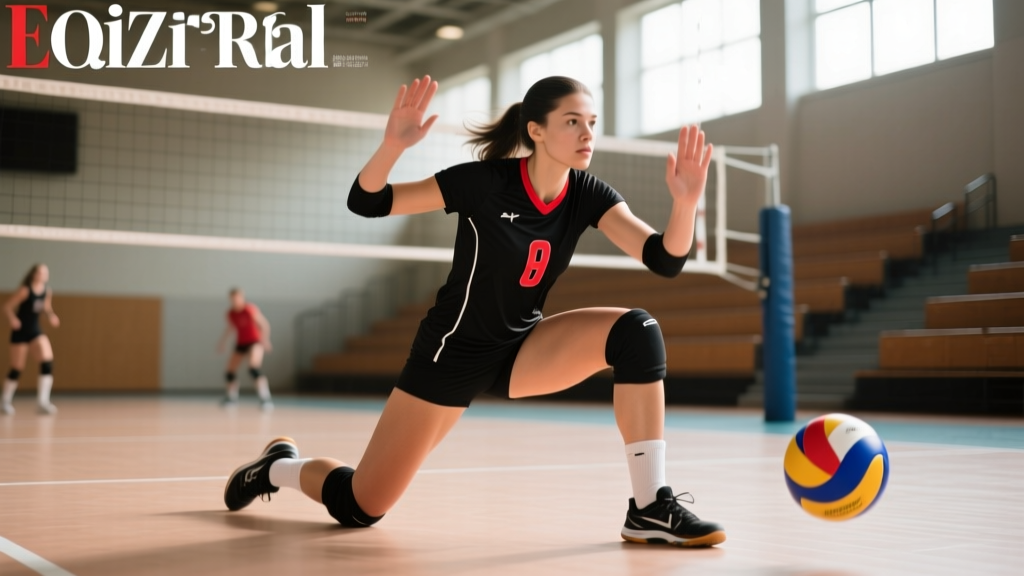
Volleyball Libero Jersey Rules & Strategy (2026)
The libero in volleyball exists to enhance defensive play by allowing a specialized back-row player to improve passing and digging without the restrictions of rotational rules. This role increases rally length, rewards skill specialization, and maintains game excitement.
What Is the Libero Position in Volleyball?
The libero is a specialized defensive player introduced in international volleyball in 1998 by the Fédération Internationale de Volleyball (FIVB). Unlike other players, the libero wears a contrasting jersey and is restricted from performing offensive actions such as spiking or serving. Their primary responsibilities include receiving serves and playing back-row defense.
Key Responsibilities of the Libero
- Receive serve and initiate first touch for setter
- Stabilize back-row defense during opponent attacks
- Improve team ball control and transition efficiency
- Replace any back-row player without counting toward substitutions
Why Was the Libero Introduced?
Volleyball before the libero often saw long rallies cut short due to poor reception and frequent service errors. The FIVB introduced the position to:
- Increase rally duration by improving floor defense
- Reward technical precision over sheer power
- Encourage strategic depth with specialized roles
- Reduce unforced errors on serve receive
Rules Governing the Libero Role
The libero operates under strict regulations to maintain balance between offense and defense:
| Rule | Libero Restriction | FIVB/USA Volleyball Standard |
|---|---|---|
| Front-row play | Not allowed | Cannot block or attack above net height |
| Serving | Depends on competition | FIVB: Not allowed; NCAA: Can serve in one rotation |
| Substitutions | Unlimited exchanges | Does not count toward team limit (15 per set) |
| Uniform | Must contrast with team | Clearly distinguishable jersey color |
| Blocking | Prohibited | No contact above net while blocking |
The data shows that the libero's role is tightly regulated to preserve positional fairness while enabling defensive excellence. Notably, substitution freedom allows coaches to optimize back-row performance dynamically. Rule variations—like serving permissions in NCAA—highlight adaptations across leagues to fit competitive needs.
Impact of the Libero on Modern Volleyball
The introduction of the libero has fundamentally reshaped how volleyball is played at elite levels. Teams now build strategies around precise serve-receive formations, often anchoring their system on the libero’s consistency.
Performance Metrics Influenced by the Libero
- Service reception accuracy: Top liberos achieve over 80% positive passes (excellent or good rating)
- Dig success rate: Elite defenders record 60–70% effective digs under high-speed attacks
- Rally participation: Liberos touch the ball in over 70% of rallies in women’s international matches
Common Questions About the Libero in Volleyball
Why can't the libero serve in FIVB competitions?
To maintain a clear distinction between offensive and defensive specialists, FIVB rules prohibit the libero from serving. This preserves strategic balance and prevents teams from stacking one player with too many roles. Note: Some leagues like NCAA allow limited serving.
Can a libero be captain?
No, the libero cannot act as team captain during a match. According to FIVB regulations, the libero is excluded from on-court leadership roles, meaning they cannot communicate with referees or request time-outs.
How does the libero affect team strategy?
The libero enables coaches to prioritize ball control in serve receive, often positioning them opposite the setter in rotation. Their presence allows taller front-row players to focus solely on attacking and blocking, increasing overall team efficiency.
Who are some famous liberos in professional volleyball?
Prominent liberos include Sérgio Dutra Jr. (Brazil), Jenia Grebennikov (France), and Monica De Gennaro (Italy). These athletes are renowned for their reflexes, consistency, and ability to elevate team defense under pressure.
Is the libero used in all levels of volleyball?
Yes, most organized leagues—including high school (NFHS), college (NCAA), and international (FIVB)—use the libero rule, though specifics vary. For example, NCAA permits the libero to serve in one rotation, unlike FIVB standards.
More Articles
 Where to Watch Wrestling in 2025 – Full Guide by Promotion
 Where Can I Buy a Tennis Racquet? Top 2025 Options
 How Many Sets to Win a Tennis Match? Explained
 How Are Bowl Games Decided in College Football?
 Who Won Super Bowl 1996? Cowboys Beat Steelers 27-17
 How Many MLB Teams Are There in 2025?
 How Much Does It Cost to Golf at Pebble Beach?
 Where Was Baseball Created? The True Origins Revealed
 How Old Is Roger Federer in 2025? Age, Career & Legacy
 How Many Games Left in Baseball 2025? Current Count