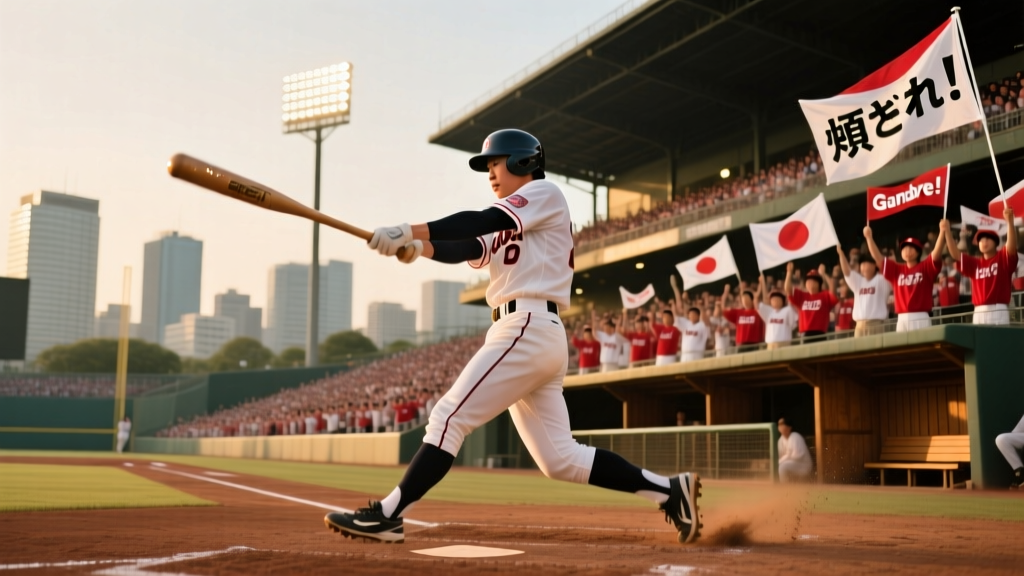
Why Is Baseball So Popular in Japan?
Baseball is so popular in Japan because it was introduced in the late 19th century, deeply integrated into school culture, and elevated by professional leagues and national pride through international success, resonating with Japanese values of discipline, teamwork, and perseverance.
Historical Roots of Baseball in Japan
Baseball was first introduced to Japan in 1872 by American educator Horace Wilson, who taught the game to students at Kaisei Academy in Tokyo. What began as a foreign pastime quickly took root in Japanese society, especially within the education system.
Early Adoption and Institutional Support
- The first official baseball game in Japan was played in 1873.
- By the early 20th century, high school tournaments were established, most notably the National High School Baseball Championship at Koshien Stadium in 1915.
- Universities formed competitive leagues, creating a talent pipeline for professional play.
This institutional embedding made baseball more than a sport—it became a rite of passage for young Japanese men.
Cultural Significance and Social Integration
Baseball aligns closely with core Japanese cultural values such as harmony (wa), effort (doryoku), and group loyalty—principles emphasized in schools and workplaces alike.
Why Baseball Resonates Culturally
- Teamwork over individualism: Success depends on coordination and self-sacrifice, reflecting societal norms.
- Discipline and ritual: The game's structure, from pre-game drills to post-game bows, mirrors traditional practices.
- National identity: Victories in international competitions like the World Baseball Classic boost collective pride.
Koshien tournaments draw massive television audiences, with entire communities rallying behind local teams, reinforcing social cohesion.
Professional Baseball: NPB and Its Impact
The formation of Nippon Professional Baseball (NPB) in 1950 solidified baseball’s status as Japan’s national pastime. With two leagues—the Central and Pacific Leagues—NPB features 12 teams and draws millions of fans annually.
Key Features of NPB
- Season runs from late March to October.
- Postseason culminates in the Japan Series.
- High attendance rates: Over 27 million fans attended games in 2023.
| Year | Total Attendance (NPB) | TV Viewership (Japan Series) | Notable Player Achievement |
|---|---|---|---|
| 2019 | 28,140,000 | 78% | Shohei Ohtani named MVP contender |
| 2020 | 15,670,000 | 65% | Season shortened due to pandemic |
| 2021 | 21,320,000 | 70% | Ohtani wins AL MVP in MLB |
| 2022 | 25,450,000 | 75% | Tamura hits 56 HRs in Pacific League |
| 2023 | 27,890,000 | 82% | Japan wins WBC championship |
The data shows a strong recovery in fan engagement post-pandemic, with record TV viewership in 2023 following Japan’s World Baseball Classic victory. High attendance and media coverage reflect enduring popularity and emotional investment in the sport.
Global Influence and Star Power
Japanese players succeeding in Major League Baseball (MLB) have amplified domestic interest. Stars like Hideo Nomo, Ichiro Suzuki, and Shohei Ohtani serve as national heroes and global ambassadors.
Impact of MLB Success
- Ichiro Suzuki: First Japanese position player in MLB; inducted into the Mariners Hall of Fame.
- Shohei Ohtani: Dual-threat pitcher and hitter; signed a $700 million contract with the Los Angeles Dodgers in 2024.
- Increased youth participation inspired by role models.
Ohtani’s rise has sparked renewed enthusiasm, with merchandise sales and youth league registrations surging nationwide.
Education System and Youth Development
Baseball is deeply embedded in Japan’s educational framework. Nearly every middle and high school has a team, and regional qualifiers lead to the prestigious Koshien tournament.
Pathway from School to Pro
- Over 4,000 high schools participate in Koshien qualifiers annually.
- Players train rigorously—often six days a week—with intense focus on fundamentals.
- Scouting networks actively recruit top high school and university players.
This structured development system ensures a steady flow of talent into NPB and beyond, sustaining long-term popularity.
Frequently Asked Questions About Baseball in Japan
Why do Japanese people love baseball so much?
Japanese fans love baseball because it reflects cultural values like discipline, hard work, and group unity. The sport is also tied to national pride through school competitions and international victories, making it emotionally significant across generations.
When did baseball become popular in Japan?
Baseball gained widespread popularity in the early 1900s, particularly after the establishment of the National High School Baseball Championship at Koshien Stadium in 1915. By the 1930s, it had become a national obsession.
Is baseball more popular than soccer in Japan?
Yes, baseball consistently ranks higher in fan attendance, TV ratings, and corporate sponsorship compared to soccer. While J-League soccer has grown since the 1990s, NPB and high school baseball maintain deeper cultural roots and broader appeal.
Who are the most famous Japanese baseball players?
Top players include Shohei Ohtani, Ichiro Suzuki, Hideo Nomo, and Hideki Matsui. Ohtani, known for his dual excellence as a pitcher and hitter, is currently the most celebrated athlete in Japan.
What is the significance of Koshien Stadium?
Koshien Stadium is the historic home of the National High School Baseball Championship. It symbolizes dreams, sacrifice, and youth ambition in Japan. Playing at Koshien is a lifelong goal for many young athletes and a major cultural event each summer.
More Articles
 How Many Super Bowls Has Mahomes Been In? Full Breakdown
 How Long Does a Tennis Match Last? Average & Record Times
 How Much Are Table Tennis Tables?
 Aleksandar Petković Tennis Career & Stats
 How Much Is a Billiard Table? (2025 Prices)
 Did Eli Manning Win a Super Bowl? Yes, Twice
 Where Was Tennis Started? Origin & History Explained
 Who Won the 2011 World Series? Cardinals vs Rangers
 Did Jared Goff Win a Super Bowl? Answer & Career Stats
 How Many Pitchers on a Baseball Team in MLB?