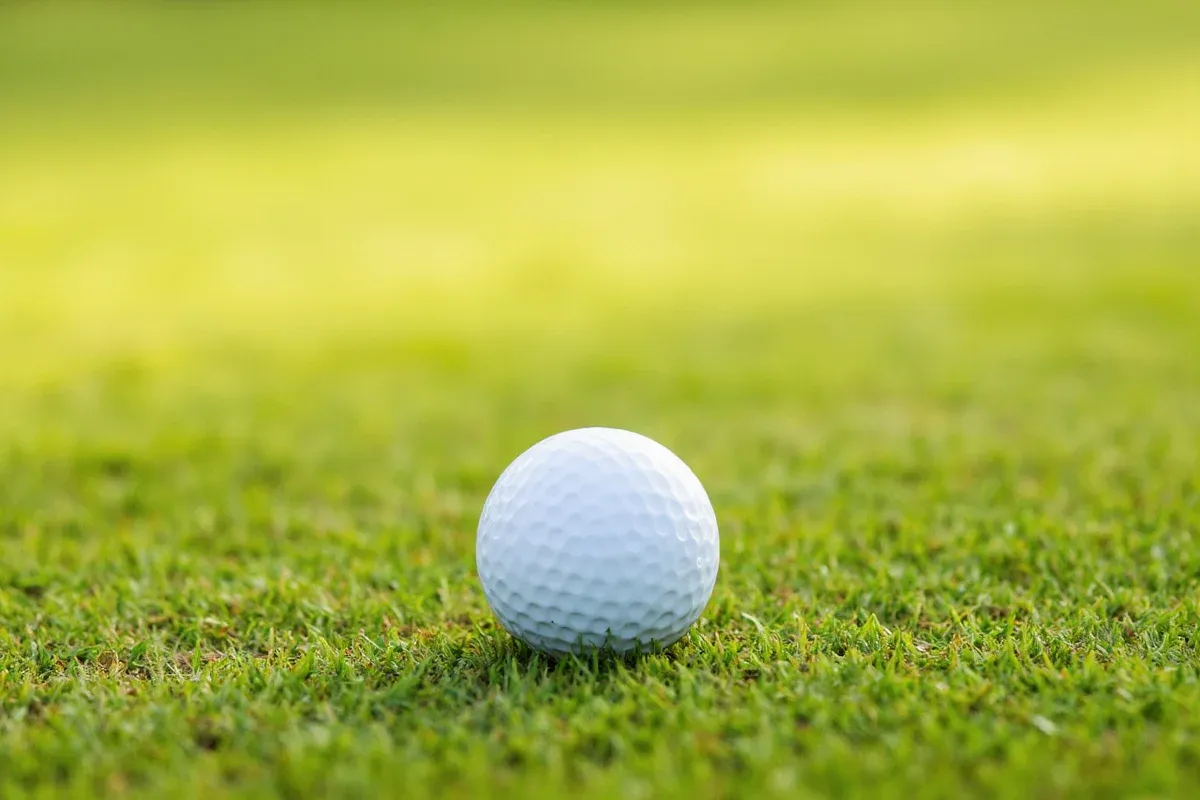
Why Do Golf Balls Have Dimples? Science Explained
Golf balls have dimples to reduce aerodynamic drag and increase lift, allowing the ball to fly farther and more stably through the air. The dimpled surface creates a thin turbulent boundary layer of air that clings to the ball’s surface longer, delaying airflow separation and reducing the size of the wake behind it. This results in up to 30% more flight distance compared to a smooth ball. Dimples also help stabilize the ball’s trajectory by minimizing wobbling and enhancing consistency in various flight conditions.
How Dimples Improve Golf Ball Aerodynamics
The presence of dimples on a golf ball fundamentally changes how air flows around it during flight. Without dimples, a golf ball would experience high pressure drag due to early airflow separation, creating a large low-pressure wake behind the ball that slows it down.
The Science Behind Airflow and Drag Reduction
- Dimples induce a transition from laminar to turbulent airflow at lower speeds.
- Turbulent flow adheres to the ball’s surface longer, delaying separation.
- This reduces the size of the wake, lowering pressure drag significantly.
- As a result, the ball maintains velocity and travels farther.
Impact of Dimple Design on Flight Performance
Not all dimples are created equal. Their number, depth, shape, and pattern are carefully engineered to optimize flight characteristics such as lift, drag, spin, and stability.
Key Dimple Characteristics
- Number: Most golf balls have between 300 and 500 dimples.
- Depth: Typically ranges from 0.008 to 0.012 inches (0.2–0.3 mm).
- Shape: Circular is most common, but hexagonal and other polygonal shapes are used for symmetry.
- Symmetry: Ensures consistent flight regardless of orientation at impact.
| Golf Ball Model | Number of Dimples | Dimple Depth (mm) | Average Carry Distance (yards) | Spin Rate (RPM) |
|---|---|---|---|---|
| Titleist Pro V1 (2023) | 388 | 0.26 | 275 | 2,850 |
| Callaway Chrome Soft X | 332 | 0.29 | 272 | 2,920 |
| Bridgestone Tour B XS | 330 | 0.27 | 270 | 2,880 |
| Srixon Z-Star XV | 338 | 0.25 | 268 | 2,800 |
| Pinnacle Soft | 318 | 0.24 | 245 | 3,100 |
The data shows a clear correlation between dimple count, depth, and performance metrics. Higher-end models like the Titleist Pro V1 use optimized dimple patterns to achieve greater carry distances with controlled spin. In contrast, budget balls like the Pinnacle Soft have fewer dimples and less refined aerodynamics, resulting in shorter flight and higher spin rates that reduce control.
Historical Evolution of Golf Ball Dimples
Golfers in the early 20th century noticed that older, nicked balls flew better than smooth new ones. This led manufacturers to experiment with surface textures. The first dimpled golf balls were patented in the 1900s, and by the 1920s, dimples became standard.
- Early balls were made of gutta-percha, easily marked during play.
- Engineers realized indentations improved flight predictability.
- Modern computer simulations now optimize dimple patterns for specific swing types.
Common Questions About Golf Ball Dimples
Why don’t golf balls have smooth surfaces?
A smooth golf ball would experience early airflow separation, creating a large wake and high drag. This results in a shorter, less stable flight. Dimples reduce drag by maintaining airflow attachment, significantly increasing distance and accuracy.
How many dimples are on a standard golf ball?
Most golf balls have between 300 and 500 dimples. For example, the Titleist Pro V1 has 388 dimples, while the Callaway Chrome Soft has 332. The exact number depends on design goals like lift, drag, and spin control.
Do dimple patterns affect ball spin?
Yes, dimple patterns influence how air moves around the ball, which affects lift and drag forces. These, in turn, interact with backspin generated at impact. Optimized patterns help manage spin rates for better control, especially in windy conditions.
Can damaged dimples reduce performance?
Absolutely. Scratches, cracks, or missing paint over dimples disrupt airflow symmetry. Studies show even minor damage can reduce carry distance by up to 20 yards and alter flight trajectory unpredictably.
Are all dimples the same size and shape?
No. Manufacturers use varying sizes, depths, and shapes—such as circular, hexagonal, or teardrop—to fine-tune aerodynamics. Some balls feature multi-layered dimple designs for different phases of flight: launch, ascent, apex, and descent.
Conclusion
Golf ball dimples are not just cosmetic—they are critical aerodynamic features that enable longer, more stable flights. By reducing drag and enhancing lift through controlled turbulence, dimples transform how the ball interacts with air. From historical observations to modern computational design, dimple engineering continues to evolve, offering players improved performance tailored to their game.
More Articles
 Who Played in the 2007 Super Bowl? Full Breakdown
 How Many Acres Is an Average Golf Course?
 How Many Miles Is 18 Holes of Golf? (Full Breakdown)
 How Many BJJ Black Belts Are There in 2025?
 Why Is Boxing Called Boxing? Origins Explained
 How Many Super Bowls Have the Seattle Seahawks Won?
 Who Is the Best Bowler in the World in 2025?
 Don Bosco Wrestling: Program, Rankings & Alumni
 Who Played in Super Bowl 2014? Teams, Score & Highlights
 Where Did Squash Originate? History & Facts