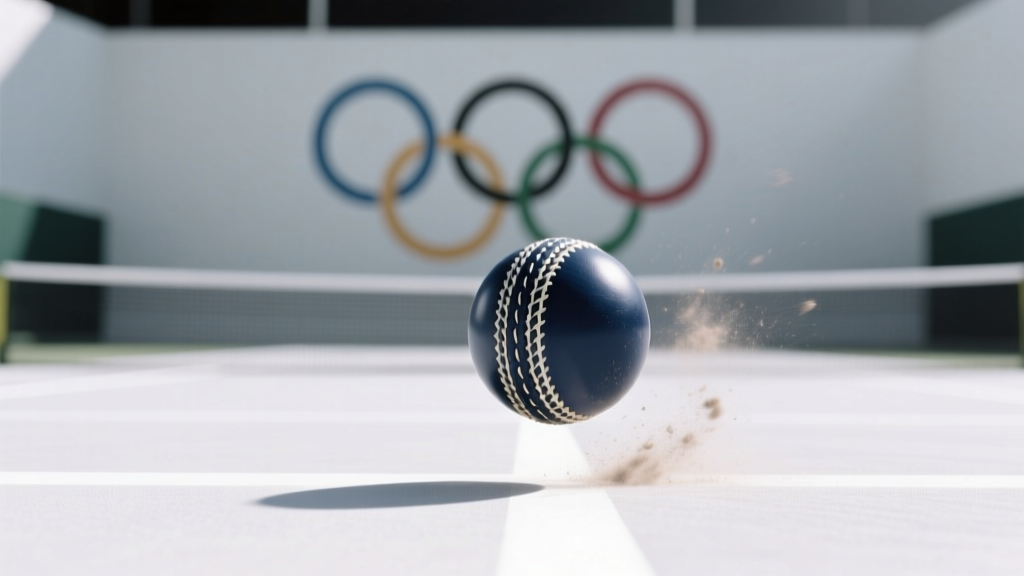
Why Cricket Is Not in the Olympics
Cricket is not in the Olympics primarily due to logistical challenges, lack of global participation, and resistance from major cricketing nations and the ICC, despite growing calls for its inclusion in future Games.
Why Cricket Isn't in the Olympics
Although cricket has a massive global following—especially in countries like India, Australia, England, and Pakistan—it has not been included in the modern Olympic Games since 1900. The absence stems from structural, organizational, and competitive hurdles that have prevented its reintroduction despite periodic discussions.
Key Reasons Behind Cricket's Olympic Absence
- Lack of global reach compared to core Olympic sports
- Resistance from the International Cricket Council (ICC)
- Logistical issues related to match duration and field requirements
- Dominance of a few nations limiting competitive balance
- Existing packed Olympic schedule and limited slots for new sports
Historical Context of Cricket in the Olympics
Cricket was part of the Olympic program only once, at the 1900 Paris Games, where Great Britain defeated France to win gold. The sport was then dropped due to low participation and organizational difficulties. Over the past century, the Olympics have prioritized sports with broader international representation, which cricket has struggled to meet despite its popularity in specific regions.
Revival Efforts and T20 Format Push
The rise of T20 cricket—a shorter, faster format introduced in the early 2000s—has reignited interest in Olympic inclusion. The ICC and several national boards now support the idea, seeing the T20 format as ideal for the Olympic schedule. In 2023, the IOC granted provisional recognition to cricket, signaling potential inclusion for the 2028 Los Angeles Games.
Global Participation and Competitive Balance
One major barrier is the uneven distribution of elite cricketing talent. While over 100 countries play cricket, only about 12 are considered competitive at the international level. This imbalance raises concerns about the sport’s suitability for an inclusive event like the Olympics.
| Country | ICC Full Member | Population (millions) | Last World Cup Semi-Final |
|---|---|---|---|
| India | Yes | 1428 | 2023 |
| Australia | Yes | 26 | 2023 |
| England | Yes | 57 | 2022 |
| Pakistan | Yes | 240 | 2021 |
| South Africa | Yes | 60 | 2023 |
| New Zealand | Yes | 5 | 2023 |
| West Indies | Yes | 6 | 2016 |
| Bangladesh | Yes | 173 | 2015 |
| Sri Lanka | Yes | 22 | 2014 |
| Afghanistan | Yes | 41 | N/A |
| Zimbabwe | Yes | 16 | 1999 |
| Ireland | Yes | 5 | N/A |
The table highlights that while ICC full members span six continents, top-level performance is concentrated in a few nations. India alone accounts for over 17% of the world’s population and generates the majority of cricket’s revenue, raising questions about equitable competition in a multi-sport event.
Logistical and Organizational Challenges
Olympic cricket would likely use the T20 format to fit scheduling demands, but challenges remain:
- Each match requires a large oval field, limiting venue availability
- Need for specialized pitches and equipment transport
- Player workload conflicts with existing international calendars
- Commercial rights disputes between ICC and IOC
Despite these issues, cities like Los Angeles have proposed using modular or temporary cricket venues, showing innovation in overcoming infrastructure barriers.
Future Prospects: LA 2028 and Beyond
The 2028 Summer Olympics in Los Angeles could mark cricket’s return. The LA28 organizing committee has formally expressed interest in including T20 cricket. If approved, it would feature both men’s and women’s tournaments, potentially boosting the sport’s visibility in North America.
Women’s cricket, in particular, stands to benefit. With growing investment and competitive depth, Olympic inclusion could accelerate development in emerging nations such as Thailand, Nepal, and the USA.
Frequently Asked Questions About Cricket in the Olympics
When was cricket last played in the Olympics?
Cricket was last played at the 1900 Paris Olympics. Only two teams competed—Great Britain and France—and the match lasted two days. Great Britain won by 158 runs. It was the sport’s only appearance in the Olympic program.
Will cricket be in the 2028 Olympics?
T20 cricket is under active consideration for the 2028 Los Angeles Olympics. While not yet officially confirmed, the LA28 organizers have included it in their proposed sports list, pending IOC approval expected in 2025.
Why doesn’t the ICC support Olympic cricket?
The ICC has historically been cautious due to concerns over player availability, commercial rights, and scheduling conflicts with events like the World Cup. However, recent leadership changes have shifted the ICC toward supporting Olympic inclusion as a growth opportunity.
Which countries would compete if cricket returns to the Olympics?
If included, the tournament would likely feature 8–12 teams, including traditional powerhouses like India, Australia, England, and South Africa, along with emerging nations such as the USA, Canada, and Ireland, especially in the women’s event.
Would Olympic cricket be T20 format?
Yes, Olympic cricket would almost certainly use the T20 format. Its shorter duration (approx. 3 hours per match) fits better within the Olympic schedule than Test or One-Day cricket, making it ideal for multi-sport events.
More Articles
 How Many Innings Are in Baseball? Explained
 How Many Games Left in Baseball 2025? Current Count
 What Time Is the Super Bowl 2025 On? Full Air Schedule
 How Many Super Bowls Do the Raiders Have? 3 Wins Explained
 How Much Is Bowling at Round1? 2025 Prices Explained
 Where Is Super Bowl 2026? Location and Venue Info
 How Many Bowl Games Are There in College Football?
 What's in the Olympic Medalists' Gift Box?
 How Many Super Bowls Have the Cowboys Won? | 5 Championships
 Oldest MLB Player Ever: Records & Longevity Facts