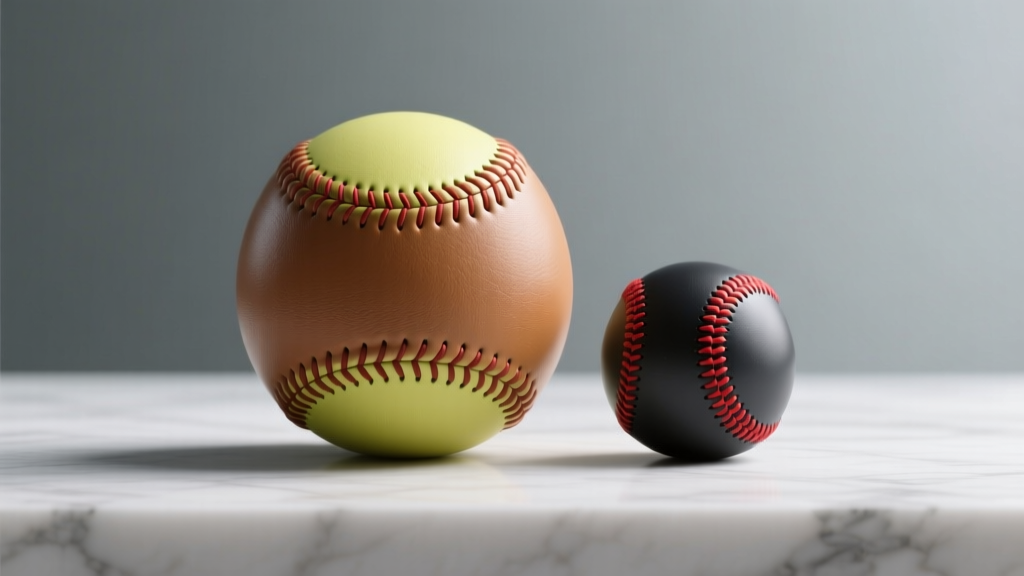
Why Are Softballs Bigger Than Baseballs?
Softballs are bigger than baseballs primarily to enhance visibility and reduce injury risk during play, accommodate different pitching styles, and suit the dynamics of a shorter playing field. The larger size compensates for slower pitch speeds in softball, allowing batters more reaction time, while also making the ball easier to grip and control.
Why Is a Softball Larger Than a Baseball?
The size difference between softballs and baseballs is intentional and rooted in the distinct rules, gameplay mechanics, and safety considerations of each sport. While both sports share similarities in concept, their execution differs significantly, necessitating equipment tailored to each game's unique demands.
Key Differences Between Softballs and Baseballs
- Diameter: Softballs range from 11 to 12 inches in circumference; baseballs are about 9 inches.
- Weight: Softballs weigh between 6.25 and 7 ounces; baseballs weigh approximately 5 ounces.
- Playing Field: Softball fields have shorter base paths (60 feet) compared to baseball (90 feet).
- Pitching Distance: Softball pitchers throw from 43 feet (women's fastpitch), while baseball pitchers release from 60 feet, 6 inches.
- Pitching Style: Softballs are typically pitched underhand; baseballs are thrown overhand with higher velocity.
Gameplay Mechanics Behind the Size Difference
The larger size of softballs directly supports the physics and timing required in softball games. Because underhand pitching generates less speed than overhand throws, the bigger ball ensures better visibility for batters and fielders alike.
Reaction Time and Safety Considerations
With shorter distances between pitcher and batter, a smaller, faster-moving ball would be dangerous and nearly impossible to react to. A larger ball naturally slows perceived speed and increases reaction time, improving player safety and competitive fairness.
Field Dimensions and Game Rhythm
Softball fields are compact. Bases are closer together, and outfield fences are nearer. The larger ball complements this tighter space by reducing maximum hit distance and roll speed, maintaining balanced offensive and defensive play.
| Feature | Softball (12-inch) | Baseball |
|---|---|---|
| Circumference | 12 inches (30.5 cm) | 9–9.25 inches (22.9–23.5 cm) |
| Diameter | 3.8 inches (9.7 cm) | 2.86–2.94 inches (7.3–7.5 cm) |
| Weight | 6.25–7 oz (177–198 g) | 5–5.25 oz (142–149 g) |
| Pitching Distance | 43 ft (13.1 m) | 60.5 ft (18.4 m) |
| Average Pitch Speed (Fastpitch) | 60–70 mph (97–113 km/h) | 85–95 mph (137–153 km/h) |
The data shows that despite lower pitch velocities, softballs travel a much shorter distance to the plate, giving batters roughly half the reaction time compared to baseball. The increased size offsets this by improving visual tracking and contact accuracy. Additionally, the heavier, larger ball reduces erratic bounce and roll on varied field surfaces.
Historical and Evolutionary Factors
Softball was invented in 1887 as an indoor version of baseball, initially played with a boxing glove wrapped into a ball—naturally larger than a baseball. As the sport evolved, the larger ball remained standard to preserve its identity and gameplay balance.
Standardization Across Leagues
Over time, governing bodies like USA Softball and the NCAA formalized ball size regulations. Men’s slow-pitch may use 16-inch balls, while women’s fastpitch uses 12-inch. This standardization ensures consistency across age groups and competition levels.
Frequently Asked Questions About Why Softballs Are Bigger Than Baseballs
Why do softballs have a larger circumference than baseballs?
Softballs have a larger circumference to improve visibility, increase reaction time for players, and match the shorter field dimensions and underhand pitching style used in softball. The size helps maintain safe and fair gameplay despite reduced pitch speed.
Does the size of a softball affect how far it can be hit?
Yes, the larger size creates more air resistance and generally results in shorter hit distances compared to baseballs. Combined with lower pitch speeds and shorter bat lengths, this keeps gameplay balanced on smaller fields.
Are softballs softer than baseballs?
No, despite the name, softballs are not necessarily soft. They are made with a similar core to baseballs but covered in leather or synthetic material. The name "softball" comes from early versions of the game, not the ball's texture.
Can you use a baseball in a softball game?
No, using a baseball in a softball game is unsafe and against regulations. The smaller size would make it harder to see and hit, and it could lead to injuries due to faster perceived speed at close range.
Why don’t baseballs use a larger ball to reduce injuries?
Baseballs prioritize speed, distance, and precision throwing over short reaction windows. A larger ball would disrupt the established physics of the game, reduce pitch effectiveness, and alter hitting dynamics too drastically to be practical.
More Articles
 De La Salle Baseball: Program Insights & Performance
 How Many Super Bowls Have the Chargers Won? (Answer)
 How Long Is a Boxing Match Round?
 Buy Baseball Cards Near Me: Top Local & Online Spots
 Where to Watch Bellator MMA Live in 2025
 How Old Is Gabby Golf Girl in 2025? Age, Bio & Career
 When Was Major League Baseball Started? Key Facts
 Who Is the GOAT of Golf? Tiger Woods vs Legends
 Where to Watch the Boxing Fight Tonight - Live Stream Guide
 How Much Does a Golf Caddy Make? (2025 Data)