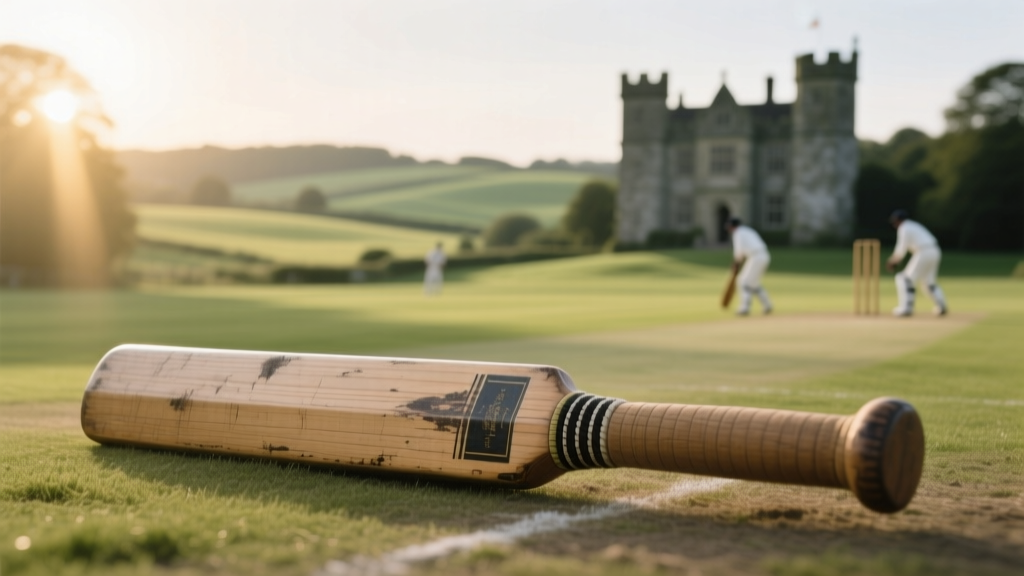
Who Invented Cricket? Origins and History Explained
Cricket does not have a single inventor; it evolved over centuries, with origins traced to 13th-century England, where children in southeastern villages played early forms of the game. By the 16th century, it had developed into an adult pastime, and by the 18th century, formal rules were established, laying the foundation for modern cricket.
The Historical Development of Cricket
Cricket's origins are deeply rooted in English rural life. While no one person invented the sport, historical records suggest it began as a children's game in Kent, Sussex, and Surrey. The word "cricket" may derive from the Old English "cryce" or the French "criquet," both meaning stick or bat.
Key Stages in Cricket's Evolution
- 13th–15th Century: Children played a primitive form of bat-and-ball games in southern England.
- 16th Century: Adults adopted the game; earliest known reference is from 1598, mentioning schoolboys playing cricket in Guildford. \li>17th Century: First recorded match in 1646; cricket became increasingly organized.
- 18th Century: Formation of the London Cricket Club; first Laws of Cricket drawn up in 1744.
- 19th Century: Spread across the British Empire; Test cricket begins in 1877.
The Codification of Cricket Rules
The formalization of cricket was crucial to its global spread. The Marylebone Cricket Club (MCC), founded in 1787, became the custodian of the Laws of Cricket.
Milestones in Rule Development
| Year | Event | Significance |
|---|---|---|
| 1744 | First codified Laws of Cricket | Defined pitch length, ball weight, and umpire roles |
| 1774 | Introduction of leg before wicket (LBW) | Expanded dismissal methods |
| 1788 | MCC established and adopts the Laws | Institutionalized rule governance |
| 1889 | First official international tour (England to Australia) | Paved way for Test cricket |
| 2000 | ICC assumes responsibility for Laws | Global standardization under international body |
Cricket's Global Expansion
British colonial influence helped cricket spread to Australia, India, the West Indies, and South Africa. The first international match was between the U.S. and Canada in 1844, though Test cricket officially began with Australia vs. England in 1877.
| Nation | First Test Match | Opponent | Year |
|---|---|---|---|
| Australia | MCG, Melbourne | England | 1877 |
| England | MCG, Melbourne | Australia | 1877 |
| South Africa | St George's Park, Port Elizabeth | England | 1889 |
| West Indies | Lord's, London | England | 1928 |
| India | Lord's, London | England | 1932 |
| Pakistan | Headingley, Leeds | India | 1952 |
| Sri Lanka | P. Saravanamuttu Stadium, Colombo | England | 1982 |
The table illustrates how cricket expanded beyond England through colonial ties and diplomatic sporting engagement. Australia and England pioneered international competition, while nations like Sri Lanka joined much later, reflecting evolving global inclusion. The consistent venue of early matches—Lord's and English grounds—highlights England's central role in cricket's administration.
Famous Early Figures in Cricket
Though no individual invented cricket, several pioneers shaped its development:
- William Gilbert Grace (W.G. Grace): Regarded as the father of modern cricket; dominated the sport in the late 19th century.
- Charles Lennox, 2nd Duke of Richmond: Patron of early cricket; funded matches and supported professional players.
- Thomas Lord: Lessee of the ground that became Lord's Cricket Ground, the sport's spiritual home.
Common Questions About the Invention of Cricket
Who invented the game of cricket?
No single person invented cricket. It originated in medieval England as a folk game and gradually evolved into a structured sport by the 18th century.
Where was cricket first played?
Cricket was first played in southeastern England, particularly in the counties of Kent, Sussex, and Surrey, with the earliest definite reference dating to 1598 in Guildford.
When were the first rules of cricket written?
The first codified Laws of Cricket were drawn up in 1744 by the London Cricket Club and later revised and maintained by the Marylebone Cricket Club (MCC) from 1788 onward.
Why is the MCC important in cricket history?
The Marylebone Cricket Club (MCC), founded in 1787, became the guardian of the Laws of Cricket and played a central role in standardizing rules and promoting the game globally.
How did cricket spread around the world?
Cricket spread through British colonial expansion, with the game introduced to countries like India, Australia, and the West Indies. International tours and the formation of national boards facilitated its global growth.
More Articles
 What Year Did the Buccaneers Win the Super Bowl?
 Who Will Win Super Bowl LIX in 2025? Top Contenders & Odds
 Who Was the First Wrestler in WWE? | WWE Origins
 Why We Love Baseball: Tradition, Strategy & Legends
 Where Is Boxer Triple G From? GGG's Origin Revealed
 Super Bowl Start Time This Sunday: What Time Is It?
 Who Owns Callaway Golf Company? Current Ownership 2025
 Where to Buy Second Hand Golf Clubs: Best 2025 Options
 Super Bowl LIX: What Number Is It? (2026)
 When Is Baseball All-Star Break? 2025 Dates & Events