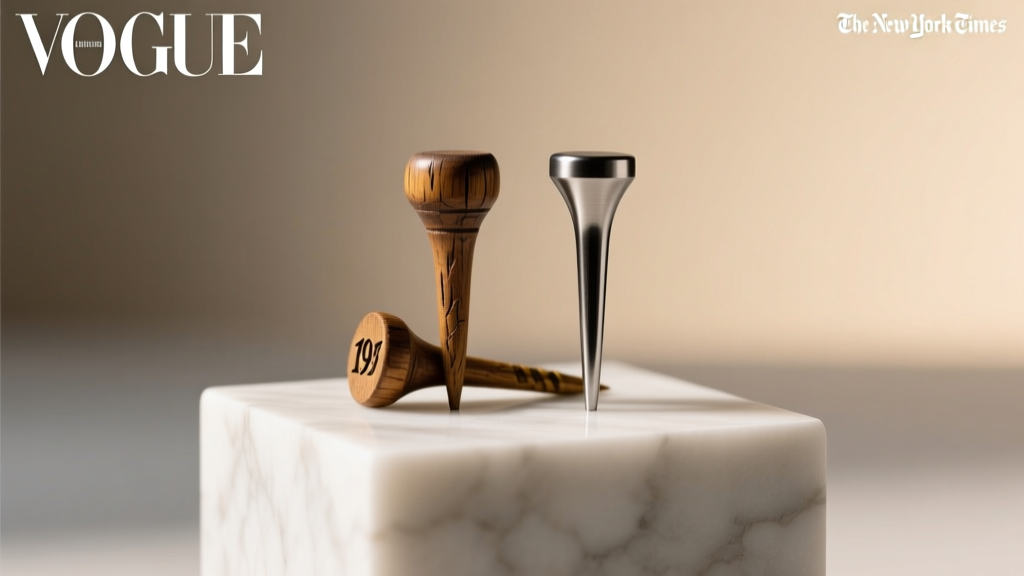
Who Invented the Golf Tee? The True Story
The golf tee was invented by Dr. George Franklin Grant in 1899. As the first African American professor at Harvard Dental School and an avid golfer, Grant designed the first patented wooden golf tee to elevate the ball for easier driving, revolutionizing the game. His invention laid the foundation for modern teeing systems still used today.
Who Invented the Golf Tee? The Story of Dr. George Franklin Grant
The invention of the golf tee is credited to Dr. George Franklin Grant, who received U.S. Patent #651,907 on June 12, 1899. While various forms of ball supports existed earlier, Grant's design was the first practical, purpose-built, and patented golf tee made of wood with a conical shape and flared base to hold the ball securely.
Why Was the Golf Tee Needed?
Before the invention of the golf tee, players had to prop their balls up using mounds of sand or natural materials like tufts of grass. This method was inconsistent and time-consuming. The need for a reliable, portable solution led to innovation. Key problems included:
- Inconsistent ball height affecting swing mechanics
- Time lost building sand tees after each shot
- Lack of portability and cleanliness
- Damage to clubs from hitting sand-covered balls
The Evolution of the Golf Tee
Grant’s original design featured a simple wooden peg with a cupped top to cradle the ball. Though not widely commercialized during his lifetime, it inspired future iterations. Over time, several key developments shaped the modern tee:
Milestones in Golf Tee Development
- 1899: Dr. Grant patents the first wooden golf tee
- 1921: William Lowell introduces the “Reddy Tee,” a mass-produced wooden tee that popularizes the concept
- 1930s: Standardization of length (2.25"–4") based on club types
- 1990s–present: Rise of plastic, reusable, and zero-resistance tees
| Year | Inventor / Company | Tee Type | Key Innovation | Patent Number |
|---|---|---|---|---|
| 1899 | Dr. George F. Grant | Wooden Conical Tee | First patented golf tee with cupped top | US651907 |
| 1921 | William Lowell | Reddy Tee (Mass-Produced Wooden) | Commercialized wooden tee; sold millions | N/A (product) |
| 1957 | Victor G. Lovell | Plastic Multipoint Tee | Durable, reusable plastic design | US2801091 |
| 1998 | Frank L. Burnside | Brush Tee | Minimizes interference during swing | US5816940 |
| 2001 | Golf Laboratories Inc. | Zero-Resistance Tee | Breakaway design reduces drag | US6213893 |
The data shows a clear progression from handcrafted wooden designs to engineered performance products. Dr. Grant’s 1899 patent predates all commercial variants, establishing him as the true pioneer. Later innovations focused on durability, aerodynamics, and minimizing contact with the clubface—proving how foundational Grant’s idea was to subsequent development.
Dr. George Franklin Grant: More Than Just an Inventor
Beyond his contribution to golf, Dr. Grant was a trailblazing dentist and academic. Born in 1846 in Oswego, New York, he became the first African American professor at Harvard University, teaching in the School of Dental Medicine. An enthusiastic golfer, he applied his problem-solving skills to improve his game.
Although he didn’t profit significantly from his invention, the U.S. Golf Association officially recognizes Grant’s role in golf history. A replica of his original tee is displayed at the Smithsonian Institution, honoring both his ingenuity and legacy.
Modern Golf Tees: Types and Uses
Today’s golfers have access to a wide variety of tees tailored to different clubs and playing styles:
- Short Tees (1.5–2.25 inches): Ideal for irons and fairway woods
- Standard Tees (2.75 inches): Most common; used with drivers
- Long Tees (3–4 inches): For maximum launch angle with modern drivers
- Brush Tees: Reduce friction and are legal under USGA rules
- Plastic Reusable Tees: Environmentally friendly and durable
Frequently Asked Questions About the Invention of the Golf Tee
Who invented the golf tee and when?
Dr. George Franklin Grant invented the first patented golf tee in 1899. He received U.S. Patent #651907 for a wooden tee with a cupped top designed to hold a golf ball securely above the ground.
Was the golf tee always made of wood?
Yes, early golf tees were primarily made of wood. Dr. Grant’s original design was wooden, and mass-produced versions like the Reddy Tee followed suit. Plastic and composite materials emerged in the mid-20th century.
Why is Dr. George Grant’s invention significant?
Grant’s invention introduced consistency and convenience to the game. Before his tee, players relied on sand mounds, which were messy and unreliable. His design set the standard for all future tees and improved playability.
Did Dr. Grant profit from his golf tee invention?
No, Dr. Grant did not commercially exploit his invention during his lifetime. Unlike later entrepreneurs like William Lowell, he focused on solving a personal challenge rather than marketing the product.
Is the original golf tee still used today?
While modern tees have evolved in material and design, the basic principle—elevating the ball for a cleaner strike—remains unchanged. Grant’s conical wooden design is still recognizable in today’s standard tees.
More Articles
 Eli Manning Super Bowls: 2 Championships
 When Did Broncos Win the Super Bowl? 3 Titles Explained
 Did the Eagles Win a Super Bowl? Yes, Here's the Full Story
 How Is ERA Calculated in Baseball? Formula & Examples
 Where Was Tennis Invented? The True Origin Revealed
 When Was the First Baseball World Series? Answer & History
 How Many Super Bowls Do Chiefs Have? 4 Titles Explained
 Who Won the Super Bowl in 2013? Full Recap & Highlights
 How Many Super Bowls Have the Buffalo Bills Won?
 How Many Super Bowls Did the Miami Dolphins Win?