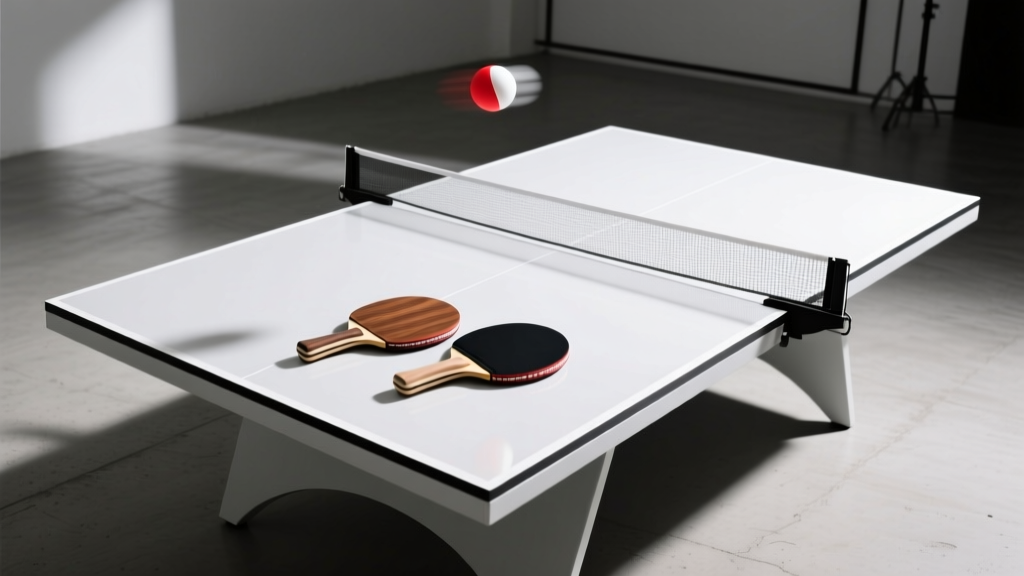
Who Invented Ping Pong Table Tennis?
In 1890, Englishman David Foster patented one of the earliest known indoor table versions of tennis, laying the foundation for what would become modern ping pong or table tennis. While he did not invent the game in its final form, his design was a critical step in transforming lawn tennis into an indoor tabletop sport.
The Origins of Table Tennis: From Parlors to Patents
Table tennis began as an after-dinner parlor game in Victorian England during the late 19th century. Wealthy families adapted lawn tennis using books as nets, cigar box lids as rackets, and golf balls or rubber balls as projectiles. As the game grew in popularity, entrepreneurs sought ways to commercialize it.
David Foster’s Contribution (1890)
In 1890, David Foster filed a patent (GB189012526) titled "Improvements in Parlor Table Games." His design featured a table with a net, marked boundaries, and suggested use of rubber balls. This was among the first structured attempts to formalize the game.
- Foster’s version included service rules and scoring ideas.
- It was marketed as a novelty rather than a competitive sport.
- His model lacked standardized dimensions used today.
John Jaques and the Birth of 'Ping Pong' (1901)
The term ping pong was popularized by John Jaques of London, a leading sports manufacturer. In 1901, they trademarked "Ping-Pong" as a brand name, derived from the sound of the ball hitting the table and paddles.
Jaques began selling complete boxed sets with celluloid balls, paddles, and nets—standardizing equipment and rules. Other companies followed, leading to widespread adoption across Europe and the U.S.
- The name 'ping pong' became synonymous with table tennis.
- Jaques organized early competitions and rulebooks.
- By 1903, official rules were being drafted independently by clubs.
Evolution Toward Modern Table Tennis
While Foster and Jaques played pivotal roles, the standardization of the game came later through international governance.
Formation of ITTF (1926)
The International Table Tennis Federation (ITTF) was founded in 1926 in Berlin, unifying rules and promoting global competition. The ITTF established:
- Standard table size: 2.74m x 1.525m
- Net height: 15.25 cm
- Ball diameter and weight specifications
- Official tournament regulations
This marked the transition from parlor amusement to serious sport.
| Inventor/Contributor | Year | Contribution | Impact |
|---|---|---|---|
| David Foster | 1890 | Patented parlor table game resembling tennis | Laid mechanical groundwork for table tennis |
| John Jaques & Co. | 1901 | Trademarked "Ping-Pong", sold kits | Commercialized and popularized the game |
| E.C. Goode | 1901 | Introduced pimpled rubber racket | Enabled spin play; revolutionized technique |
| William Henry Lawes | 1890s | Promoted game in England; wrote early rules | Helped define gameplay structure |
| ITTF | 1926 | Standardized rules and organized world events | Established table tennis as an international sport |
The data shows that while David Foster initiated the concept, multiple innovators contributed key developments over 36 years before the sport was fully standardized. Commercialization by Jaques and technological advances like the rubber paddle were equally vital to the game’s evolution.
Key Innovations That Shaped the Game
Beyond the table itself, several innovations transformed how the game was played:
Racket Technology
In 1901, E.C. Goode attached a sheet of pimpled rubber to a wooden blade, creating the first modern racket. This allowed players to generate spin and control—fundamental aspects of today's elite play.
The Celluloid Ball
Early balls were made of rubber or cork. By the 1890s, manufacturers switched to celluloid, which offered better bounce and durability. Today’s 40mm plastic balls evolved from this innovation.
Global Spread and Olympic Recognition
Table tennis spread rapidly through British colonies and Europe. It became an Olympic sport in 1988 at the Seoul Games, cementing its status as a competitive discipline.
Frequently Asked Questions About Who Invented Ping Pong Table Tennis
Who invented the ping pong table?
Englishman David Foster patented one of the earliest versions of a table tennis setup in 1890, though it was John Jaques & Co. who commercialized the game with standardized tables and equipment in 1901.
When was table tennis invented?
Table tennis emerged in the 1880s as a parlor game in England and was formally patented in 1890 by David Foster. The modern version evolved throughout the early 20th century.
What is the difference between ping pong and table tennis?
"Ping pong" originally referred to the trademarked version by Jaques & Co., while "table tennis" is the official sporting term. Today, both are used interchangeably, though professionals prefer "table tennis."
Why is table tennis called ping pong?
The name comes from the sound the ball makes when struck—"ping" when hitting the paddle and "pong" when bouncing on the table. Jaques & Co. adopted it as a brand name in 1901.
Is table tennis an Olympic sport?
Yes, table tennis has been an official Olympic event since the 1988 Summer Olympics in Seoul, South Korea, governed by the International Table Tennis Federation (ITTF).
More Articles
 How Many Super Bowls Did Brett Favre Win? Answer & Analysis
 Boxing Weight Classes Explained: Pro & Olympic Divisions
 Who Won Beach Volleyball Olympics 2024? Gold Medal Winners
 Who Won Super Bowl 2009? Steelers vs Cardinals
 How Much Does a Professional Wrestler Make?
 What Time Golf Today? Tee & TV Times Explained
 Super Bowl Start Time Pacific Time: What You Need to Know
 How Long Does a Boxing Match Last? Full Breakdown
 Can Am Classic Volleyball 2025: Dates, Teams, Tickets
 What Time Are the Baseball Games Today? (Oct 4, 2025)