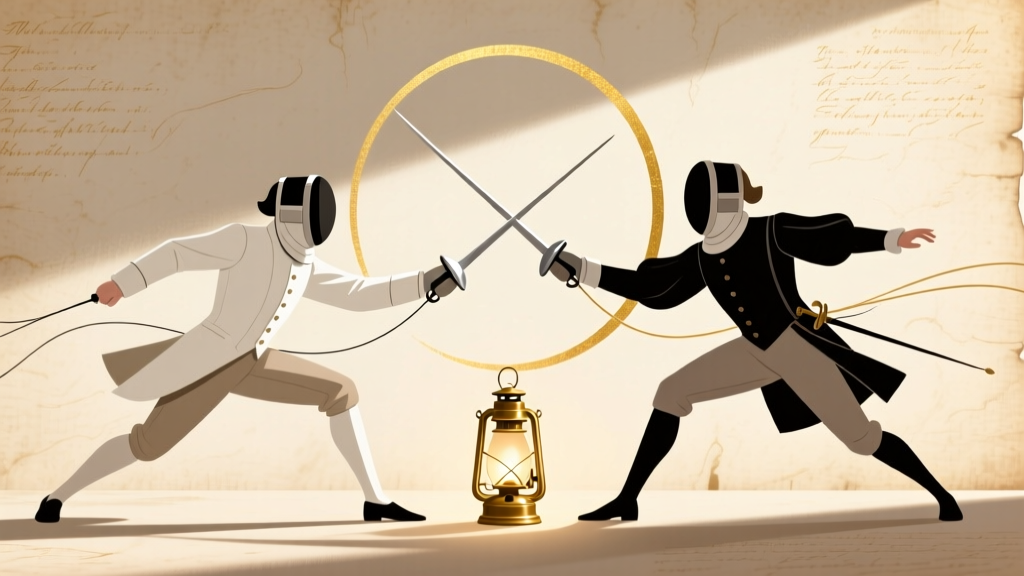
Who Invented Fencing Sport? Origins & Key Figures
Fencing, as a sport, was not invented by a single individual but evolved over centuries, with its modern form codified in the 15th and 16th centuries in Europe, particularly in Italy and later France. The foundational rules, techniques, and weapons used in contemporary fencing were systematized by masters such as Camillo Agrippa and Ridolfo Capo Ferro, making them key figures in shaping the sport.
Origins and Historical Development of Fencing
The roots of fencing trace back to ancient civilizations where sword combat was essential for warfare and self-defense. However, fencing as a structured sport began during the Renaissance period when dueling became formalized and required regulated practice.
Early Sword Combat Practices
- Ancient Egyptians and Greeks practiced forms of swordplay for military training.
- Roman gladiators engaged in armed combat that influenced later European martial traditions.
- Medieval knights trained with swords using rudimentary techniques passed down orally.
The Birth of Modern Fencing
The transition from battlefield combat to sportive fencing occurred primarily in 15th-century Italy. Italian fencing masters began documenting systematic methods of attack, defense, and footwork.
- Camillo Agrippa (1553) published one of the first treatises on geometric principles in fencing, introducing the four primary guards still referenced today.
- Ridolfo Capo Ferro (1610) expanded on these ideas, standardizing rapier technique and influencing French fencing schools.
- French masters like La Boëssière refined the use of the foil and introduced the wire mesh mask in the 18th century, drastically improving safety and enabling faster, more precise bouts.
Evolution of Fencing Weapons and Rules
Modern fencing features three distinct weapons—foil, épée, and sabre—each with unique rules, target areas, and scoring systems developed through historical combat styles.
Weapon Types and Their Origins
- Foil: Developed in 18th-century France as a training weapon for dueling; emphasizes precision and strategy.
- Épée: Introduced in the 19th century to simulate real duels; entire body is target, no right-of-way rule.
- Sabre: Based on cavalry warfare; allows both thrusting and cutting motions, with target area above the waist.
| Weapon | Origin Period | Target Area | Weight (approx.) | Blade Length | Max Speed (m/s) |
|---|---|---|---|---|---|
| Foil | 18th Century | Torso only | 500 g | 90 cm | 6.5 |
| Épée | 19th Century | Full body | 770 g | 90 cm | 5.8 |
| Sabre | 19th Century | Waist up | 500 g | 88 cm | 7.2 |
The data shows how each weapon balances speed, weight, and reach to reflect its historical purpose. Sabres allow the fastest attacks due to slashing motions, while épées prioritize accuracy over agility with heavier construction and full-body targeting.
Olympic Recognition and Global Standardization
Fencing has been part of the modern Olympic Games since their inception in 1896, highlighting its status as one of the original competitive sports. The Fédération Internationale d'Escrime (FIE), founded in 1913, governs international competition and ensures consistent rules across nations.
- First Olympic fencing events included men's foil and sabre; épée was added in 1900.
- Women's foil debuted at the 1924 Paris Olympics; women's épée and sabre followed in 1996 and 2004 respectively.
- Electronic scoring systems were introduced in the 1930s for épée and fully adopted across all weapons by the 1990s.
Famous Fencing Masters and Their Contributions
While no single person “invented” fencing, several historical figures laid the groundwork for its technical and philosophical development.
Key Figures in Fencing History
- Camillo Agrippa: An Italian engineer who applied geometry to fencing, revolutionizing guard positions and movement efficiency.
- Ridolfo Capo Ferro: Authored "Gran Simulacro dell'Arte e dell'Uso della Scherma" (1610), a foundational text in rapier fencing.
- Nicolas-Louis Defrance: Popularized foil fencing in France and emphasized safety and pedagogy.
- Julian Bahuaud: 20th-century French master who contributed to the codification of right-of-way rules used in foil and sabre.
Fencing as a Modern Sport: Training, Competition, and Technology
Today’s fencing combines athleticism, mental sharpness, and technological integration. Athletes train rigorously in footwork, bladework, and tactical decision-making.
- Elite fencers can execute attacks in under 0.5 seconds.
- Laser-based training tools and video analysis are now standard in top programs.
- The FIE updates rules biennially to maintain fairness and excitement in global competitions.
Common Questions About the Invention and History of Fencing
Who is considered the father of modern fencing?
Camillo Agrippa is often called the father of modern fencing due to his scientific approach and publication of geometric fencing principles in 1553, which laid the foundation for structured instruction.
When did fencing become an official sport?
Fencing became an official modern sport with the establishment of standardized rules in the 19th century and was included in the first modern Olympic Games in 1896.
Was fencing originally used for duels?
Yes, fencing originated from dueling practices, especially during the 16th to 19th centuries, when disputes among nobility were settled with swords. The sport evolved to preserve the skill without lethal consequences.
How did fencing spread from Italy to other countries?
Italian fencing masters taught across Europe, especially in France and Spain. By the 17th century, French academies adopted and refined Italian techniques, eventually developing their own national style that dominated European fencing culture.
What role did technology play in the evolution of fencing?
Technology transformed fencing with the invention of the wire-mask (1760s), electronic scoring (1930s–1990s), and high-speed video replay. These innovations increased safety, accuracy, and spectator engagement in competitions.
More Articles
 Where Is The Masters Golf Tournament Played?
 Super Bowl 2025 Time in Arizona: Kickoff at 6:30 PM MST
 How Many Super Bowls Did Brett Favre Win? Answer & Analysis
 Where to Watch Nebraska Volleyball Tonight Live
 When Is Wrestling in the Olympics? 2024 Schedule and Updates
 Who Is the Tallest WWE Wrestler Ever?
 2026 Celebrity Golf Tournament: Players, Teams, Schedule
 Who Started Tennis? The Inventor of Modern Tennis
 When Does Rugby Season Start? Global Schedules Explained
 Who Was the Best Baseball Player Ever? Babe Ruth