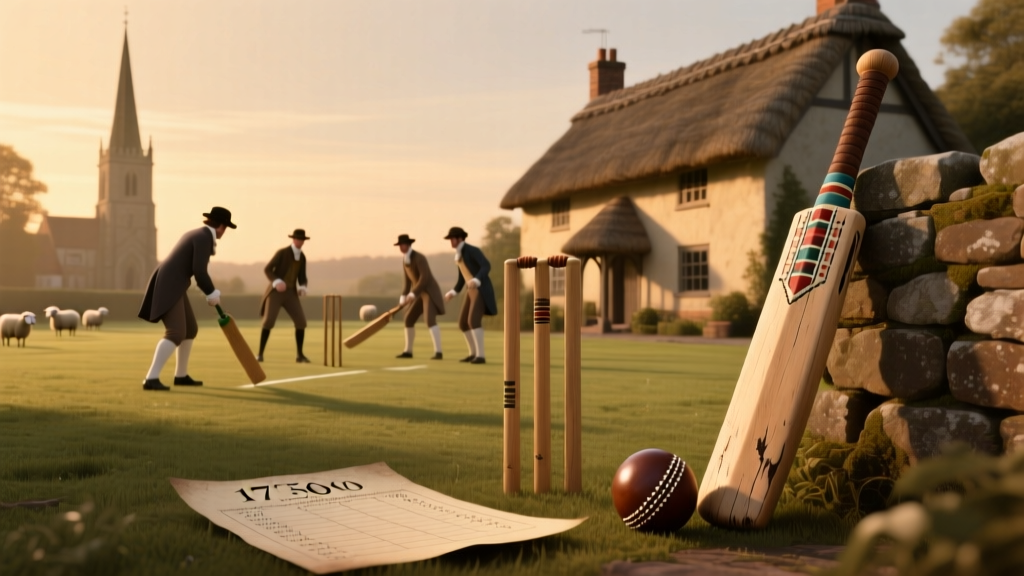
Where Was Cricket Invented? Origins and History
Cricket was invented in England, with its earliest known origins dating back to the 16th century, most likely in the southeastern counties such as Kent.
The Origins of Cricket: A Historical Overview
Cricket, one of the world's most popular bat-and-ball sports, traces its roots to rural England. The game evolved from children's games played in the fields of southeast England, particularly in Kent and Sussex. By the 17th century, cricket had become a pastime for adults and began spreading across England.
Key Early Milestones in Cricket History
- The first recorded reference to cricket dates to 1598, mentioning a game played by schoolboys in Guildford, Surrey.
- By the 1700s, cricket clubs began forming, including the famous Hambledon Club in Hampshire (founded c. 1760).
- The Marylebone Cricket Club (MCC), established in 1787 at Lord's Cricket Ground, became the custodian of the Laws of Cricket.
- The first international match took place in 1844 between the United States and Canada, but the first official Test match was played in 1877 between England and Australia.
How Cricket Spread Across the World
British colonial expansion played a pivotal role in spreading cricket globally. As the British Empire expanded, so did the sport, gaining strong followings in countries like India, Australia, South Africa, and the West Indies.
Major Regions Where Cricket Took Root
- South Asia: Introduced during British rule, cricket is now the dominant sport in India, Pakistan, Sri Lanka, and Bangladesh.
- Australasia: Australia and New Zealand adopted cricket early and are founding members of the ICC.
- Caribbean: The sport became deeply embedded in West Indian culture, producing legendary players like Viv Richards and Brian Lara.
- Sub-Saharan Africa: South Africa has a long cricketing tradition, while Kenya and Zimbabwe have also competed internationally.
Evolution of Cricket Rules and Formats
The standardization of rules by the MCC in the 18th and 19th centuries helped formalize the game. Over time, new formats emerged to increase accessibility and entertainment value.
Major Cricket Formats
- Test Cricket: The longest format, played over five days with no overs limit.
- One Day International (ODI): Introduced in the 1970s, limited to 50 overs per side.
- T20: Launched in the early 2000s, this fast-paced 20-over format revolutionized the sport.
| Country | First International Match | ICC Full Member Since | Major Domestic League |
|---|---|---|---|
| England | 1877 (vs Australia) | 1909 (Founding Member) | The County Championship |
| Australia | 1877 (vs England) | 1909 (Founding Member) | Big Bash League (BBL) |
| West Indies | 1928 (vs England) | 1926 | Caribbean Premier League (CPL) |
| India | 1932 (vs England) | 1926 | Indian Premier League (IPL) |
| South Africa | 1889 (vs England) | 1909 | Sunrisers League |
The table highlights how cricket expanded beyond England through colonial ties and formal international recognition. England and Australia were the first to play an official Test match, setting a precedent for global competition. The establishment of domestic leagues like the IPL and BBL underscores the sport’s commercial evolution.
About Cricket Invention: Common Questions
Where exactly was cricket invented?
Cricket was invented in southeastern England, most likely in the county of Kent, during the 16th century. The earliest documented reference comes from Guildford, Surrey, in 1598.
Who invented the game of cricket?
There is no single inventor of cricket. It evolved organically from folk games played by children in rural England, gradually developing into a structured sport by the 18th century.
When was the first official cricket match played?
The first officially recognized Test match was played between England and Australia in 1877 at the Melbourne Cricket Ground. However, informal matches date back to the 1700s.
Why was cricket invented in England?
Cricket developed in England due to the availability of open fields, a growing leisure culture, and the social structure that supported organized sports. It was further institutionalized by schools, clubs, and the aristocracy.
How did cricket become an international sport?
Cricket spread internationally through British colonialism. Soldiers, traders, and administrators introduced the game in colonies, leading to the formation of national teams and eventual inclusion in the ICC structure.
More Articles
 Who Won Super Bowl 2003? Full Recap & Stats
 Where Are PING Golf Clubs Made? | USA Manufacturing Facts
 Where Is the Masters Golf Tournament Played?
 The Ultimate Played Guide: Rules, Strategy, and Real-World Performance Data for Competitive Ultimate Frisbee
 Which NFL Team Has Won the Most Super Bowls?
 Where Was Tennis Invented? The True Origin Revealed
 What Channel Is the Sugar Bowl On? 2025 Broadcast Info
 Who Won the 2006 World Series? Cardinals Beat Tigers
 How Much Do Baseballs Weigh? Official Weight by League
 MLB Minimum Wage 2025: What Players Earn