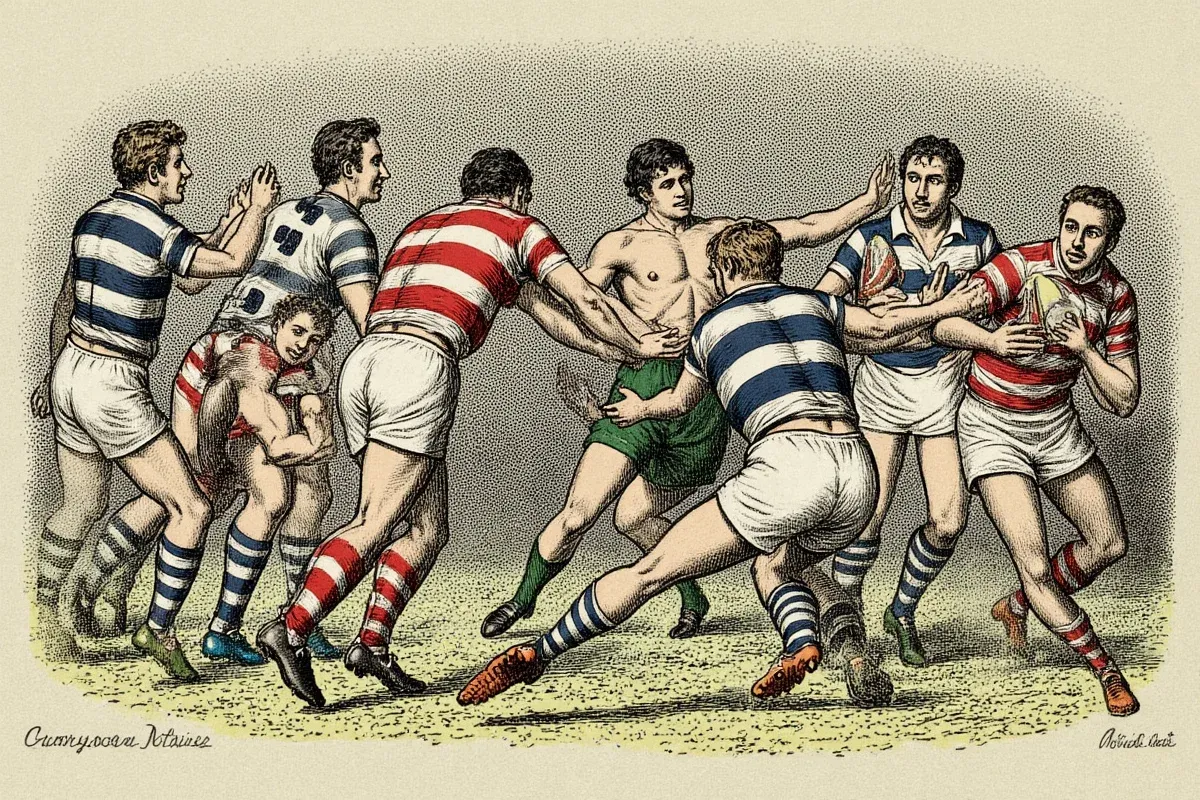
Where Rugby Originated: History & Key Facts
Where Rugby Originated: A Complete Historical Overview
Rugby originated in England, specifically at Rugby School in Warwickshire, where the sport is believed to have been first played in 1823 when William Webb Ellis allegedly picked up the ball during a soccer match and ran with it. This moment, though debated by historians, is widely recognized as the symbolic birth of rugby football. Over time, the game evolved into two distinct codes—Rugby Union and Rugby League—spreading globally through British influence, colonial networks, and international competition.
The Origins of Rugby: Myth and Reality
The story of rugby's origin centers around William Webb Ellis, a student at Rugby School. According to legend, during a football match in 1823, he defied the rules by picking up the ball and running with it. While no contemporary evidence confirms this event, the Rugby Football Union later accepted the tale, and in 1895, a plaque at the school credited Ellis with inventing the game.
Key Elements of Early Rugby
- Informal Rules: In the early 19th century, football games varied by school, with few standardized rules.
- Rugby School’s Influence: The school began formalizing rules in 1845, creating the first written code of rugby football.
- Distinction from Soccer: Unlike association football, handling and running with the ball became central to rugby.
Evolution of the Game: From Schoolyard to Global Sport
After its codification, rugby spread across Britain and beyond. The formation of the Rugby Football Union (RFU) in 1871 marked a turning point, standardizing rules and organizing international matches. By the late 1800s, rugby had reached countries like New Zealand, South Africa, and Australia.
Split Between Rugby Union and Rugby League
In 1895, a major schism occurred in Northern England over player compensation. Clubs in Yorkshire and Lancashire broke away to form the Northern Rugby Football Union, later known as Rugby League, which introduced rule changes such as 13 players per side and simplified scoring.
| Year | Event | Location | Significance |
|---|---|---|---|
| 1823 | William Webb Ellis incident | Rugby, England | Symbolic origin of rugby |
| 1845 | First written rugby rules | Rugby School | Standardization begins |
| 1871 | Formation of RFU | London, England | National governance established |
| 1886 | First international match (England vs Scotland) | Edinburgh, Scotland | Start of international rugby |
| 1895 | Split forming Rugby League | Huddersfield, England | Creation of separate code |
| 1900 | Rugby in Olympic Games | Paris, France | Global recognition |
| 1987 | First Rugby World Cup | New Zealand & Australia | Peak of international competition |
The timeline shows how rugby progressed from a localized school activity to an internationally governed sport. Key institutional milestones—such as the creation of the RFU and the first World Cup—demonstrate the sport’s growing structure and global appeal. The 1895 split highlights early tensions between amateurism and professionalism that continue to shape rugby today.
Global Spread and Cultural Impact
British expatriates, military personnel, and educators introduced rugby to colonies and protectorates. Countries like Fiji, Japan, and Argentina developed strong domestic leagues. Today, the Six Nations and The Rugby Championship are premier annual tournaments, while the Rugby World Cup, held every four years, draws millions of viewers worldwide.
Frequently Asked Questions About Where Rugby Originated
Did rugby really originate in Rugby, England?
Yes, rugby originated at Rugby School in Warwickshire, England. Although the story of William Webb Ellis may be more legend than fact, the school’s role in codifying the rules in 1845 makes it the acknowledged birthplace of the sport.
What year was rugby invented?
Rugby is traditionally said to have been invented in 1823, when William Webb Ellis ran with the ball at Rugby School. However, the first official rules were written in 1845, marking the formal beginning of the sport.
What is the difference between Rugby Union and Rugby League?
Rugby Union features 15 players per side and emphasizes set pieces like scrums and lineouts. Rugby League has 13 players, faster gameplay, and a six-tackle rule. The codes split in 1895 over disagreements on player payments.
How did rugby spread around the world?
Rugby spread through British colonial expansion, trade routes, and military deployments. It gained popularity in countries like New Zealand, South Africa, Australia, and France, eventually leading to international competitions and global governance.
Is rugby older than soccer?
No, forms of soccer predate rugby by centuries. However, modern soccer (association football) was codified in 1863, just after rugby’s initial rules in 1845. Both sports evolved from traditional English public school football games.
More Articles
 What Years Did Tom Brady Win Super Bowls? Full List
 Choosing the Right Baseball by Level and Surface
 Who Won Super Bowl 13? Steelers Beat Cowboys 35-31
 How Old Was Ralph Macchio in Karate Kid 1?
 Where Is Jude Bellingham From? Birthplace and Origins
 Don Bosco Baseball: Top NJ High School Program
 Who Invented Table Tennis? Origins and History
 Volleyball Stats and Rules Comparison
 Did Julio Jones Win a Super Bowl? Career Facts
 When Did the NY Giants Win the Super Bowl?