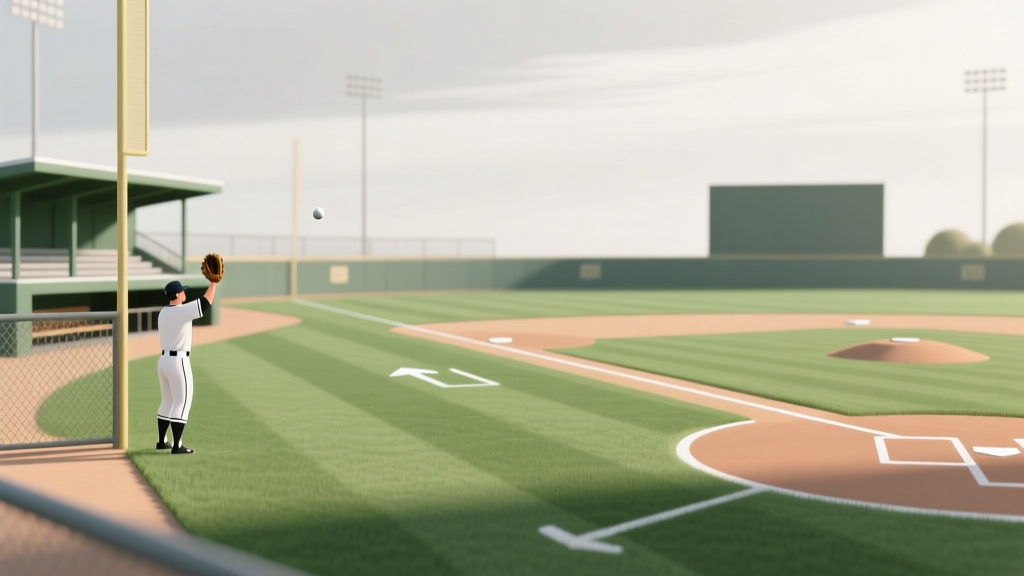
Where Is Left Field in Baseball? Location & Role Explained
In baseball, left field is the area of the outfield located to the batter's left when facing the pitcher, bounded by the third base line and the foul pole in left field.
Understanding the Layout of a Baseball Field
Baseball fields are divided into two main areas: the infield and the outfield. The outfield is the grassy or turf-covered region beyond the infield dirt, extending from the edge of the warning track to the outfield fence. It is further divided into three sections: left field, center field, and right field.
The positioning of these fields is always relative to the perspective of the batter standing at home plate, facing the pitcher’s mound. This means that left field is on the batter’s left side, which corresponds to the third-base side of the field.
Key Boundaries of Left Field
- Defined by the third base foul line extending outward from home plate
- Bordered by the left field foul pole marking the edge of fair territory
- Extends from the edge of the infield grass to the outfield wall
- Positioned between center field and the foul line
Role and Responsibilities of the Left Fielder
The left fielder, assigned jersey number 7 in scorekeeping, plays a critical role in both defensive and offensive strategies. While generally considered less demanding than center or right field, left field requires strong judgment, decent speed, and solid throwing accuracy.
Primary Duties of a Left Fielder
- Catch fly balls hit into left field
- Back up throws from the catcher to third base
- Prevent extra-base hits by quickly retrieving balls off the wall
- Communicate with center fielder and pitcher on ball placement
- Hold runners at second base with strong, accurate throws
Left fielders often deal with more balls hit down the line due to the natural pull tendency of right-handed batters, who make up the majority in baseball.
Notable Dimensions and Variations Across Ballparks
While Major League Baseball (MLB) mandates minimum distance requirements (325 feet from home plate to the foul poles), actual dimensions vary significantly across stadiums. Some parks have deep left fields, while others are shallow, affecting how left fielders position themselves and how hitters approach at-bats.
| Stadium | Team | Left Field Distance (feet) | Notable Feature |
|---|---|---|---|
| Fenway Park | Boston Red Sox | 310 | Green Monster (37 ft wall) |
| Yankee Stadium | New York Yankees | 318 | Short porch in left |
| Oracle Park | San Francisco Giants | 309 | McCovey Cove (water beyond wall) |
| Globe Life Field | Texas Rangers | 330 | Symmetrical outfield |
| Wrigley Field | Chicago Cubs | 355 | Ivy-covered wall |
The data shows that several MLB stadiums, including Fenway Park and Oracle Park, have notably short distances to left field, making them favorable for right-handed power hitters. Conversely, Wrigley Field’s 355-foot left field is among the deepest, requiring left fielders to cover more ground and reducing home run frequency to that side.
These variations influence player positioning, defensive shifts, and even roster decisions—teams may prioritize left fielders with better range or stronger arms depending on their home ballpark.
Strategic Importance of Left Field in Modern Baseball
In today’s game, left field is often occupied by players with strong offensive profiles but slightly less defensive prowess compared to center or right fielders. This trend stems from the increasing emphasis on run production and the use of defensive shifts.
- Offensive-first players are frequently placed in left field to preserve their batting impact while minimizing defensive exposure
- Teams with strong-armed right fielders may allow the left fielder to play shallower, knowing backup throws are reliable
- With the rise of analytics, some teams now prioritize “average exit velocity” and “barrel rate” over traditional defensive metrics for left fielders
Frequently Asked Questions About Left Field in Baseball
Why is left field called left field in baseball?
It is named from the perspective of the batter standing at home plate. When the batter faces the pitcher, left field is on their left-hand side, near third base.
Is left field easier than other outfield positions?
Generally, yes. Center field requires the most range and responsibility, and right field demands the strongest arm. Left field typically sees fewer long throws and less action, making it less demanding defensively.
Who are some famous left fielders in baseball history?
Legendary left fielders include Ted Williams, Barry Bonds, Rickey Henderson, and Carl Yastrzemski. These players combined elite hitting with solid defense, redefining the position’s value.
What number does the left fielder wear in baseball scoring?
The left fielder is assigned the number 7 in official baseball scorekeeping notation.
Can a player move from left field to another position easily?
Yes. Players often transition between outfield positions based on team needs, skill development, or injury. A left fielder with improved speed or arm strength may shift to center or right field, respectively.
More Articles
 Who Plays at the Cotton Bowl? Teams and Events Explained
 Who Owns MMA? Understanding UFC and Global Promotions
 Best Rules for Modern Life: Evidence-Based
 When Is Squash in Season? Tournament & League Schedule Guide
 What Time Is Wrestling On Tonight? 2025 Schedule & Stream
 Who Made Taekwondo? Founder, History & Key Facts
 When Is Wrestling Season? Key Dates by Level
 Who Was the Best Tennis Player of All Time?
 Who Won the 1980 Super Bowl? Steelers vs Rams
 Who Is the Oldest Baseball Player Ever?