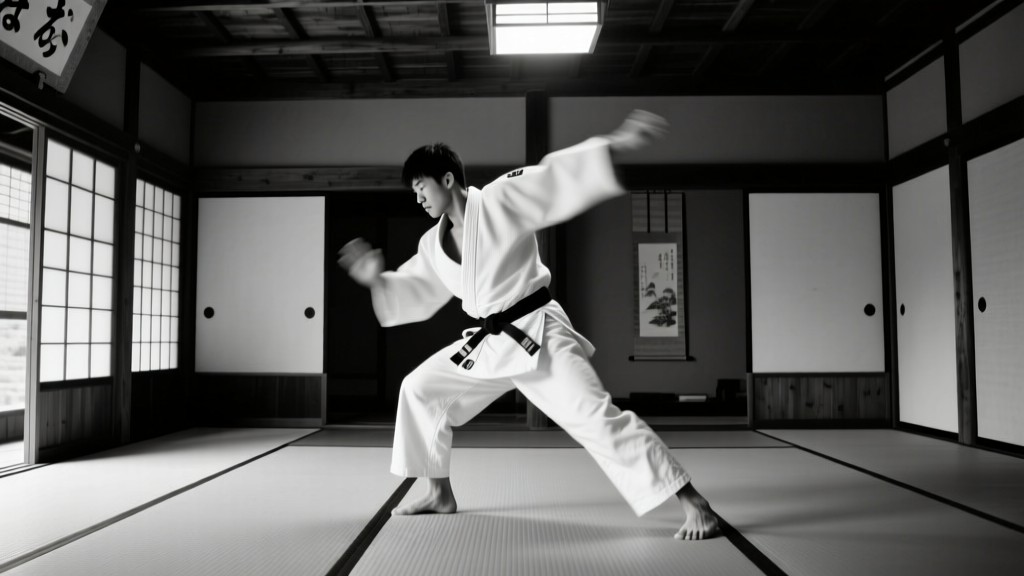
Where Does Judo Come From? Origin and History Explained
Judo originated in Japan in the late 19th century, developed by Jigoro Kano in 1882 as a modern martial art and combat sport emphasizing throws, grappling, and moral development.
The Origins of Judo: A Historical Overview
Founded by Dr. Jigoro Kano in 1882, judo emerged from traditional Japanese jujitsu schools but was reimagined as a systematic method for physical, mental, and moral education. Unlike its predecessor, which focused on battlefield effectiveness, judo emphasized seiryoku zen'yō (maximum efficiency) and jita kyōei (mutual welfare and benefit). Kano established the Kodokan Institute in Tokyo, which remains the global headquarters of judo today.
Key Influences on Judo's Development
- Traditional jujitsu schools such as Tenjin Shinyō-ryū and Kitō-ryū
- Kano’s studies of Western physical education systems
- Philosophical principles rooted in Confucianism and Zen Buddhism
- The Meiji Restoration’s push for modernization of Japanese culture
Core Principles and Techniques of Judo
Judo is built around safe, effective techniques that use an opponent’s force against them. It excludes striking, focusing instead on throws (nage-waza), groundwork (ne-waza), and control methods like pins, joint locks, and chokes (restricted in youth competition).
Fundamental Techniques in Judo
- Nage-waza (Throwing techniques): Includes hip throws (koshi-waza), hand throws (te-waza), and foot sweeps (ashi-waza)
- Katame-waza (Grappling techniques): Subdivided into holds (osaekomi-waza), joint locks (kansetsu-waza), and strangulations (shime-waza)
- Dojo etiquette: Bowing, proper uniform (judogi), and respect for partners are integral to training
Global Spread and Olympic Inclusion
Judo rapidly gained international popularity due to its structured teaching methodology and competitive format. The International Judo Federation (IJF) was founded in 1951 and now includes over 200 national federations. Judo became an official Olympic sport for men at the 1964 Tokyo Games and for women in 1992 at Barcelona.
| Olympic Year | Host City | Men's Events | Women's Events | Total Competitors | Participating Nations |
|---|---|---|---|---|---|
| 1964 | Tokyo | 4 | 0 | 70 | 27 |
| 1988 | Seoul | 10 | 8 (demonstration) | 283 | 54 |
| 1992 | Barcelona | 10 | 8 (official) | 310 | 61 |
| 2020 | Tokyo | 7 | 7 | 393 | 131 |
| 2024 | Paris | 7 | 7 | 386 | 135 |
The data shows a steady increase in global participation despite a reduction in event numbers after 1992 due to IOC weight-class consolidation. The growth in competing nations—from 27 in 1964 to 135 in 2024—highlights judo’s worldwide appeal, especially across Europe, Asia, and Africa.
Modern Judo: Sport, Education, and Lifestyle
Today, judo is practiced by over 20 million people in more than 190 countries. It is used not only as a competitive sport but also in law enforcement training, school physical education programs, and character development curricula. The IJF promotes initiatives like "Judo for Peace" and inclusion programs for athletes with disabilities.
Common Questions About Where Judo Comes From
Who invented judo and when?
Jigoro Kano founded judo in 1882 in Tokyo, Japan, by synthesizing techniques from various jujitsu schools and adding educational and philosophical principles.
Is judo Japanese or Chinese in origin?
Judo is distinctly Japanese in origin. While it shares historical roots with older Asian martial traditions, it was formally created in Japan by Jigoro Kano and is based on Japanese jujitsu systems.
Why was judo created?
Kano created judo to promote physical fitness, discipline, and mutual respect. He wanted a safe, teachable system that could contribute to personal development and social harmony, moving away from the combative focus of traditional jujitsu.
How did judo become an Olympic sport?
Judo debuted as an Olympic sport at the 1964 Tokyo Games after years of lobbying by Kano’s students and the International Judo Federation. Its structured rules and global presence made it suitable for Olympic inclusion.
What does the word 'judo' mean?
'Judo' means 'gentle way' in Japanese. The name reflects the principle of using minimal force and leveraging an opponent’s energy rather than meeting strength with strength.
More Articles
 Golf Ball Released from Rest: Physics Explained
 How Long Is a Rugby Match in the Olympics?
 How Old Is a Golfer? Age Ranges & Trends in Golf
 Why Do Baseball Players Spit? Causes & Facts
 Who Won Super Bowl 1977? Raiders Beat Vikings 32-14
 When Did the 49ers Last Win the Super Bowl?
 Who Has Most Grand Slams in Tennis? (2025 Update)
 Next LSU Baseball Game: Date, Time & How to Watch
 What Channel Is the Baseball World Series On?
 Babe Ruth Baseball Teams: Full Career Breakdown