Where Did Table Tennis Originate? The True Story
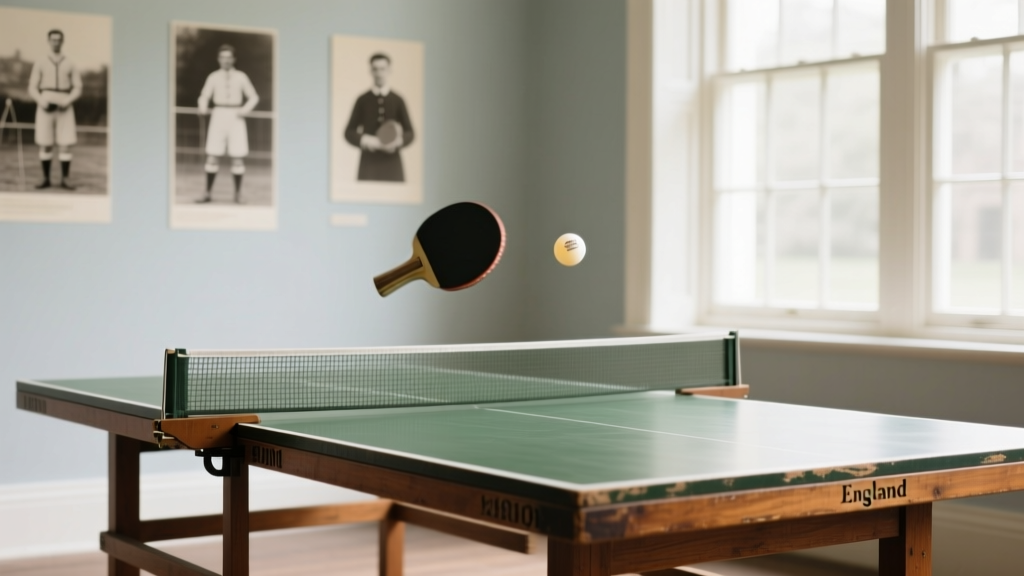
Table tennis originated in England during the late 19th century as an indoor version of lawn tennis, invented by upper-class Victorians seeking after-dinner entertainment.
The Origins of Table Tennis
Table tennis began in England around 1880 as a parlor game played by the Victorian elite. It was initially called 'whiff-whaff' or 'gossima,' using books as rackets and a golf ball or cork for the ball. The sport evolved rapidly with the invention of celluloid balls and specialized equipment.
Key Factors Leading to Its Invention
- Social demand for indoor post-dinner entertainment among British aristocrats
- Limited access to outdoor tennis courts during winter months
- Innovative use of household items like books, nets, and cigar box lids
- Rise of mass-produced celluloid materials enabling consistent ball performance
Evolution of Equipment and Rules
Early versions lacked standardized rules or equipment. Over time, manufacturers developed dedicated rackets, rubber coverings, and lightweight balls that improved playability and speed.
Milestones in Equipment Development
| Year | Innovation | Impact |
|---|---|---|
| 1890 | Jacob Reed & Sons trademarked 'Ping-Pong' | First commercial brand name for table tennis |
| 1901 | Introduction of celluloid ball | Improved bounce consistency and gameplay |
| 1926 | Formation of ITTF (International Table Tennis Federation) | Standardized international rules and competition |
| 1950s | Rubber rackets with sponge layer introduced | Increased spin and speed, transformed playing style |
| 2000 | Balls increased from 38mm to 40mm diameter | Slowed down game slightly for better spectator appeal |
Data shows how technological advancements directly influenced rule changes and global competitiveness. The shift to larger balls in 2000 aimed to reduce rally speeds, making matches more viewer-friendly on television.
Global Spread and Institutionalization
From its English roots, table tennis spread across Europe and Asia by the early 20th century. China emerged as a dominant force after the 1950s, while Japan, Sweden, and later Germany produced world-class players.
| Country | First National Association Founded | ITTF Membership Year | Olympic Gold Medals (1988–2020) |
|---|---|---|---|
| England | 1902 | 1926 | 0 |
| China | 1953 | 1953 | 28 |
| Sweden | 1905 | 1926 | 1 |
| Japan | 1937 | 1947 | 3 |
| Germany | 1925 | 1926 | 1 |
This data highlights the disparity between early adoption and long-term dominance. Despite England’s pioneering role, China became the most successful nation due to state-sponsored training programs and strategic investment in youth development.
Table Tennis Becomes an Olympic Sport
Table tennis was officially included in the Summer Olympics in 1988 in Seoul. Events include men's and women's singles and team competitions, with mixed doubles added in 2020.
Olympic Impact on Popularity
- Increased funding and media coverage worldwide
- Professionalization of player careers
- Expansion of grassroots programs in developing nations
- Greater emphasis on athleticism and training science
Frequently Asked Questions About Where Table Tennis Originated
Where did table tennis originate?
Table tennis originated in England during the 1880s as an indoor adaptation of lawn tennis, created by upper-class Victorians for social entertainment.
Who invented table tennis?
No single inventor is credited, but British entrepreneurs and enthusiasts popularized it. Companies like J. Jaques & Son helped commercialize the game under names like 'Ping-Pong' in the 1890s.
Why was table tennis invented?
It was invented as a convenient indoor alternative to lawn tennis, allowing people to play after dinner in homes without requiring large outdoor space.
How did table tennis get its name?
The name 'ping-pong' comes from the sound of the ball hitting the racket and table. It was trademarked by Parker Brothers, though 'table tennis' remained the official term used by governing bodies.
When did table tennis become popular globally?
Table tennis gained global popularity after World War II, especially when China adopted it as a national sport in the 1950s and began dominating international competitions from the 1960s onward.
More Articles
 When Does PA Archery Season End? 2025 Dates
 How Many Super Bowls Have Gone Into Overtime?
 Most Valuable Baseball Cards in 2025: Top 10 List & Prices
 Where Is the Cotton Bowl Played? Current Venue Explained
 Best Rules for Modern Life: Evidence-Based
 Who Won the Masters Golf Tournament in 2011?
 Why Table Tennis Players Touch the Table: Explained
 How Old Is Rafael Nadal? Age, Career & Legacy in 2025
 How Many Super Bowls Did the Redskins Win?
 Orange Bowl 2025 Start Time, TV Channel, How to Watch