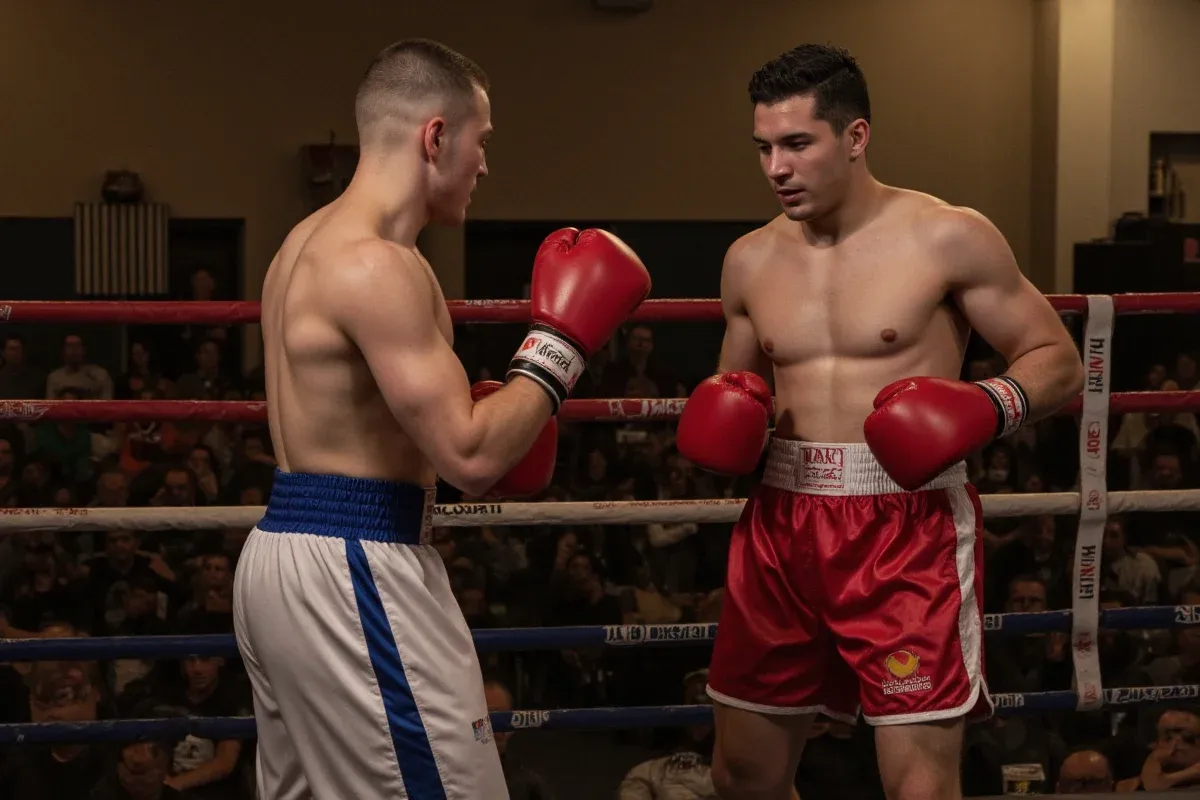
Where Did Boxing Originate? History & Evolution Explained
Boxing originated in ancient Mesopotamia and was later formalized as a competitive sport in ancient Greece, eventually evolving into the modern regulated sport we know today.
The Ancient Origins of Boxing
Boxing traces its roots back thousands of years to early human civilizations. The earliest evidence of boxing-like combat dates to around 3000 BCE in Mesopotamia, particularly in Sumer and Babylon, where depictions of fist fighting were found on stone carvings and reliefs.
Early Evidence Across Civilizations
- Ancient Mesopotamia: Cave paintings and reliefs from 3000 BCE show men engaging in bare-knuckle combat.
- Ancient Egypt: Wall murals from the 3rd millennium BCE depict boxers with padded hands.
- Ancient Greece: Boxing became an official Olympic sport in 688 BCE during the 23rd Olympiad.
- Roman Empire: The sport evolved with the use of leather straps (caestus) that sometimes included metal studs.
Evolution Through the Centuries
After the decline of the Roman Empire, boxing faded in Europe but resurfaced in 17th-century England as a form of entertainment among the upper class. It gradually became more organized, leading to the development of formal rules.
Development of Modern Rules
The transition from brutal bare-knuckle fighting to regulated sport began in the 18th and 19th centuries.
- 1743 – Broughton's Rules: Introduced by Jack Broughton, these were the first standardized rules, including a 30-second count after a knockdown.
- 1838 – London Prize Ring Rules: Formalized the ring size and introduced rounds.
- 1867 – Marquess of Queensberry Rules: Established three-minute rounds, gloves, and ten-second counts—forming the foundation of modern boxing.
| Era | Location | Key Features | Year Introduced |
|---|---|---|---|
| Ancient | Mesopotamia | Bare-knuckle fighting, stone reliefs | ~3000 BCE |
| Ancient | Greece | Olympic sport, no gloves, continuous until submission | 688 BCE |
| Roman | Roman Empire | Leather straps with metal (caestus), gladiatorial combat | 1st Century BCE |
| Modern | England | Broughton’s Rules, prize fighting | 1743 |
| Modern | United Kingdom | Marquess of Queensberry Rules, gloves, timed rounds | 1867 |
| Contemporary | Global | Professional leagues, amateur Olympics, weight classes | 20th Century |
The table illustrates how boxing evolved from primitive combat to a globally regulated sport. Key transitions occurred in Greece and England, where cultural and legal frameworks helped shape modern standards. The adoption of gloves and timed rounds significantly reduced fatalities and increased fairness.
Global Spread and Institutionalization
From England, boxing spread across the British Empire and into the United States. By the late 19th century, it had gained popularity in America, especially among immigrant communities. The formation of national and international governing bodies such as the New York State Athletic Commission (1920) and the International Boxing Association (AIBA, 1946) further standardized the sport.
Today, boxing is practiced professionally and amateurly worldwide, with major events like the Olympics and professional world championships drawing global audiences.
Frequently Asked Questions About the Origin of Boxing
Where did boxing originate?
Boxing originated in ancient Mesopotamia around 3000 BCE, with the earliest visual evidence found in Sumerian and Babylonian artifacts depicting fist fights.
When did boxing become an Olympic sport?
Boxing became an official Olympic sport in 688 BCE during the 23rd ancient Olympic Games in Greece.
Who invented modern boxing rules?
Modern boxing rules were established by the Marquess of Queensberry in 1867, which introduced gloves, three-minute rounds, and the ten-count knockout rule.
Was boxing always a gloved sport?
No, early forms of boxing in Greece and Rome were fought bare-knuckled or with leather wrappings. Gloves were introduced in the 18th century and became standard under the Marquess of Queensberry Rules.
How did boxing evolve from ancient times to today?
Boxing evolved from ritualistic and military training in ancient civilizations to a regulated sport through formal rules in 18th- and 19th-century England, eventually becoming a global professional and Olympic discipline.
More Articles
 Who Is the World Heavyweight Boxing Champion in 2025?
 When Are Bowl Games Announced? Key Dates & Schedule
 What Does a Red Card Mean in Volleyball?
 How to Clean Sports Equipment: Science Guide
 Who Has Lost the Most Super Bowls? Patriots Hold Record
 Where Is Torrey Pines Golf Course Located?
 What Number Is Jude Bellingham? Real Madrid Jersey Revealed
 Super Bowl Start Time Today: 6:30 PM ET
 Girls Volleyball Net Height: Official 2026 Standards
 How Many Super Bowls Did Roger Staubach Win?