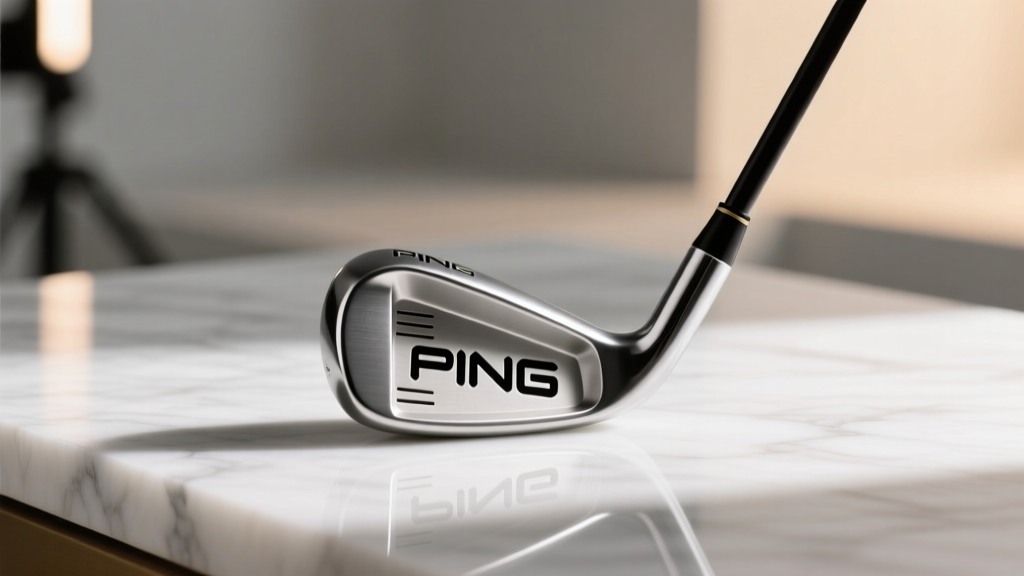
Where Are PING Golf Clubs Made? | USA Manufacturing Facts
PING golf clubs are primarily manufactured in Phoenix, Arizona, USA, where the company operates a state-of-the-art engineering and production facility. While some components may be sourced globally, final assembly, customization, and quality control occur at PING's headquarters, ensuring precision and consistency across all models.
History and Manufacturing Origins of PING Golf Clubs
Founded in 1959 by Karsten Solheim, an engineer with a passion for improving golf equipment, PING began in a garage in Redwood City, California. The brand quickly gained recognition for its innovative putter designs, especially the Anser model, which remains iconic decades later. Over time, PING moved its operations to Phoenix, Arizona, where it established a dedicated manufacturing campus that now serves as the global hub for club production.
Key Milestones in PING’s Manufacturing Evolution
- 1959: First PING putter created by Karsten Solheim.
- 1961: Relocated to larger facilities in Palo Alto, California.
- 1980s: Expanded into full-line golf club manufacturing.
- 1996: Moved headquarters and primary manufacturing to Phoenix, Arizona.
- Present: All PING clubs are custom-built in Phoenix with advanced robotics and CNC machining.
Where Are PING Golf Clubs Made? A Detailed Look
The vast majority of PING golf clubs—irons, drivers, fairway woods, wedges, and putters—are engineered, assembled, and tested at the company's 400,000-square-foot campus in Phoenix, Arizona. This vertically integrated facility allows PING to maintain strict control over design, materials, tolerances, and performance testing.
Why PING Keeps Production in the USA
- Quality Control: In-house manufacturing ensures every club meets exact specifications.
- Customization: PING is known for offering extensive fitting options (lie angle, shaft length, grip type), best handled locally.
- Innovation Speed: Rapid prototyping and feedback loops between engineers and production teams accelerate product development.
- Brand Identity: "Made in USA" reinforces trust and premium positioning in the golf market.
| Product Line | Primary Manufacturing Location | Material Sourcing | Custom Fit Available |
|---|---|---|---|
| G440 Irons | Phoenix, AZ, USA | Japan & USA (steel), USA (aluminum) | Yes |
| G430 Driver | Phoenix, AZ, USA | South Korea (titanium face), USA (carbon crown) | Yes |
| GSeries Wedges | Phoenix, AZ, USA | USA & Germany (soft carbon steel) | Yes |
| Anser Putter | Phoenix, AZ, USA | USA (stainless steel) | Yes |
| Nylon Bag | China | Global (fabric, zippers) | No |
The data shows that while raw materials for PING clubs come from various countries—including Japan, South Korea, and Germany—the final manufacturing and assembly take place exclusively in Phoenix, Arizona. This hybrid sourcing model enables PING to leverage high-grade international materials while maintaining domestic craftsmanship and customization capabilities. Accessories like bags and apparel are outsourced, but core performance products remain US-made.
Technology and Innovation Behind PING’s Manufacturing Process
PING invests heavily in research and development, operating one of the most advanced golf R&D centers in the world. Their Phoenix facility includes:
- CNC milling machines for precise clubhead shaping
- Robotics for consistent welding and finishing
- Digital fitting systems (PING nFlight)
- Launch monitor testing bays for real-time performance validation
This integration of technology ensures that each club not only meets design specs but also performs optimally under real-world conditions.
Frequently Asked Questions About Where PING Golf Clubs Are Made
Are PING golf clubs made in the USA?
Yes, all PING golf clubs—including irons, drivers, wedges, and putters—are manufactured at the company’s headquarters in Phoenix, Arizona. Final assembly, fitting, and quality assurance are completed domestically, even if some raw materials are imported.
Is PING still family-owned?
Yes, PING remains a family-owned company. After founder Karsten Solheim, leadership passed to his son John Solheim, and currently his grandson Ryan Solheim holds key leadership roles in product development and innovation.
Do PING clubs have a serial number for authenticity?
Yes, every PING iron and wedge set includes a laser-etched serial number for traceability and authenticity. Drivers and putters also feature unique identifiers linked to purchase records and fitting data.
Can I tour the PING manufacturing facility?
Yes, PING offers guided factory tours at their Phoenix, Arizona campus. These tours showcase the engineering, robotics, and craftsmanship behind their clubs and must be scheduled in advance through the official PING website.
Why does PING manufacture in the USA when others offshore production?
PING prioritizes precision, customization, and rapid innovation—all of which benefit from centralized, domestic manufacturing. Unlike mass-market brands, PING builds clubs to individual player specs, making local production more efficient and reliable.
More Articles
 Did Julio Jones Win a Super Bowl? Career Facts
 How Old Is Kevin Owens the Wrestler? Age & Career Facts
 Most Super Bowl Rings by a QB: Tom Brady's 7 Titles
 How Many Rounds in Tennis? Match & Tournament Explained
 Super Bowl LVIII Games Until: Full Playoff Breakdown
 Where and When Was Volleyball Invented? | Complete History
 What Does a Draw Mean in Boxing? Explained
 Rose Bowl Game 2025 Start Time: What Time Does It Begin?
 Who Won the Super Bowl in 2013? Full Recap & Highlights
 What Channel Does the Super Bowl Come On in 2025?