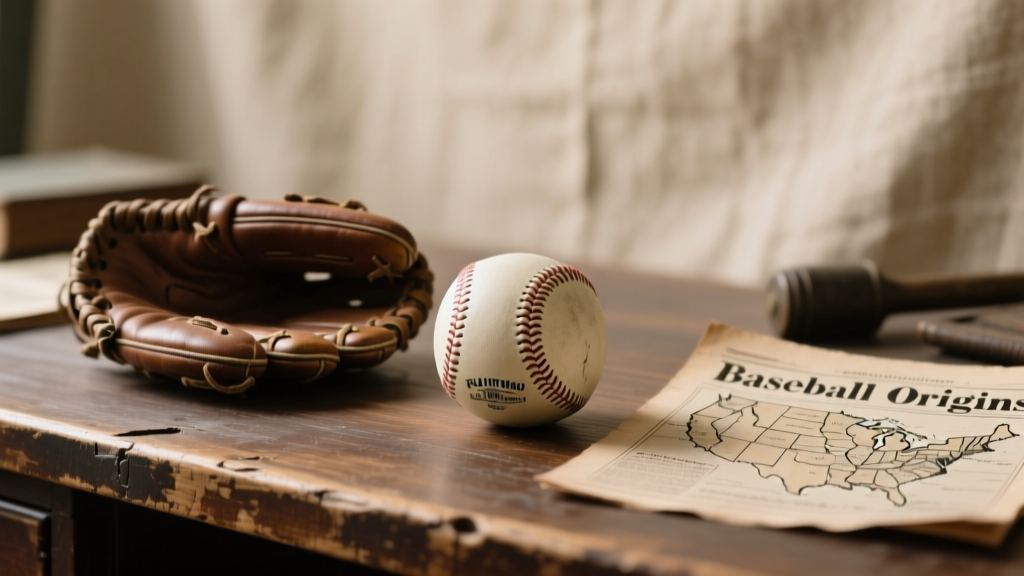
Where and When Did Baseball Originate? Facts & History
Baseball originated in the United States in the mid-19th century, with the first recorded game played in Hoboken, New Jersey, on June 19, 1846, under rules formalized by Alexander Cartwright and the Knickerbocker Base Ball Club of New York.
The Origins of Baseball: A Historical Overview
While early bat-and-ball games existed in England, such as rounders, the modern sport of baseball evolved in the United States. The version we recognize today began taking shape in the 1840s when organized rules were established. This marked a shift from informal play to a codified team sport.
Key Factors in Baseball's Development
- The formation of the Knickerbocker Club in 1845
- Standardization of field dimensions and gameplay rules
- Use of a smaller, harder ball and fixed base paths
- Rise of amateur clubs in New York City and surrounding areas
Debunking the Abner Doubleday Myth
A long-standing myth credits Civil War general Abner Doubleday with inventing baseball in Cooperstown, New York, in 1839. However, historical evidence does not support this claim. The myth was popularized by the 1907 Mills Commission, which lacked credible documentation.
Why the Doubleday Story Persisted
- National desire for an American origin story
- Lack of widely known alternative narratives at the time
- Establishment of the National Baseball Hall of Fame in Cooperstown in 1939
Evolution of Early Baseball Rules
Before Cartwright’s influence, games varied significantly between regions and teams. The Knickerbocker Rules of 1845 introduced foundational elements still used today:
- Nine-inning games
- Nine players per side
- Three-strike rule
- Prohibition of throwing the ball at runners to record outs (no “soaking” or “plugging”)
| Year | Event | Location | Significance |
|---|---|---|---|
| 1845 | Knickerbocker Rules adopted | New York, NY | First standardized rules for modern baseball |
| 1846 | First recorded game | Hoboken, NJ (Elysian Fields) | Knickerbockers vs. New York Nine |
| 1857 | Formation of National Association of Base Ball Players | New York, NY | First governing body for the sport |
| 1869 | First professional team (Cincinnati Red Stockings) | Cincinnati, OH | All players paid, marking pro era |
| 1871 | First professional league founded | National Association of Professional Base Ball Players | Predecessor to MLB |
The timeline shows a clear progression from informal recreation to organized competition. Key milestones like the 1845 rules and the 1869 professional team laid the foundation for Major League Baseball. The concentration of early developments in the Northeast highlights urban centers as incubators for the sport.
Global Influences and Similar Games
Baseball did not emerge in isolation. It shares ancestry with older English games like rounders, cricket, and town ball. These sports contributed mechanics such as batting, running bases, and fielding roles.
Comparative Features of Predecessor Games
- Rounders: Used a softer ball and underhand pitching; popular among children in England
- Cricket: Shared concepts of innings, outs, and batting order
- Town Ball: Played in Philadelphia and parts of New England with variable rules and team sizes
Despite these roots, American innovation—especially through the Knickerbocker Club—transformed these elements into a distinct national pastime.
Frequently Asked Questions About Baseball Origins
Where was the first official baseball game played?
The first officially recorded baseball game took place on June 19, 1846, in Hoboken, New Jersey, at the Elysian Fields. The match was between the New York Nine and the Knickerbocker Base Ball Club, with the Nine winning 23–1.
Who invented baseball?
No single person invented baseball. While Abner Doubleday is often mistakenly credited, Alexander Cartwright is recognized as a key figure for codifying the rules in 1845. He helped standardize the game’s structure, earning him induction into the Baseball Hall of Fame.
When did baseball become professional?
Baseball turned professional in 1869 when the Cincinnati Red Stockings became the first team to openly pay all its players. This led to the formation of the National Association of Professional Base Ball Players in 1871, the first professional league.
Was baseball influenced by cricket?
Yes, baseball borrowed several structural elements from cricket, including the concept of innings, batting order, and field positions. However, baseball evolved to feature faster pacing, smaller fields, and continuous action, distinguishing it as a unique sport.
How did baseball spread across the United States?
Baseball spread rapidly during the Civil War, as soldiers from different regions played the game in camps. After the war, returning veterans formed clubs in their hometowns. Newspapers and railroads further accelerated its popularity by enabling score reporting and intercity travel for matches.
More Articles
 How Much Were Super Bowl 2025 Tickets?
 How Many Super Bowls Do the Packers Have? 4 Titles Explained
 What Do Super Bowl Winners Receive in 2025?
 When Does NCAA Baseball Start in 2025? Key Dates & Schedule
 Who Invented Boxing? Origins & Key Innovators
 Where to Play Table Tennis Near Me: Best Local Spots
 How Long Is the Super Bowl Usually? Full Duration Explained
 Can Am Badminton: Top North American Tournament Explained
 Who Owns TNA Impact Wrestling in 2025?
 Which Teams Are in the Super Bowl? Full Breakdown