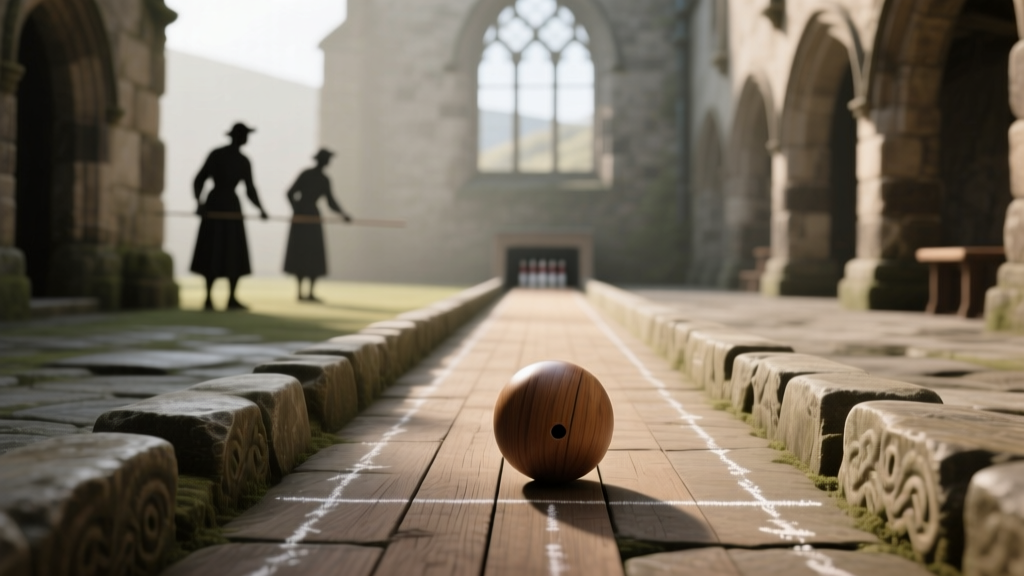
When and Where Was Bowling Invented? Origins Revealed
Bowling was first invented over 7,000 years ago in ancient Egypt, with evidence found in a child's tomb near Memphis dating back to 5200 BCE. This early form of bowling involved rolling stones toward objects, resembling modern skittles or ninepin bowling.
Origins of Bowling: Ancient Beginnings
The earliest known version of bowling traces back to ancient Egypt around 5200 BCE. Archaeologist William Matthew Flinders Petrie discovered primitive bowling equipment in a child's burial tomb near Memphis, including stone balls and pins made from limestone.
Evidence from Ancient Civilizations
- Stone balls and pins were arranged in a triangular formation, similar to modern setups.
- These artifacts suggest the game had ritualistic or spiritual significance, possibly symbolizing life after death. \li>The game likely evolved from earlier throwing or rolling games used for religious ceremonies.
Evolution Across Continents
Bowling-like games spread across Europe and Asia through trade and cultural exchange. By the Middle Ages, variations appeared in Germany, England, and the Netherlands.
Key Historical Milestones
- 3rd century BCE: Romans adapted Egyptian-style rolling games using cannonball-sized stones.
- 300 CE: Germans practiced "Kegel" games as part of religious rituals symbolizing sin destruction.
- 14th century: English law banned bowling to preserve archery skills during wartime.
- 1840s: First standardized ninepin lanes opened in New York City.
- 1901: American Bowling Congress founded, formalizing rules and promoting sport integrity.
Modern Bowling Development
The transition from outdoor lawn games to indoor alley systems marked a turning point. The invention of automatic pinsetters in the 1950s revolutionized accessibility and popularity.
Technological Advancements
- Introduction of synthetic lanes replaced wooden surfaces for consistency.
- Urethane and reactive resin bowling balls improved hook potential and scoring.
- Digital scoring systems enhanced player experience and league management.
| Year | Event | Location | Significance |
|---|---|---|---|
| 5200 BCE | Earliest known bowling set | Memphis, Egypt | Discovery by Flinders Petrie; precursor to all modern forms |
| 300 CE | German Kegel game | Saxon regions | Ritual use; influenced ninepin development |
| 1366 | King Edward III bans bowling | England | Military focus on archery over recreation |
| 1848 | Ninepin alleys legalized | New York, USA | Birth of organized American bowling |
| 1952 | AMF introduces pinsetter machine | United States | Boosted commercial viability and participation rates |
| 2023 | Global bowling market value | Worldwide | $3.8 billion industry with over 100 million players |
The data shows how bowling evolved from ancient ritualistic practice into a global commercial sport. The introduction of automation in the mid-20th century directly correlated with rapid growth in participation and economic impact. Today’s $3.8 billion market reflects enduring appeal across generations and cultures.
Global Spread and Cultural Impact
Bowling became especially popular in the United States during the 20th century, but also gained traction in Japan, Finland, and parts of Latin America. It has been featured in films, music, and even attempted Olympic inclusion.
International Variants
- Ten-pin bowling: Dominant in North America and widely played globally.
- Nine-pin bowling: Traditional in Central Europe, especially Austria and Slovenia.
- Duckpin & Candlepin: Regional U.S. variants with shorter, lighter balls.
Frequently Asked Questions About Bowling Invention
Where was bowling originally invented?
Bowling was originally invented in ancient Egypt around 5200 BCE. Archaeological findings near Memphis revealed stone balls and pins arranged like a primitive bowling setup, making it the oldest known ancestor of modern bowling.
When did bowling become a modern sport?
Bowling became a modern organized sport in the late 19th and early 20th centuries, particularly after the founding of the American Bowling Congress in 1895 and the introduction of mechanical pinsetters in the 1950s.
Who invented the game of bowling?
No single person invented bowling. It evolved over thousands of years from ancient rolling games in Egypt and Germany. Modern ten-pin bowling developed collectively in the U.S. during the 1800s.
Was bowling ever illegal?
Yes, bowling was banned in England in 1366 by King Edward III because he believed it distracted soldiers from practicing archery, which was vital for national defense at the time.
How did bowling spread to America?
German immigrants brought Kegel games to the U.S. in the 1800s. These evolved into ninepin and later ten-pin bowling, which became popular in urban areas like New York and Cincinnati before spreading nationwide.
More Articles
 How Many Super Bowls Do the Steelers Have? 6 Wins Explained
 What Year Did Green Bay Win the Super Bowl?
 Who Is the World Heavyweight Champion in Boxing?
 Who Won Super Bowl 1992? Full Breakdown & Highlights
 What Channel Is LSU Baseball On Today? Live Stream Info 2025
 How Much Did a Super Bowl Ticket Cost in 2025?
 What Does Total Games Mean in Tennis?
 How Many Super Bowls Has Mahomes Won? (2025 Update)
 Can Can Wonderland Mini Golf: What You Need to Know
 Who Won in Tennis Today? Djokovic & Šwiatek Claim Titles