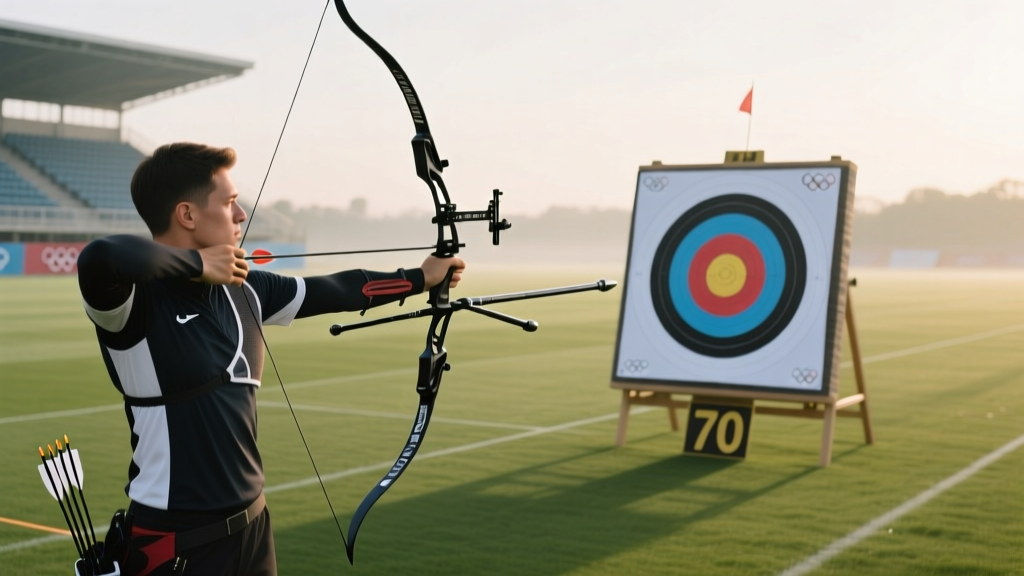
Olympic Archery Distance: 70 Meters Explained
In Olympic archery, the standard competition distance is 70 meters (approximately 76.55 yards) for both men and women in the recurve events, which are the only type of archery featured in the Olympic Games.
Understanding Olympic Archery Distance
The 70-meter distance is a defining feature of modern Olympic archery. This standardized range ensures consistency across competitions and challenges athletes to demonstrate precision, focus, and technical mastery under pressure. The target face has a diameter of 122 cm, with the 10-ring measuring just 12.2 cm in diameter—making it extremely difficult to hit consistently from 70 meters.
Why Is the Distance Set at 70 Meters?
- The 70-meter distance was officially adopted by World Archery (formerly FITA) in 1985 and has been used in every Summer Olympics since.
- This distance balances challenge and fairness, allowing athletes to showcase skill while maintaining spectator engagement.
- It aligns with international standards, ensuring uniformity across global competitions including World Championships and Continental Games.
Archery Event Formats and Distances
Olympic archery includes individual, team, and mixed team events—all contested at the same 70-meter distance. Only recurve bows are permitted; compound bows are not part of the Olympic program.
Types of Olympic Archery Competitions
- Individual Events: Each archer shoots 72 arrows during ranking rounds from 70 meters.
- Team Events: Teams of three archers (men or women) compete using combined scores.
- Mixed Team Events: Introduced in Tokyo 2020, this format pairs one male and one female archer.
| Event Type | Distance (meters) | Target Diameter (cm) | 10-Ring Diameter (cm) | Rounds Shot |
|---|---|---|---|---|
| Men's Individual | 70 | 122 | 12.2 | 72 arrows (ranking) |
| Women's Individual | 70 | 122 | 12.2 | 72 arrows (ranking) |
| Men's Team | 70 | 122 | 12.2 | 216 arrows (ranking) |
| Women's Team | 70 | 122 | 12.2 | 216 arrows (ranking) |
| Mixed Team | 70 | 122 | 12.2 | 4 arrows per match |
The table above confirms that all Olympic archery disciplines use the same 70-meter shooting distance and identical target specifications. This uniformity emphasizes skill parity across genders and event types. The small size of the 10-ring relative to the distance amplifies the need for exceptional accuracy and mental control.
Equipment and Target Specifications
Olympic archers use recurve bows with draw weights typically ranging between 40–50 pounds for men and 26–35 pounds for women. Arrows are made from lightweight carbon or aluminum-carbon composites.
Target Setup Details
- The target butt is placed so the center of the 10-ring is 132 cm above the ground.
- Targets are arranged in a vertical line when multiple archers shoot simultaneously.
- Electronic scoring systems are increasingly used in major events for instant feedback and accuracy verification.
Frequently Asked Questions About Olympic Archery Distance
What is the distance for Olympic archery?
The official distance for all Olympic archery events is 70 meters (about 76.55 yards) for both men and women competing in recurve disciplines.
Do men and women shoot from the same distance in Olympic archery?
Yes, both male and female archers compete from the same 70-meter distance in Olympic archery, ensuring equal competitive conditions based on standardized rules set by World Archery.
Are compound bows used in Olympic archery?
No, compound bows are not used in the Olympic Games. Only recurve bows are permitted in Olympic archery competitions, although compound archery is featured in other international events.
How big is the Olympic archery target?
The Olympic archery target has a total diameter of 122 cm, with a 10-ring measuring just 12.2 cm in diameter—roughly the size of an apple—making precise aiming critical from 70 meters away.
Has the Olympic archery distance changed over time?
The current 70-meter distance was standardized in 1985. Prior to that, distances varied, including 60, 80, 90, and even 100 meters in early 20th-century Olympics. The shift to 70 meters brought consistency and improved safety and logistics.
More Articles
 Greatest Baseball Players of All Time: Top 20 (2026)
 When Was Cricket Founded? Origins & History
 Who Won Super Bowl 1994? 49ers Beat Dolphins 38-16
 Where Is the Cotton Bowl Played? Current Venue Explained
 Who Is the Boxing Heavyweight Champion in 2025?
 Badminton Court Size: Official Dimensions Explained
 Australian Open 2025 Dates: When and Where
 When Did Serena Williams Start Playing Tennis?
 What's in the Olympic Gift Box Athletes Receive?
 When Is Tennis Season? Pro & Amateur Schedule Explained