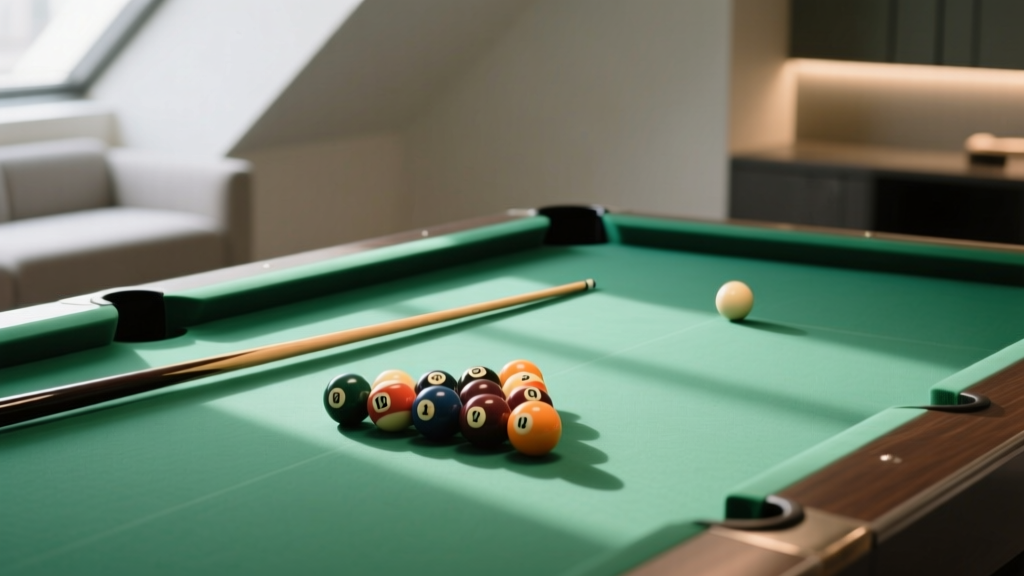
Difference Between Pool and Billiards Explained
Pool and billiards are often used interchangeably, but they refer to different cue sports: pool is a subset of billiards played on a table with six pockets, using 15 object balls and a cue ball, while billiards broadly includes all cue sports, including pocketless table games like carom billiards.
Understanding the Key Differences Between Pool and Billiards
The confusion between pool and billiards stems from casual usage, but in competitive and technical contexts, the distinction is clear. "Billiards" is an umbrella term for all cue sports, including games played on tables with or without pockets. "Pool," specifically, refers to pocket billiards—games like eight-ball, nine-ball, and straight pool played on a six-pocket table with numbered object balls.
Origins and Terminology
The word "billiards" originates from the French "billiard," meaning "stick or cue," and historically referred to games played on pocketless tables. Over time, as pocketed tables became popular, especially in the U.S., the term "pool" emerged to describe these games, named after "poolrooms" where people gathered to play.
- Billiards: General term covering all cue sports, including carom, snooker, and pool.
- Pool: Refers specifically to pocket billiards, most commonly eight-ball and nine-ball.
- Carom billiards: Played on a table without pockets; players score by striking both object balls with the cue ball.
- Snooker: A form of billiards played with 21 balls (15 red, 6 colored), popular in the UK and Commonwealth countries.
Gameplay and Equipment Comparison
Differences in rules, equipment, and table design clearly separate pool from other forms of billiards.
Table Design and Dimensions
Pocket billiards (pool) tables have six pockets—one at each corner and one at the middle of each long side. Carom billiards tables have no pockets. Snooker tables are larger than standard pool tables and use smaller balls with tighter pockets.
Balls Used
- Pool: Uses 16 balls—1 cue ball and 15 object balls (7 solids, 7 stripes, 1 black 8-ball in eight-ball).
- Carom billiards: Uses only 3 balls—white, yellow, and red; the two white/cue balls distinguish opponents. \li>Snooker: Uses 22 balls, including 15 reds, 6 colored balls, and 1 cue ball.
Detailed Comparison: Pool vs. Other Billiards Games
| Feature | Pool (Eight-Ball) | Carom Billiards | Snooker |
|---|---|---|---|
| Table Size | 7 ft, 8 ft, or 9 ft (standard: 4.5 x 9 ft) | 10 x 5 ft (regulation) | 12 x 6 ft (regulation) |
| Number of Balls | 16 | 3 | 22 |
| Pockets | 6 | 0 | 6 |
| Ball Diameter | 2.25 inches (57 mm) | 2.24 inches (56.8 mm) | 2.06 inches (52.5 mm) |
| Objective | Call your pocket and pot all assigned balls before 8-ball | Score points by caroming cue ball off both object balls | Alternate between red and colored balls, highest score wins |
| Popular Regions | North America, Europe | France, Japan, Belgium | UK, India, Pakistan, Australia |
The data shows that while pool is the most accessible and widely played cue sport globally, carom billiards emphasizes precision on pocketless tables, and snooker requires greater tactical depth due to its scoring system and table size. The variation in ball size and table dimensions directly impacts gameplay strategy and skill development.
Rules and Scoring Systems
Each game has distinct rulesets governed by international federations:
- Pool: Governed by the World Pool-Billiard Association (WPA). In eight-ball, players must legally pocket all their group (solids or stripes) before sinking the 8-ball.
- Carom billiards: Three-cushion billiards is the most popular variant; players must contact three rails before hitting the second object ball to score.
- Snooker: Players alternate between potting a red and a color; colors are respotted until all reds are cleared.
Frequently Asked Questions About Pool and Billiards
Is pool the same as billiards?
No, pool is a type of billiards. Billiards refers to all cue sports, while pool specifically means pocket billiards games like eight-ball and nine-ball.
Why is it called pool if it's billiards?
The term "pool" comes from "poolrooms," where people would gather to bet (or pool money) on games, eventually associating the space with pocket billiards.
What's the difference between billiards, pool, and snooker?
Billiards is the overarching category. Pool is played on a six-pocket table with 15 object balls. Snooker uses 21 balls on a larger table with smaller pockets and more complex scoring.
Do billiards tables always have pockets?
No. Traditional carom billiards tables do not have pockets. Only pool and snooker tables include pockets.
Which is harder: pool or carom billiards?
Carom billiards is generally considered more technically challenging due to the lack of pockets and the precision required for multi-rail shots.
More Articles
 Tennessee Baseball Play Today at 7 PM ET
 How Many Super Bowls Have the Chicago Bears Won?
 How Is Wrestling Scored? Point System Explained
 Tom Brady: Most Super Bowl Wins by a QB
 Golf Channel on DIRECTV: Channel Number & Streaming Info
 Who Has Won a Grand Slam in Golf? Full Breakdown
 Performance vs Sports: Overlapping Principles
 Who Got Super Bowl MVP? Patrick Mahomes Wins LVII Honor
 How Much Does a Boxer Weigh? Weight Classes & Facts
 Who Created Taekwondo? The Founder Revealed