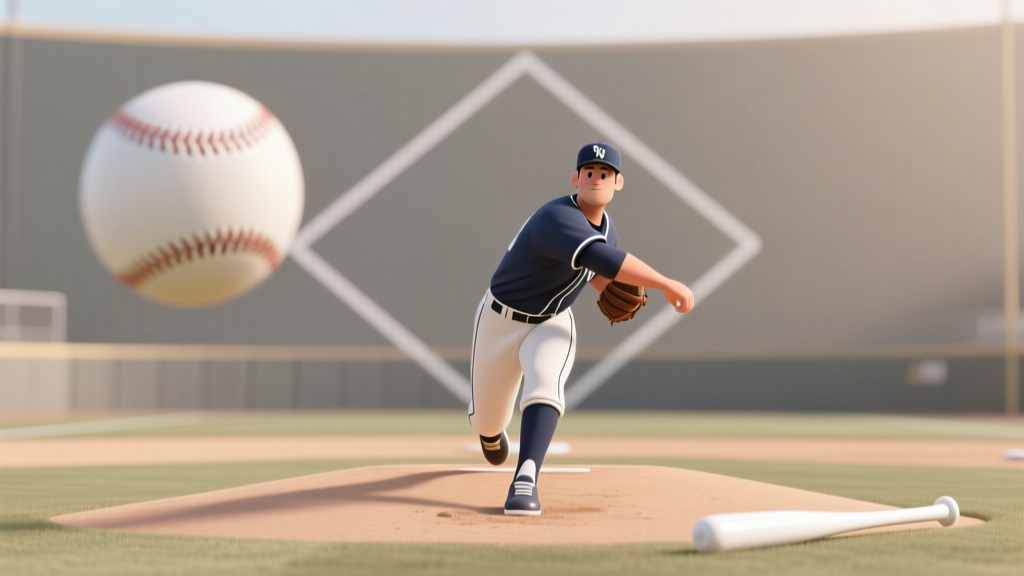
What Does No Hitter Mean in Baseball? Explained
A no-hitter in baseball occurs when a pitcher or pitching staff prevents the opposing team from recording a single hit during the entire game, which must last at least nine innings. This rare feat highlights exceptional skill, control, and often teamwork, as fielders play a crucial role in preserving the no-hitter by making key defensive plays.
What Is a No-Hitter in Baseball?
In Major League Baseball (MLB), a no-hitter is an official game of at least nine innings in which one team does not get any hits—such as singles, doubles, triples, or home runs—off the opposing pitcher(s). While walks, hit-by-pitches, errors, and stolen bases are allowed, no batter may reach base via a hit.
Key Conditions for a No-Hitter
- The game must last a minimum of nine innings (or eight and a half if the home team is ahead).
- No hits can be recorded by the opposing team.
- No-hitters thrown by multiple pitchers (combined no-hitters) are officially recognized.
- If a team loses a no-hitter in extra innings, it still counts as official if nine innings were completed without a hit.
Different Types of No-Hitters
Not all no-hitters are created equal. The classification depends on whether it's a solo effort or combined, and whether it's also a shutout.
Solo No-Hitter
A single pitcher throws all innings without allowing a hit. This is the most celebrated form of no-hitter.
Combined No-Hitter
Multiple pitchers contribute to the no-hit performance. MLB officially recognized combined no-hitters starting in 1991.
Perfect Game
The rarest form: no hits, no walks, no errors, no hit batters—27 batters up, 27 batters out. Every perfect game is a no-hitter, but not every no-hitter is a perfect game.
Historical Significance and Notable Examples
No-hitters are among the most prestigious achievements in baseball. Nolan Ryan holds the record with seven career no-hitters. More recently, the trend of combined no-hitters has increased due to strategic bullpen usage.
| Year | Player(s) | Team | Type | Opponent |
|---|---|---|---|---|
| 2023 | Joe Musgrove | San Diego Padres | Solo | Texas Rangers |
| 2021 | Spencer Turnbull | Detroit Tigers | Solo | Seattle Mariners |
| 2021 | Cristian Javier, et al. | Houston Astros | Combined | NY Yankees |
| 2012 | Felix Hernandez | Seattle Mariners | Solo | Tampa Bay Rays |
| 1994 | Kenny Rogers | Texas Rangers | Solo (Perfect Game) | California Angels |
The data shows a rise in combined no-hitters in recent years, reflecting evolving pitching strategies. Solo no-hitters remain more common, but collaborative efforts highlight modern bullpen specialization. Perfect games are exceedingly rare, with only 23 in MLB history.
Why Are No-Hitters So Rare?
Several factors contribute to the rarity of no-hitters:
- High offensive talent: MLB hitters are among the best in the world.
- Pitcher fatigue: Maintaining elite stuff over nine innings is physically demanding.
- Defensive miscues: A single error can break up a no-hitter or allow a runner to reach.
- Luck: Soft line drives that become hits or well-placed balls just out of reach affect outcomes.
How No-Hitters Impact Player Legacy
Throwing a no-hitter elevates a pitcher’s status, even if they aren’t perennial All-Stars. It demonstrates dominance and composure under pressure. For veterans like Joe Musgrove, it validates years of hard work. For younger pitchers, it marks a breakout moment.
Teams often celebrate no-hitter performances with special merchandise and media coverage, further amplifying their cultural significance.
Frequently Asked Questions About No-Hitters
Does a no-hitter have to be a shutout?
No. A no-hitter does not require a shutout. Runs can score via walks, errors, wild pitches, or sacrifice flies. As long as no hits are allowed, it qualifies as a no-hitter.
Can a team lose a no-hitter?
Yes. If a pitcher allows no hits but their team loses due to unearned runs, the game is still considered a no-hitter. However, the pitcher is credited with a loss, which is extremely rare.
Has anyone ever thrown a postseason no-hitter?
No official no-hitter has been recorded in MLB postseason history as of 2025. Several near-misses have occurred, including Roy Halladay’s 2010 playoff gem, which was a no-hitter through eight innings.
Who has the most no-hitters in MLB history?
Nolan Ryan holds the record with seven no-hitters over his 27-year career. He threw them across four different teams: the Angels, Astros, and Rangers.
How many combined no-hitters have there been?
As of 2025, there have been 16 combined no-hitters in MLB history. The first was recognized in 1991, though several occurred earlier but were not officially acknowledged until retroactive review.
More Articles
 How Big Is a Baseball Field? Dimensions & Sizes by Level
 When Do Baseball Games End? Timing Explained
 How Many Players on a Baseball Team on the Field?
 How Old Is Tennis Player Nadal in 2025?
 How Long Are Rounds in Boxing? Full Breakdown
 Who Invented Fencing? The Origin of Modern Fencing
 Where to Watch Peach Bowl 2025 Live on TV & Stream
 Olympic Archery Distance: How Far Is the Target?
 How Many Acres for a Baseball Field? Full Breakdown
 How Does Table Tennis Scoring Work?