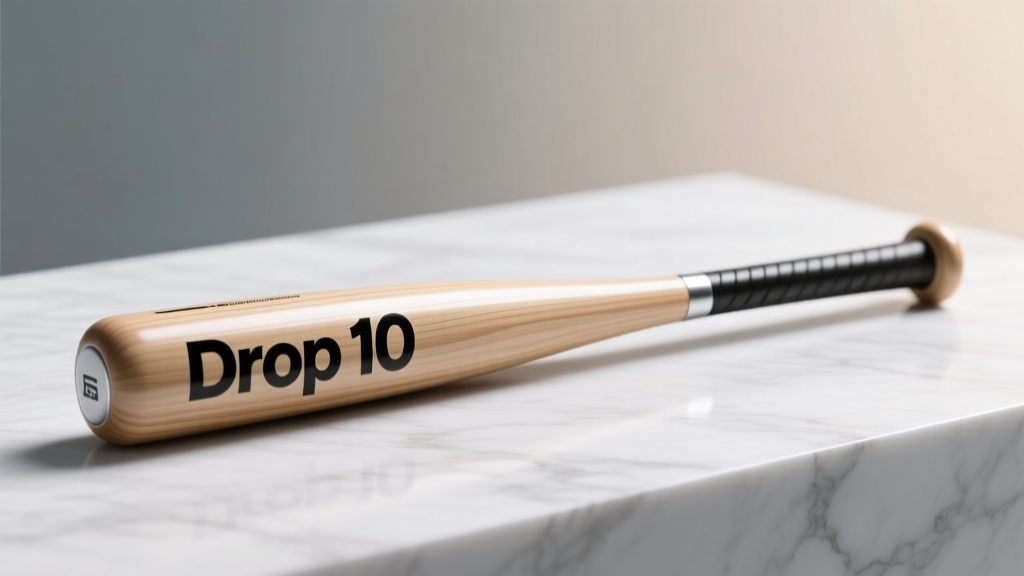
What Does Drop 10 Mean on a Baseball Bat?
In baseball, “drop 10” refers to the difference between a bat’s length in inches and its weight in ounces. A drop 10 bat is 10 ounces lighter than its length; for example, a 32-inch bat weighs 22 ounces. This measurement, known as the “bat drop,” significantly affects swing speed, control, and power, making it a critical factor in selecting the right youth or amateur bat.
Understanding Bat Drop: What Does Drop 10 Mean?
The term “drop” in baseball bats describes the numerical difference between the bat's length (in inches) and its weight (in ounces). For instance, if a bat is labeled as 31 inches long and weighs 21 ounces, it has a drop of 10. This system helps players compare balance and swing weight across different models.
Why Bat Drop Matters
Bat drop influences how quickly a player can swing the bat, how much control they have, and how much power they can generate. Lower drop numbers mean heavier bats, which may increase power but reduce swing speed. Higher drop numbers indicate lighter bats, ideal for younger or contact-focused hitters who need faster swings.
- A negative number (e.g., -10) indicates the bat is lighter relative to its length.
- Drop 10 bats are common in high school and some senior league play.
- Bat drop affects both feel and performance during gameplay.
- Regulations often limit allowable drops depending on league rules.
Comparing Common Bat Drop Values
Different leagues and age groups require specific bat specifications. The most common drop weights range from -5 to -13, with -10 being a mid-range option suitable for developing strong, consistent hitters.
| Bat Length (in) | Bat Weight (oz) | Bat Drop | Typical Age Group | Common Use |
|---|---|---|---|---|
| 29 | 18 | -11 | 9–11 | Youth Leagues |
| 30 | 20 | -10 | 11–13 | Middle School |
| 31 | 21 | -10 | 12–14 | Middle/High School |
| 32 | 22 | -10 | 13–15 | High School (some) |
| 33 | 23 | -10 | 14–16 | High School |
| 34 | 30 | -6 | 16+ | High School/College |
| 34 | 31 | -3 | 17+ | Wood Bats / NCAA |
The table illustrates how drop 10 bats are typically used by middle school and early high school players. As players grow older and stronger, they transition toward lower drop values (e.g., -3), which offer more mass for power hitting. The progression from higher to lower drops reflects physical development and league regulations.
League Rules and Bat Drop Restrictions
Various baseball organizations regulate bat performance, including allowable drop weights. Understanding these rules ensures compliance and optimal equipment selection.
Key League Standards
- Little League: Allows bats with drops up to -13.5 (USA Baseball standard).
- Junior/Senior League: Often permits -5 to -10 depending on barrel size and certification.
- High School (NFHS): Maximum drop of -3 for wood-like performance standards; however, many metal bats approved under BBCOR have a -3 limit.
- USSSA: Allows higher performance bats with drops ranging from -5 to -11, depending on division.
Note: While drop 10 bats were once common in high school, current BBCOR standards require a minimum weight-to-length ratio, effectively capping the drop at -3 for most competitive levels.
Choosing the Right Drop for Your Game
Selecting the correct bat drop depends on several factors including age, strength, hitting style, and league requirements.
Factors to Consider
- Swing Speed: Lighter bats (higher drop) allow faster swings, beneficial for contact hitters.
- Strength Level: Stronger players can handle lower drop bats for increased momentum. \li>Hitting Mechanics: Players with good timing may prefer heavier bats for drive production.
- Coach Recommendations: Many coaches advise staying within league norms and personal comfort zones.
Frequently Asked Questions About Drop 10 Baseball Bats
What does drop 10 mean on a baseball bat?
Drop 10 means the bat’s weight in ounces is 10 less than its length in inches. For example, a 32-inch bat weighing 22 ounces has a drop of -10. This measurement helps determine how light or heavy the bat feels during the swing.
Is a drop 10 bat allowed in high school baseball?
Most high school leagues in the U.S. follow NFHS rules requiring BBCOR-certified bats with a maximum drop of -3. Therefore, traditional drop 10 bats are not legal for high school play unless they meet BBCOR standards, which typically apply only to -3 bats.
Who should use a drop 10 baseball bat?
Drop 10 bats are best suited for middle school players or younger high school athletes who need a balanced, lightweight bat to improve swing speed and consistency before transitioning to heavier BBCOR models.
How do I know what drop bat to choose?
Choose based on your league’s regulations, strength, and hitting goals. Younger players benefit from higher drops (-10 to -13), while advanced players move toward -3. Always test different models if possible to find the best feel.
Are drop 10 bats made for power or contact hitting?
Drop 10 bats are generally designed for contact hitters who prioritize swing speed and control over raw power. Their lighter weight enables quicker swings, making them ideal for getting on base rather than driving the ball deep.
More Articles
 What Stadium Is the Cotton Bowl Played In?
 Has Tyreek Hill Won a Super Bowl? Career Stats & Facts
 Where and When Was Volleyball Invented? | Complete History
 How Old Is Gary Player? Age & Career Facts in 2025
 Common Mistakes in Judo Fighting & How to Avoid Them
 How Many Super Bowls Did Roger Staubach Win?
 Super Bowl Start Time PST: What Time Does It Begin?
 Anna Blinkova Tennis: Career Stats & 2025 Update
 Will MacKenzie Golf: Career, Wins & Legacy
 How Many Wins for Bowl Eligibility in College Football?