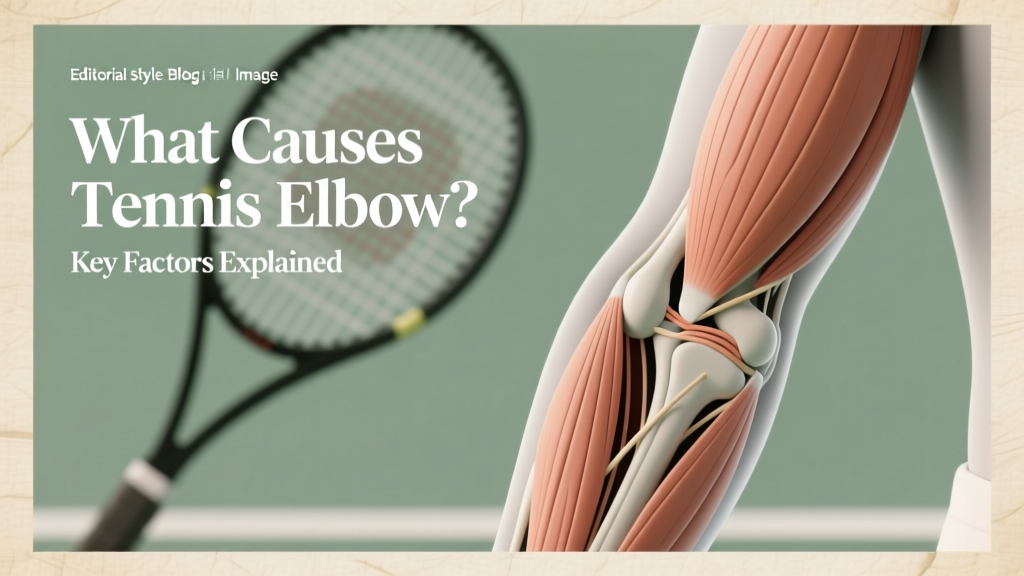
What Causes Tennis Elbow? Key Factors Explained
Tennis elbow, or lateral epicondylitis, is primarily caused by overuse of the forearm muscles and tendons responsible for wrist and hand movements. Repetitive gripping, twisting, or lifting motions lead to microscopic tears in the extensor carpi radialis brevis (ECRB) tendon, resulting in pain and inflammation on the outside of the elbow.
What Is Tennis Elbow?
Tennis elbow, medically known as lateral epicondylitis, is a painful condition that occurs when the tendons in your forearm are overloaded, typically through repetitive arm, wrist, and hand motions. Despite its name, most people who develop tennis elbow don’t play tennis. It’s an overuse injury affecting the lateral (outer) side of the elbow where forearm muscles attach to the humerus bone.
Anatomy Behind the Pain
The primary tendon involved in tennis elbow is the extensor carpi radialis brevis (ECRB). This muscle helps extend and stabilize the wrist. When subjected to repeated stress—especially during activities involving forceful wrist extension—it can develop microtears near its attachment point at the lateral epicondyle of the humerus.
Common Causes of Tennis Elbow
- Repetitive wrist and arm motions: Especially those involving gripping, twisting, or lifting.
- Poor technique in sports: Incorrect backhand form in tennis or improper equipment use. \li>Occupational strain: Jobs requiring frequent use of screwdrivers, pliers, or typing with poor ergonomics.
- Age-related degeneration: Tendon resilience decreases after age 30–40, increasing susceptibility.
- Sudden increase in activity level: Rapidly intensifying physical tasks without conditioning.
Risk Factors for Developing Lateral Epicondylitis
Certain individuals are more prone to developing tennis elbow due to lifestyle, profession, or biomechanical factors.
| Risk Factor | Population Affected | Relative Risk Increase | Average Age of Onset |
|---|---|---|---|
| Manual labor jobs | Construction, plumbing, painting | 3.2x higher than general population | 35–55 years |
| Tennis players | ~10% of recreational players | 2.8x higher risk with poor technique | 30–50 years |
| Office workers with poor ergonomics | Data entry, prolonged mouse use | 1.9x increased incidence | 40–60 years |
| Previous elbow injury | History of forearm strain | 2.5x recurrence likelihood | All ages |
The data shows manual laborers face the highest relative risk, but tennis players and office workers also show significant vulnerability. Most cases occur between ages 30 and 60, indicating a strong link with cumulative wear and reduced tendon healing capacity.
Sports and Activities That Contribute to Tennis Elbow
Tennis and Racquet Sports
Despite being named after tennis, only about 5–10% of cases come from actual tennis play. However, improper backhand strokes, using a racket with incorrect grip size or tension, and playing with wet balls (increased weight) amplify stress on the ECRB tendon.
Other Common Culprits
- Golf: Repeated club swinging stresses similar forearm muscles.
- Climbing: Gripping holds tightly over long durations strains extensor tendons.
- Weightlifting: Exercises like deadlifts or rows with poor form increase forearm load.
- DIY/home repairs: Using screwdrivers, hammers, or drills repetitively.
Diagnosis and When to Seek Help
Tennis elbow is usually diagnosed based on medical history and physical examination. A healthcare provider may perform specific tests such as the Cozen's test or Mills' test to reproduce pain at the lateral epicondyle.
Imaging like ultrasound or MRI may be used if the diagnosis is unclear or to rule out nerve compression or other joint issues.
Warning Signs That Require Medical Attention
- Pain persists beyond 6–8 weeks despite rest
- Weakness in grip strength interfering with daily tasks
- Numbness or tingling (could indicate radial nerve involvement)
- No improvement after home treatments like ice, stretching, or OTC anti-inflammatories
Treatment Options for Tennis Elbow
Most cases (80–90%) resolve within 6–12 months with conservative management.
Non-Surgical Treatments
- Rest and activity modification: Avoid aggravating movements.
- Physical therapy: Eccentric strengthening exercises improve tendon resilience.
- Bracing: Counterforce elbow straps reduce tendon strain.
- NSAIDs: Short-term relief of pain and inflammation.
- Corticosteroid injections: Effective short-term; limited long-term benefit.
- Platelet-rich plasma (PRP): Emerging treatment showing promise in chronic cases.
Surgical Intervention
Surgery is considered only after 6–12 months of failed conservative treatment. Procedures involve removing damaged tendon tissue and repairing the remaining structure. Success rates range from 80–90% in appropriately selected patients.
Prevention Strategies
- Use proper technique in sports and work activities
- Strengthen forearm muscles with eccentric exercises
- Take regular breaks during repetitive tasks
- Ensure ergonomic setup at workstations
- Choose tools with padded grips and appropriate weight
Frequently Asked Questions About Tennis Elbow
Is tennis elbow caused by playing tennis?
Not always. While tennis players are at risk due to repetitive arm motions, only about 10% of cases are directly linked to tennis. Most cases stem from occupational or daily activities involving repetitive gripping and wrist extension.
How long does it take to recover from tennis elbow?
Most people recover within 6 to 12 months with conservative treatment. Recovery time varies based on severity, adherence to therapy, and whether the causative activities are modified.
Can typing cause tennis elbow?
Yes. Prolonged typing, especially with poor ergonomics—such as an elevated wrist position or excessive force on keys—can contribute to forearm overuse and lead to lateral epicondylitis over time.
What does tennis elbow pain feel like?
Pain typically starts gradually on the outer part of the elbow and may radiate down the forearm. It often worsens with gripping, lifting, or wrist extension. Some describe it as a burning or aching sensation accompanied by weakened grip strength.
Do elbow braces help with tennis elbow?
Yes. Counterforce braces, worn just below the elbow, help distribute forces away from the injured tendon. Studies show they can reduce pain during activity and support healing when combined with rest and exercise.
More Articles
 What Stat Is OPS in Baseball? Meaning & Calculation
 How Much Does a Tennis Player Earn? (2025 Data)
 How Many Games in Baseball? MLB Season Breakdown
 When Did the NY Giants Win the Super Bowl?
 What Does Ace Mean in Volleyball? Definition & Impact
 Who Played in the First Super Bowl Game?
 Who Played in 2013 Super Bowl? Full Game Details
 How Much Do Golf Clubs Weigh? Full Breakdown by Type
 Where Is the Baseball World Series Held?
 Who Has Won the Golf Career Grand Slam?