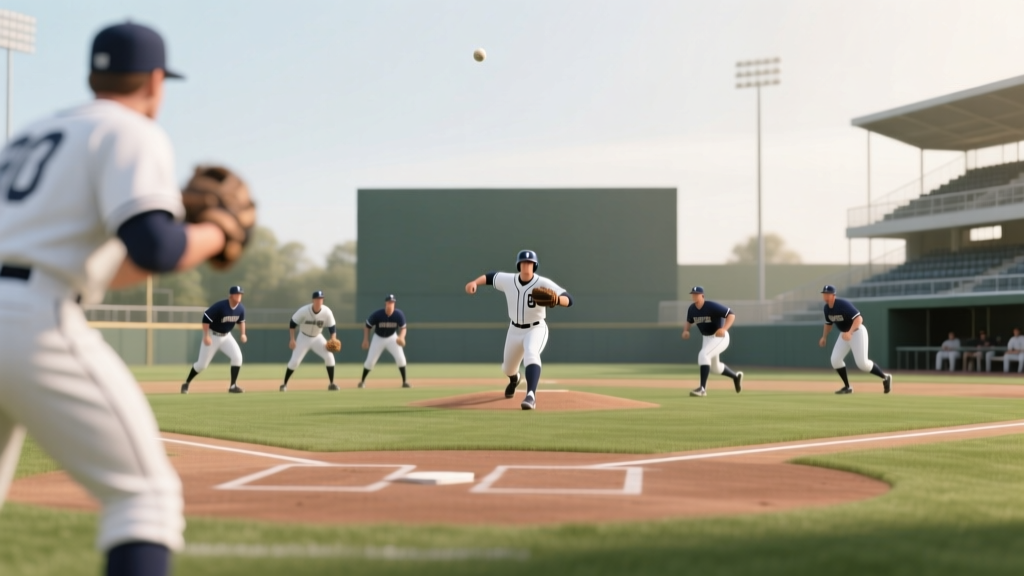
How Many People Are on a Baseball Team?
A standard baseball team has 26 players on its active roster during most of the regular season, with up to 28 allowed in September. This includes a mix of position players and pitchers.
Understanding Baseball Team Roster Size
In professional Major League Baseball (MLB), the number of players on a team varies slightly depending on the time of year and game situation. During the regular season, each team is allowed a 26-player active roster. This rule was implemented in 2020 to balance competitive fairness and player workload management. Prior to that, teams were limited to 25 players.
Why Roster Size Matters
- Impacts strategic decisions such as pinch-hitting and defensive substitutions
- Determines depth for injury coverage and player rest
- Influences pitching rotation and bullpen usage
- Affects player development timelines and minor league call-ups
Breakdown of a Typical MLB Roster
A 26-man roster is carefully balanced between offense, defense, and pitching specialists. Teams must decide how many pitchers versus position players to carry based on matchups, injuries, and performance trends.
Position Players vs. Pitchers
Most teams carry around 13 to 15 position players and 11 to 13 pitchers. The exact split depends on team needs and strategy. For example, a team facing a series of strong offensive opponents might carry an extra reliever.
| Team | Season | Active Roster Size | Number of Pitchers | Number of Position Players |
|---|---|---|---|---|
| New York Yankees | 2024 Regular Season | 26 | 13 | 13 |
| Los Angeles Dodgers | 2024 Regular Season | 26 | 12 | 14 |
| Atlanta Braves | 2024 Postseason | 26 | 14 | 12 |
| Boston Red Sox | 2024 September Call-up | 28 | 14 | 14 |
| Houston Astros | 2024 Opening Day | 26 | 13 | 13 |
The data shows that while the active roster size remains consistent at 26 for most of the season, teams adjust the pitcher-to-position player ratio based on strategic priorities. In September, when rosters expand to 28, teams often promote top prospects and add relief arms for playoff pushes.
Game-Day Lineup: Who Actually Plays?
Although a team has 26 players available, only nine take the field defensively at any given time. Managers select these nine based on matchups, health, and tactical considerations. All 26 players may contribute over the course of a long season, especially with travel, injuries, and scheduling demands.
Substitutions and Tactical Flexibility
- Pinch hitters can replace batters late in games
- Relief pitchers are used to exploit situational advantages
- Defensive replacements help protect leads in close games
- Designated hitters allow teams to keep strong bats in lineup without defensive liability
Injured List and Reserve Rosters
Teams also manage players beyond the active 26. The injured list (IL) allows teams to replace injured players temporarily. There are different IL lengths (7-day, 10-day, 60-day), affecting how quickly a player can return. Additionally, teams maintain a 40-man roster that includes all players eligible for the major leagues, protecting them from being claimed by other teams.
Key Roster Categories
- 26-man active roster: Eligible to play in games
- 40-man roster: Protected players, including those on IL
- Minor league system: Hundreds of additional players developing across levels
- September call-ups: Expanded rosters allow up to 28 players after August 31
Frequently Asked Questions About Baseball Team Size
How many players are on a baseball team during a game?
Nine players from each team are on the field at once: three outfielders, four infielders, a pitcher, a catcher, and a first baseman. Some leagues also use a designated hitter, making it ten if applicable.
Why do baseball teams have 26 players instead of 25?
MLB increased the active roster from 25 to 26 in 2020 to reduce pitcher overuse and allow more flexibility in late-inning situations. It helps teams manage workloads and respond to injuries without constant roster moves.
Can a baseball team have more than 26 players?
Yes. From September 1 onward, teams can expand their active rosters to 28 players. Also, the 40-man roster includes all protected players, even those on the injured list or in the minors.
How many pitchers are typically on a baseball team?
Most teams carry 11 to 14 pitchers on their 26-man roster, including 5 starting pitchers and 6–9 relief pitchers. Bullpen size varies depending on team strategy and current health.
What is the difference between the 26-man and 40-man roster?
The 26-man roster consists of players eligible to play in games. The 40-man roster includes all players protected from being drafted by other teams, including those on the injured list or in Triple-A. Being on the 40-man means a player can be called up at any time.
More Articles
 How Many Rounds in US Open Tennis? Full Breakdown
 Badminton For Full-Body Fitness: Science-Backed Benefits, Training Protocols, and Equipment Standards
 Who Played in the First Super Bowl Game?
 Can Baseball Games End in a Tie? Explained
 How Long Is a Rugby Match in the Olympics?
 Best Safety Guides for Sports
 What Position Did Babe Ruth Play in Baseball?
 Where to Watch the Rose Bowl 2025 Live on TV and Stream
 How Long Does a Rugby Game Last? Full Timing Explained
 Where Is LIV Golf Playing Today? Chicago Location & Schedule