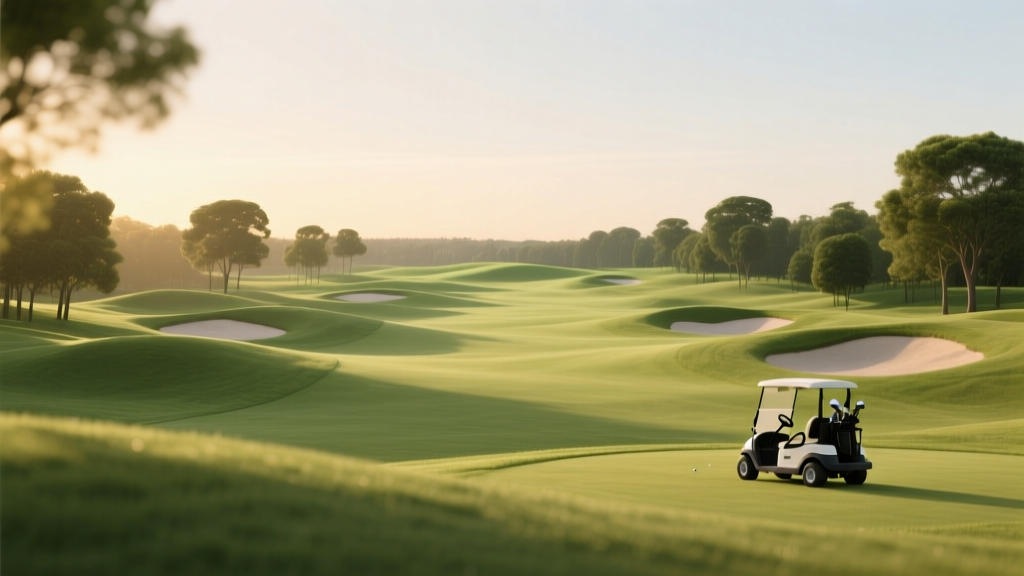
How Many Acres Is an Average Golf Course?
An average golf course covers between 100 and 200 acres, with most 18-hole courses spanning approximately 150 acres. This includes fairways, greens, tees, bunkers, water features, cart paths, and surrounding rough areas.
Understanding the Size of a Typical Golf Course
Golf courses vary widely in size depending on design, terrain, and location. However, an 18-hole regulation course typically requires substantial land to accommodate all elements of play while maintaining aesthetic and functional balance.
Key Components That Influence Course Size
- Fairways: The mowed grass area between the tee and green, usually accounting for about 60% of playable surface.
- Greens: The closely mown area surrounding the hole, where putting occurs.
- Tees: Designated starting points for each hole.
- Bunkers and Water Hazards: Obstacles that add challenge and require additional space.
- Rough and Natural Areas: Less-maintained grass or native vegetation used for environmental balance and visual appeal.
- Cart Paths and Support Facilities: Includes maintenance buildings, parking, clubhouses, and irrigation systems.
How Course Type Affects Total Area
Different types of golf courses have varying spatial requirements. Championship-level layouts demand more land due to longer holes and expanded buffer zones, while executive or municipal courses are often more compact.
Breakdown by Course Type
- Championship Courses: Often exceed 180 acres, with some exceeding 200 acres.
- Standard 18-Hole Public Courses: Average around 140–160 acres.
- Executive Courses (9-hole or par-3): Typically range from 40 to 80 acres.
- Par-3 Only Courses: Can be as small as 30 acres.
- Urban or Compact Designs: May use under 100 acres through efficient planning.
| Course Type | Average Acres | Fairway Area (acres) | Green Space & Hazards | Non-Playable Land |
|---|---|---|---|---|
| Championship 18-Hole | 180 | 75 | 60 | 45 |
| Standard 18-Hole | 150 | 65 | 50 | 35 |
| Executive 18-Hole | 90 | 35 | 25 | 30 |
| 9-Hole Par-3 | 40 | 15 | 10 | 15 |
| Municipal Course (urban) | 110 | 50 | 35 | 25 |
The data shows that championship courses use significantly more land, particularly in non-playable areas such as buffers and landscaping. Standard 18-hole courses maintain a balanced distribution, while executive and par-3 layouts reduce fairway and hazard acreage to save space. Municipal courses optimize land use in urban settings without sacrificing playability.
Factors That Influence Golf Course Footprint
Several external and internal factors determine how much land a golf course occupies.
Geographical and Environmental Factors
- Terrain: Hilly or wooded areas may require more land due to routing constraints.
- Climate: Arid regions may minimize turfgrass, reducing irrigated acreage.
- Water Features: Lakes, rivers, and wetlands increase total area but limit usable space.
- Conservation Zones: Many modern courses preserve natural habitats, increasing overall footprint.
Design Philosophy and Regulation Standards
- USGA and R&A guidelines influence hole length and safety buffers.
- Architects like Pete Dye or Jack Nicklaus often design expansive, strategic layouts.
- Modern sustainability trends encourage reduced turfgrass and integrated ecosystems.
Common Questions About Golf Course Size
How many square feet is an average golf course?
An average 150-acre golf course equals approximately 6.5 million square feet (150 × 43,560 sq ft per acre).
How big is a golf course in hectares?
An average 150-acre golf course is about 60.7 hectares (1 acre ≈ 0.4047 hectares).
Do all 18-hole golf courses have the same acreage?
No, 18-hole courses can range from 100 to over 200 acres depending on design, topography, and regional standards.
Why do some golf courses take up so much land?
Large footprints accommodate hazards, landscaping, drainage, and spectator areas—especially in tournament venues—while preserving environmental buffers.
Can a golf course be built on less than 100 acres?
Yes, especially executive, par-3, or urban courses. Modern design techniques allow full functionality on as little as 40–80 acres for 18 holes.
More Articles
 Where Was Tennis Created? The True Origin Revealed
 When Does Baseball Regular Season Start in 2025?
 Who Is the GOAT of Baseball? Ruth, Bonds & Mays Compared
 Why You Must Wear Bowling Shoes
 Who Won Super Bowl 2013? Ravens Beat 49ers 34-31
 Where to Sell Used Golf Clubs: Best Options 2025
 Who Won the Most Masters Tournaments? Nicklaus Leads
 How Long Does a Game of Bowling Take?
 How Does TGL Golf Work? Real Tech Behind the League
 What State Has the Most Golf Courses? (2025 Data)