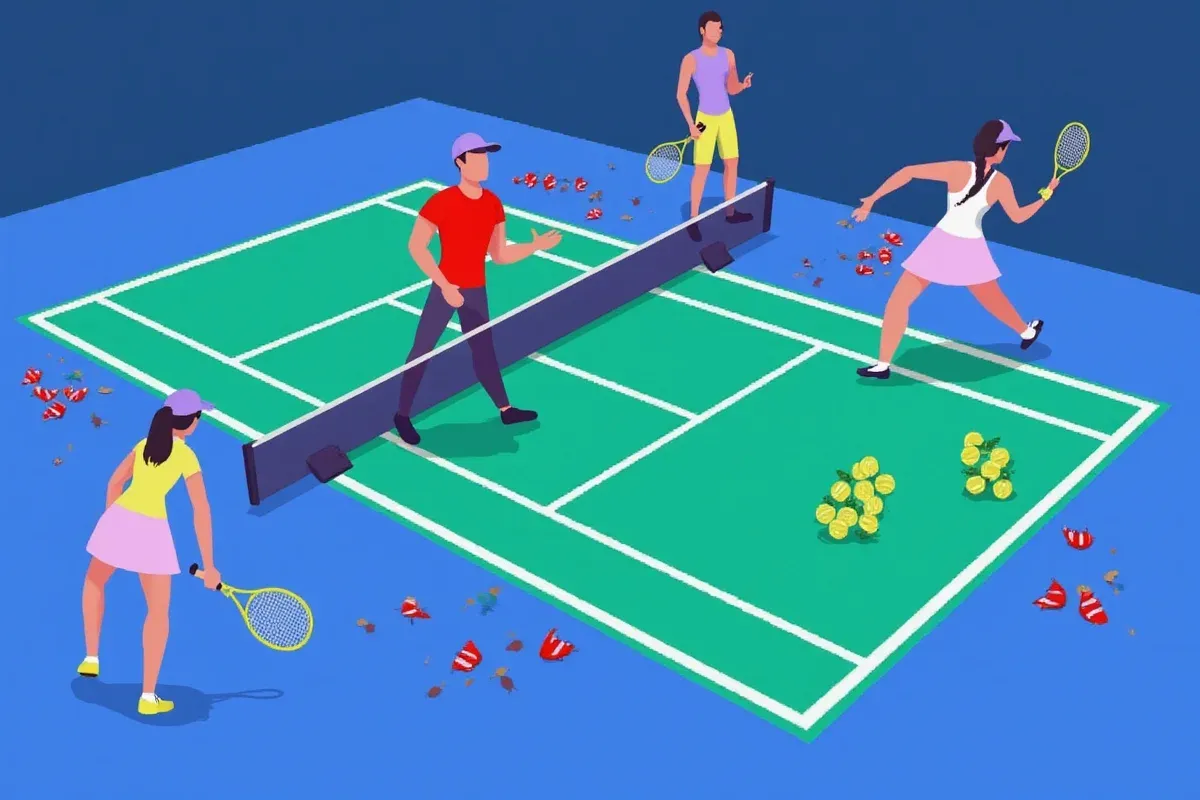
How Long Is a Tennis Game? Match Duration Explained
A tennis game's duration varies widely, but a typical match lasts between 1.5 to 3 hours. Best-of-three sets matches usually take 90–120 minutes, while best-of-five can extend to 3–5 hours or more depending on playing style, player endurance, and match intensity.
Understanding Tennis Match Structure
Tennis matches are composed of points, games, sets, and ultimately the match itself. The total length depends on how many sets are required to win and how competitive the match is.
Basic Scoring Breakdown
- Point: The smallest unit; takes 15–60 seconds
- Game: Won by winning at least 4 points (typically 2–5 minutes)
- Set: Requires winning 6 games with a margin of 2; can last 20–50 minutes
- Match: Best-of-3 or best-of-5 sets format
The absence of a shot clock means rallies, breaks, and player delays influence total time significantly.
Factors Influencing Match Duration
Several variables affect how long a tennis match lasts:
- Number of Sets: Women's Grand Slams and most ATP/WTA events use best-of-3; men's Grand Slams use best-of-5
- Player Style: Defensive baseliners extend rallies, increasing game time
- Surface Type: Clay slows play; grass speeds it up
- Tiebreaks: Used at 6–6 in a set, shortening potential duration
- Weather & Delays: Rain, heat, or injuries can pause or prolong matches
Typical Match Length by Tournament Level
| Tournament Level | Average Duration (Best-of-3) | Average Duration (Best-of-5) | Data Source |
|---|---|---|---|
| ATP Tour (Regular) | 90 minutes | — | 1 |
| WTA Tour | 95 minutes | — | 2 |
| Grand Slam (Men) | — | 150 minutes | 3 |
| Grand Slam (Women) | 105 minutes | — | 4 |
| Davis Cup / Team Events | 110 minutes | 180 minutes | 5 |
The data shows that Grand Slam men’s matches average 2.5 hours due to best-of-five formats and higher stakes. Women’s tour-level matches average under 100 minutes, reflecting consistent best-of-three structures. Team competitions like Davis Cup see longer durations due to extended changeovers and tactical breaks.
Historic and Extreme Match Durations
While most matches finish within three hours, some exceed expectations dramatically:
- Longest Match Ever: John Isner vs. Nicolas Mahut at 2010 Wimbledon — 11 hours, 5 minutes over three days
- Longest Rally: 26 minutes in a 1984 Davis Cup match, contributing to prolonged gameplay
- Shortest Match: 20 minutes (Björn Borg, 1981 Monte Carlo)
These outliers highlight how format changes, player endurance, and psychological factors impact game length.
How Modern Rules Affect Game Time
To improve pacing, governing bodies have introduced timing rules:
- Shot Clock: 25 seconds between points (enforced at ATP/WTA events since 2017)
- Medical Timeout Limits: Reduces delay tactics
- Final Set Tiebreaks: Introduced at all Grand Slams post-2019 to prevent endless sets
These adjustments aim to standardize match length and enhance viewer experience.
Frequently Asked Questions About Tennis Match Duration
How long does a single tennis game last?
A single game typically lasts 2 to 5 minutes, depending on the number of deuces and advantage points played.
Why do some tennis matches take so long?
Matches extend due to close scoring, frequent deuce games, long rallies, injury timeouts, and lack of tiebreaks in final sets (before recent rule changes).
How long is a women's tennis match?
Most women's matches last 1.5 to 2 hours, as they are best-of-three sets with fewer extended fifth sets.
How long is a men's Grand Slam tennis match?
On average, 2.5 to 5 hours, especially when going to five sets. The longest can surpass 5 hours.
Do tennis matches have a time limit?
No official time limit exists, but shot clocks regulate point intervals. Matches continue until a player wins the required number of sets.
What is the shortest possible tennis match?
Theoretically, a match could last under 20 minutes if each game ends with four consecutive points won by the server (e.g., double bagel: 6–0, 6–0).
How does surface affect tennis match length?
Clay courts produce longer matches due to slower ball speed and higher bounce, leading to extended rallies. Grass courts favor servers and shorten points.
More Articles
 How Much Is a Billiard Table? (2025 Prices)
 How Much Does a Professional Wrestler Make?
 Aleksandar Petković Tennis Career & Stats
 Has Tyreek Hill Won a Super Bowl? Career Stats & Facts
 Who Owns Pebble Beach Golf Course? Full Ownership Breakdown
 How Many Bowling Pins Are Used? Full Breakdown
 Which States Have the Most Golf Courses? Top 10 Ranked
 Which Team Has the Most Super Bowl Appearances?
 Where Is TGL Golf Located? Inglewood, CA Address & Info
 Where Is LIV Golf Playing Today? Chicago Location & Schedule