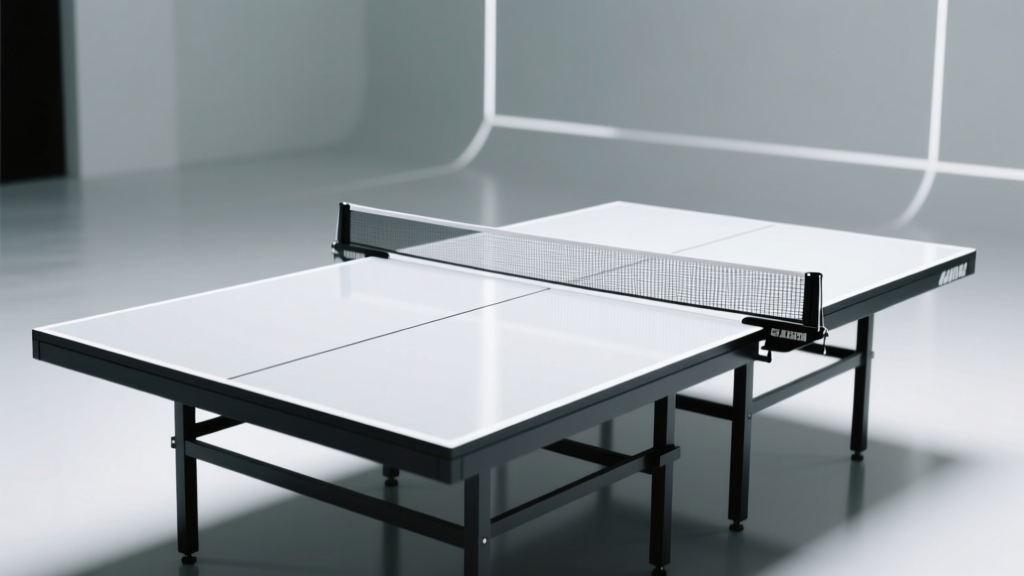
How Long Is a Regulation Table Tennis Table?
A regulation table tennis table is exactly 2.74 meters (9 feet) long, 1.525 meters (5 feet) wide, and 76 centimeters (2.5 feet) high from the floor, as defined by the International Table Tennis Federation (ITTF).
Standard Dimensions of a Regulation Table Tennis Table
The official size of a table tennis table is strictly regulated to ensure consistency in competition and fair play across all levels, from amateur leagues to the Olympics. The International Table Tennis Federation (ITTF) sets these standards, which are followed globally.
Key Measurement Specifications
- Length: 2.74 meters (9 feet)
- Width: 1.525 meters (5 feet)
- Height: 76 centimeters (2.5 feet) from the ground
- Net Height: 15.25 centimeters (6 inches) above the playing surface
- Surface Material: Typically made of wood-based panel with a smooth, low-friction finish
These dimensions apply to both recreational and professional tables, provided they are intended for competitive use.
Why Standard Size Matters in Table Tennis
Consistent table dimensions are critical for several reasons:
- Fair Competition: Ensures all players face the same playing conditions.
- Game Strategy: Affects shot placement, spin control, and footwork patterns.
- Equipment Compatibility: Ensures balls, nets, and rackets perform predictably.
- Training Consistency: Players can practice on any regulation table without adjustment issues.
Even small deviations in table size can alter ball bounce and player movement, potentially affecting match outcomes.
Differences Between Indoor and Outdoor Table Tennis Tables
While regulation indoor tables adhere strictly to ITTF standards, outdoor models may vary slightly due to durability requirements. However, full-size outdoor tables still maintain the same core dimensions to preserve gameplay integrity.
Features Comparison
- Indoor Tables: Lightweight, smooth wooden surface, ideal for controlled environments.
- Outdoor Tables: Weather-resistant materials, often heavier or anchored, with slight variations in leg design but same playing surface size.
| Feature | Indoor Regulation Table | Outdoor Regulation Table | Youth Training Table |
|---|---|---|---|
| Length (m) | 2.74 | 2.74 | 2.74 |
| Width (m) | 1.525 | 1.525 | 1.525 |
| Height (cm) | 76 | 76 | 76 |
| Net Height (cm) | 15.25 | 15.25 | 15.25 |
| Weight (kg) | ~70–80 | ~90–120 | ~60–70 |
| Material | Wood composite | Weather-resistant laminate | Lightweight composite |
The data confirms that while weight and material differ significantly between indoor and outdoor tables, the core playing dimensions remain identical. This ensures consistent gameplay regardless of environment. Youth training tables also maintain standard size, emphasizing early adaptation to regulation conditions.
Common Variations and Non-Regulation Tables
Some tables marketed for home or casual use may be smaller than regulation size. Common non-regulation sizes include:
- 7-foot (2.13 m) tables – often used in compact spaces
- Foldable mini tables – as small as 6 feet (1.8 m)
- Kids’ tables – scaled down for younger players
While convenient, these do not meet ITTF standards and are unsuitable for official matches or serious training.
Frequently Asked Questions About Table Tennis Table Size
How long is a regulation table tennis table?
A regulation table tennis table is 2.74 meters (9 feet) long, as standardized by the ITTF for all official competitions.
What are the official dimensions of a ping pong table?
The official dimensions are 2.74 m (length) × 1.525 m (width) × 0.76 m (height), with a net height of 15.25 cm at the center.
Are all full-size ping pong tables the same size?
Yes, all full-size regulation tables follow the same ITTF standards, regardless of brand or whether they are indoor or outdoor models.
Can I use a non-regulation table for tournament play?
No, only tables meeting ITTF specifications are allowed in sanctioned tournaments. Non-regulation tables are suitable only for recreational use.
Does table thickness affect gameplay?
Table thickness influences ball bounce consistency. Regulation tables typically have a playing surface between 15–25 mm thick to ensure uniform rebound characteristics.
More Articles
 Have Any Rookies Played in the Super Bowl?
 Buy Baseball Cards Near Me: Top Local & Online Spots
 What Channel Is the Rose Bowl Parade On in 2026?
 Where Are Callaway Golf Clubs Made?
 Who Is the Heavyweight Champion in Boxing? (2025 Update)
 Why NCAA Uses Molten Men's Volleyball
 How Much Is a Super Bowl Ticket? 2025 Prices & Trends
 How Many Seasons Did Michael Jordan Play Baseball?
 Who Is Boxing Tonight? Inoue vs. Goodman Fight Details
 Haven Golf: Courses, Lessons & Membership Info