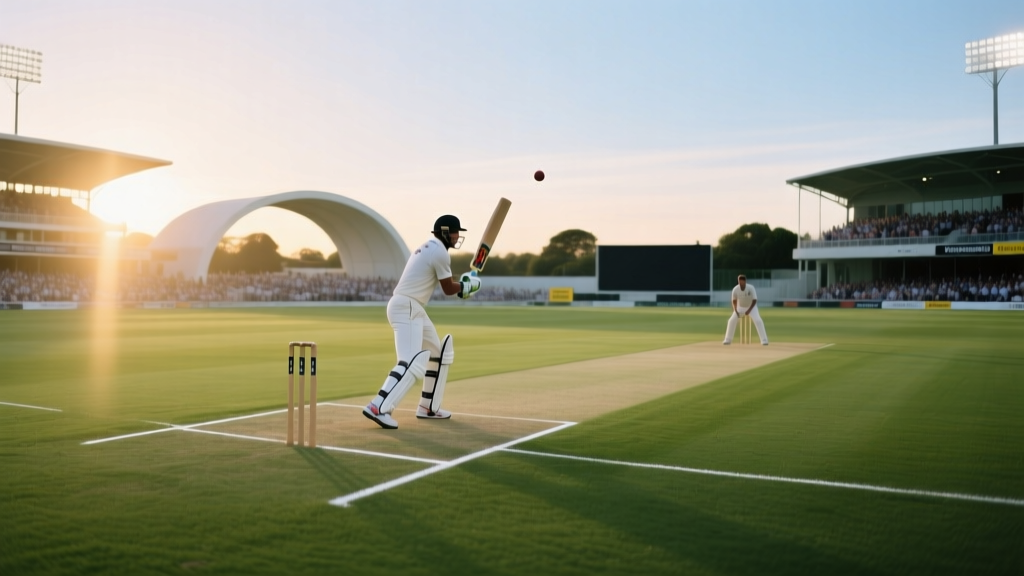
How Long Is a Game of Cricket? By Format Explained
Cricket match durations vary significantly by format: T20 games last about 3–4 hours, One Day Internationals (ODIs) take 7–8 hours, and Test matches span up to five days with sessions of 6 hours each.
Understanding Cricket Match Durations
Cricket is unique among major sports due to its variable game length. Unlike fixed-time sports like football or basketball, cricket matches are structured around formats that define their duration. The primary formats include Twenty20 (T20), One Day Internationals (ODIs), and Test cricket. Each format has specific rules governing overs, innings, and playing time, resulting in vastly different game lengths.
Key Factors Influencing Game Length
- Format of the game: T20, ODI, or Test cricket determines the number of overs and innings.
- Number of overs per innings: Ranges from 20 overs in T20 to unlimited in Test matches (within 5 days).
- Innings structure: Test matches allow two innings per team; limited-overs formats have one innings each.
- Breaks and intervals: Lunch, tea, and drinks breaks extend playing time beyond actual ball-in-play duration.
- Weather interruptions: Rain delays can extend matches into reserve days, especially in ODIs and Tests.
- Pace of play: Bowling changes, DRS reviews, and field adjustments affect overall timing.
T20 Cricket: Fast-Paced Entertainment
Twenty20 cricket was introduced in 2003 to make the game faster and more viewer-friendly. Each team faces 20 overs, making it the shortest international format.
Typical T20 Match Timeline
- Batting innings: ~80–90 minutes
- Bowling innings: ~80–90 minutes
- Strategic time-outs: 2 x 2.5 minutes
- Change of innings break: 10–15 minutes
- Total estimated duration: 3–4 hours
The fast pace, bright lights, and urban stadiums make T20 the most commercially successful format, exemplified by leagues like the Indian Premier League (IPL) and Big Bash League (BBL).
One Day Internationals (ODIs): Balanced Limited-Overs Format
ODIs feature 50 overs per side and are considered the traditional limited-overs format. Introduced in 1971, they combine strategy and endurance over a full day of play.
Structure of an ODI Match
- First innings: ~210 minutes (3.5 hours)
- Second innings: ~210 minutes (3.5 hours)
- Interval between innings: 45 minutes
- Total playing time: ~7–8 hours
- Includes two powerplays and mandatory batting reviews
ODIs often start in the afternoon and conclude in the evening, requiring sustained focus from players and fans alike.
Test Cricket: The Ultimate Endurance Challenge
Test cricket is the longest and oldest format, played over a maximum of five days. It is considered the pinnacle of the sport, testing technical skill, mental resilience, and stamina.
Daily Schedule in a Test Match
- Three sessions per day: Morning, afternoon, and evening
- Each session: 2 hours with a 40-minute lunch break between first and second
- Tea break: 20 minutes between second and third sessions
- Total playing time per day: 6 hours
- Minimum 90 overs bowled per day
A Test match can end early if a result is achieved before five days, but draws are possible if time expires without a conclusion.
| Format | Overs per Innings | Innings per Team | Estimated Duration | Playing Days |
|---|---|---|---|---|
| T20 International | 20 | 1 | 3–4 hours | 1 |
| One Day International (ODI) | 50 | 1 | 7–8 hours | 1 |
| Test Match | Unlimited (max 90/day) | 2 | Up to 30 hours total | 5 |
| Domestic First-Class | Varies | 2 | Up to 30 hours | 4 |
| The Hundred | 100 balls (20 per "set") | 1 | 2.5–3 hours | 1 |
The table highlights the dramatic differences in duration across formats. While T20 and The Hundred prioritize brevity and entertainment, Test cricket emphasizes depth and endurance. ODIs remain the standard for balanced, day-long competition.
These variations allow cricket to cater to diverse audiences, from casual viewers seeking quick action to purists valuing strategic depth over multiple days.
Frequently Asked Questions About Cricket Match Length
How long does a T20 cricket match last?
A T20 cricket match typically lasts between 3 and 4 hours from start to finish, including a 10–15 minute break between innings and possible delays. Each team bats for 20 overs, which takes approximately 80–90 minutes.
Why do Test matches last up to five days?
Test matches last up to five days to allow sufficient time for both teams to bat and bowl twice, promoting fair competition and strategic depth. The extended duration tests players' endurance, technique, and mental strength, distinguishing it from shorter formats.
Can a cricket match end in a draw?
Yes, in Test cricket and other first-class matches, a draw is possible if the game hasn't concluded within the allotted time, even if one team is ahead. However, limited-overs formats like T20 and ODI use result-oriented rules such as Super Overs or DLS method to avoid draws.
What happens if it rains during a cricket match?
Rain interruptions pause play and may lead to reduced overs using the Duckworth-Lewis-Stern (DLS) method in limited-overs games. In Test cricket, play simply resumes when conditions allow, potentially extending into reserve days if scheduled.
How many hours of play occur in a Test match day?
A Test match day includes 6 hours of scheduled playing time, divided into three 2-hour sessions with a 40-minute lunch break and a 20-minute tea break. Umpires ensure a minimum of 90 overs are bowled each day when conditions permit.
More Articles
 What Does Squash Look Like? Court, Ball & Gameplay Explained
 How Tall Is a Tennis Net? Official Height Explained
 How Many Super Bowls Did Brady Play In? Full Breakdown
 Who Won the First Super Bowl? Packers Victory in 1967
 What Bowl Game Is On Tonight? Schedule & TV Info
 How Long Is a Rugby Match? Full Breakdown by Format
 When Is Super Bowl 2025? Date, Time, and Location
 How Many Super Bowls Did Brett Favre Win? Answer & Analysis
 Who Won Super Bowl 27 in 1993? Cowboys Beat Bills 52-17
 Who Was the Best Baseball Player Ever?