How Long Is a Cricket Pitch? Exact Length Explained
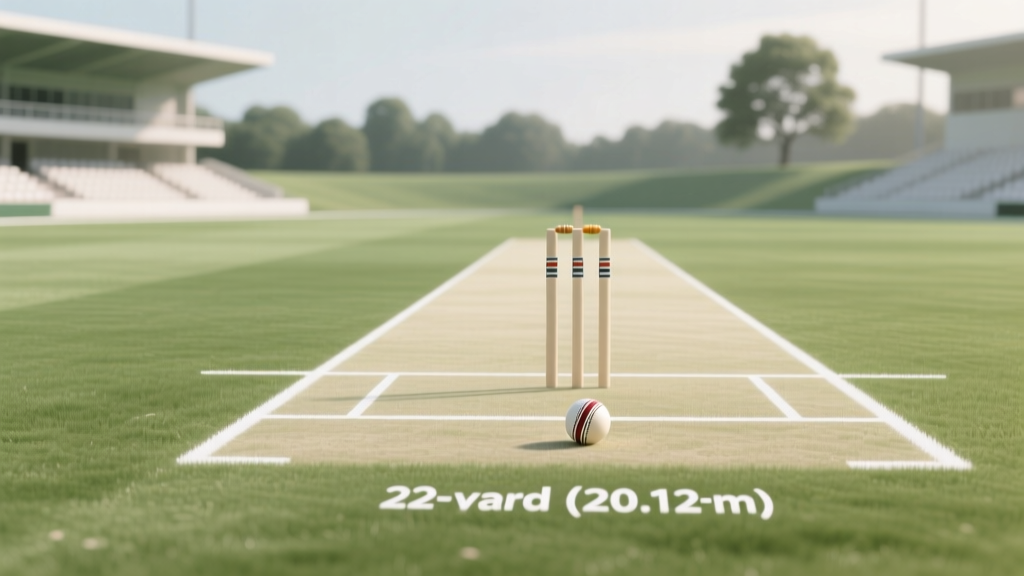
A cricket pitch is exactly 22 yards (20.12 meters) long, measured between the two sets of wickets. This standardized length is defined by the Marylebone Cricket Club (MCC) Laws of Cricket and is consistent across all international and professional formats of the game, including Test matches, One Day Internationals (ODIs), and Twenty20 (T20) games.
Understanding the Cricket Pitch Dimensions
The cricket pitch is the central playing strip where most of the action unfolds. It is a carefully prepared rectangular surface that forms the core of the cricket field. The precise measurement of 22 yards (66 feet or 20.12 meters) from one bowling crease to the other ensures fairness and consistency in gameplay worldwide.
Key Features of the Pitch
- Measured between the front edges of the bowling and batting creases
- Width of the pitch is 10 feet (3.05 meters)
- Surrounded by a larger oval field with variable dimensions
- Prepared using specific soil, grass, and rolling techniques depending on match format
Standard Measurements Across Cricket Formats
While match formats differ in duration and rules, the pitch length remains unchanged. Whether it's a five-day Test match or a fast-paced T20 game, the distance between the stumps stays constant at 22 yards. This uniformity allows players to adapt seamlessly across formats and venues.
Why Is the Pitch 22 Yards Long?
The origin of the 22-yard measurement dates back to 18th-century England. It is believed to derive from imperial units—specifically, one chain, a common surveyor’s tool at the time. A chain equals 22 yards, making it a practical and reproducible unit for marking fields. Despite technological advances, this traditional length has been preserved for historical continuity and competitive balance.
| Cricket Format | Pitch Length (yards) | Pitch Length (meters) | Field Diameter (approx. meters) | Match Duration |
|---|---|---|---|---|
| Test Match | 22 | 20.12 | 450 | 5 days |
| One Day International (ODI) | 22 | 20.12 | 445 | 1 day (50 overs/side) |
| Twenty20 International (T20I) | 22 | 20.12 | 420 | Approx. 3 hours |
| Domestic First-Class | 22 | 20.12 | 430–450 | 3–4 days |
| Youth Cricket (U-15) | 18 | 16.46 | 300–350 | Reduced overs |
The data confirms that professional cricket universally adheres to the 22-yard pitch standard. Only in youth or modified versions does the length vary. The consistency supports player development, equipment design, and broadcasting standards. Minor variations in outfield size do not affect the regulated pitch dimension.
Components of the Cricket Pitch
The pitch includes several marked lines critical to gameplay:
- Bowling Crease: Where the bowler delivers the ball
- Popping Crease: Defines the batsman’s safe zone in front of the wicket
- Return Creases: Mark the lateral boundaries for legal bowling action
- Stumps and Bails: Three vertical posts topped with two bails at each end
Surface Conditions and Game Impact
The pitch’s condition—whether dry, green, dusty, or hard—greatly influences gameplay. A green pitch favors fast bowlers due to extra bounce and seam movement, while dry, cracked surfaces assist spin bowlers. Ground staff spend weeks preparing pitches to suit tournament requirements, balancing fairness and entertainment value.
Frequently Asked Questions About Cricket Pitch Length
How long is a cricket pitch in feet?
A cricket pitch is 66 feet long, calculated as 22 yards multiplied by 3 feet per yard. This measurement runs from the front edge of one bowling crease to the front edge of the opposite bowling crease.
Is every cricket pitch the same length?
Yes, all professional and international cricket pitches are exactly 22 yards (20.12 meters) long. Variations only occur in junior cricket or informal games where shorter pitches may be used for younger players.
Why is a cricket pitch 22 yards long?
The 22-yard length originated from the imperial measurement known as a 'chain,' commonly used in land surveying in 18th-century England. One chain equals 22 yards, making it a convenient and standardized unit for laying out cricket grounds.
What is the width of a cricket pitch?
The width of a cricket pitch is 10 feet (3.05 meters). This dimension is standardized and marked by the return creases, which define the lateral limits for bowlers during their delivery stride.
How does pitch length affect bowling and batting?
The fixed 22-yard distance allows bowlers to generate pace, bounce, and swing consistently. Batsmen use this predictable length to judge line, length, and footwork. Any variation would disrupt timing, strategy, and skill execution, which is why strict adherence to the 22-yard standard is maintained.
More Articles
 Where Can I Buy a Tennis Racquet? Top 2025 Options
 Who Makes the Best Golf Clubs in 2025?
 Who Founded Judo? The Story of Jigoro Kano
 How Many Super Bowls Did the Denver Broncos Win? (Answer)
 Who Won the Super Bowl in 2006? Colts Beat Bears
 When Did Nike Stop Making Golf Clubs?
 Who Played in Super Bowl 1? Teams, Score & Facts
 GOAT of Tennis: Djokovic vs Nadal vs Federer
 Has Dan Marino Won a Super Bowl? Career Facts
 How Many Bowling Pins Are Used? Full Breakdown