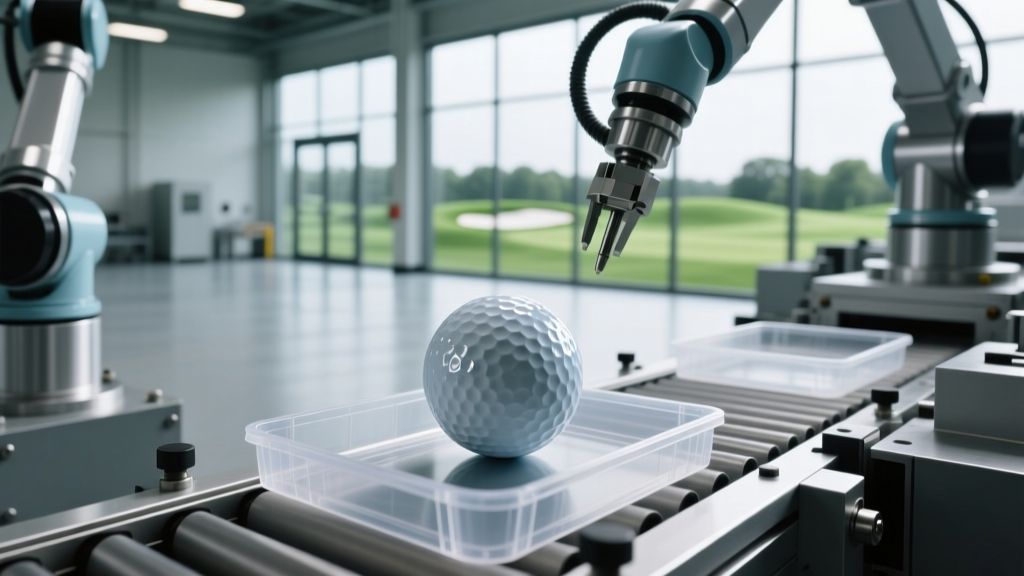
How Golf Balls Are Made: Inside Manufacturing
A golf ball is made through a multi-step manufacturing process involving core construction, layering with durable materials like ionomer or urethane, and precision molding of dimpled outer covers to optimize aerodynamics, spin, and distance.
How Golf Balls Are Constructed: Core to Cover
Golf balls are engineered for performance using advanced materials and precise design. The construction impacts speed, spin, feel, and durability—critical factors for players at all levels.
The Core: Power Source of the Ball
The core generates initial velocity and energy transfer upon impact. Most modern golf balls use a solid rubber or synthetic blend core.
- Materials: High-energy rubber compounds, often polybutadiene-based
- Function: Determines compression and initial speed
- Compression Levels: Ranges from 30 (soft) to 120 (firm)
Mid-Layers (Mantle): Enhancing Spin and Control
In multi-piece balls, one or more mantle layers sit between the core and cover to fine-tune spin rates and energy distribution.
- Typically made from ionomer resins (e.g., Surlyn®)
- Helps reduce driver spin while maintaining wedge spin
- Common in 3- and 4-piece premium balls
The Cover: Feel and Aerodynamics
The outermost layer influences feel, spin, and aerodynamic efficiency.
- Urethane: Used in high-end balls for soft feel and superior greenside control
- Ionomer (e.g., Surlyn®): Durable, cost-effective; common in two-piece balls
- Covers are molded with 300–500 dimples to reduce drag and enhance lift
Manufacturing Process Step by Step
From raw materials to finished product, golf ball production combines chemistry and precision engineering.
- Core Formation: Liquid or pre-formed rubber is injected into molds and vulcanized under heat and pressure.
- Layer Application: Additional layers are molded over the core via injection or casting.
- Surface Texturing: The ball is placed in a mold with dimple patterns and coated with urethane or ionomer.
- Painting & Marking: After curing, balls are painted, printed with logos, and stamped with numbers.
- Quality Testing: Each batch undergoes velocity, symmetry, and spin testing to meet USGA standards.
Types of Golf Balls and Their Construction
Different constructions suit different player needs—from beginners to tour professionals.
| Ball Type | Pieces | Core Type | Typical Cover | Compression | Best For |
|---|---|---|---|---|---|
| Distance (Two-Piece) | 2 | Rubber | Ionomer | 60–90 | Beginners, high swing speeds |
| Tour Performance (Three-Piece) | 3 | High-Energy Rubber | Urethane | 80–100 | Low-handicap players |
| Premium Tour (Four-Piece) | 4 | Multi-Layer Core | Urethane | 90–110 | Professional players |
| Senior/Ladies | 2 | Soft Rubber | Ionomer | 30–70 | Slower swing speeds |
| Recycled Range Balls | 2 | Synthetic Blend | Ionomer | 70–90 | Practice only |
The table shows that higher piece count correlates with increased control and spin but also higher cost. Urethane-covered balls dominate the professional market due to their superior short-game responsiveness, while ionomer-covered two-piece balls remain popular for recreational play due to durability and lower price.
Materials Science Behind Golf Ball Performance
Modern golf balls leverage polymer science to balance speed, spin, and feel.
Polybutadiene Cores
Polybutadiene rubber cores offer high resilience, returning up to 85% of energy upon impact. Additives like zinc oxide modify compression and hardness.
Ionomer vs. Urethane Covers
- Ionomer (Surlyn®): Tough, weather-resistant, low-spin—ideal for distance
- Urethane: Softer, higher friction with clubface—better spin control on approach shots
Premium brands like Titleist Pro V1 and TaylorMade TP5 use urethane to meet tour demands.
Frequently Asked Questions About How Golf Balls Are Made
How are dimples added to a golf ball?
Dimples are molded into the cover during the final layer application. The ball is placed in a precision mold with a negative dimple pattern, and liquid cover material is injected around it, forming the textured surface as it cures.
What materials are used in golf ball cores?
Most golf ball cores are made from polybutadiene, a synthetic rubber compound. This material is blended with additives like zinc diacrylate to enhance resilience and durability under repeated impact.
Why do some golf balls have more layers than others?
Additional layers allow manufacturers to fine-tune performance—controlling spin, feel, and energy transfer. More layers typically mean better shot-shaping ability and control, especially around the greens.
Are all golf balls legal for tournament play?
No. To be legal, golf balls must conform to USGA and R&A regulations, including limits on size (minimum 1.68 inches), weight (maximum 1.62 ounces), velocity, and symmetry. Non-conforming balls are restricted from official competition.
How long does it take to manufacture a golf ball?
The full production cycle—from core molding to final painting and quality checks—takes approximately 24 to 72 hours per ball, depending on the complexity and curing times of materials used.
More Articles
 When Does College Baseball Start in 2025?
 What Strings Do Pro Tennis Players Use? Top Choices Revealed
 Why You Must Wear Bowling Shoes
 How Many Games Left in MLB 2025 Season?
 What Counts as a Base in Baseball? Explained
 How Heavy Are Baseballs? Official Weights by League
 Browser History Alternatives: Legal & Technical
 Who Has More Super Bowl Wins: AFC or NFC?
 Who Owns Callaway Golf? Current Owner Revealed
 Common Mistakes in Judo Fighting & How to Avoid Them