How Inertia Applies to Badminton Explained
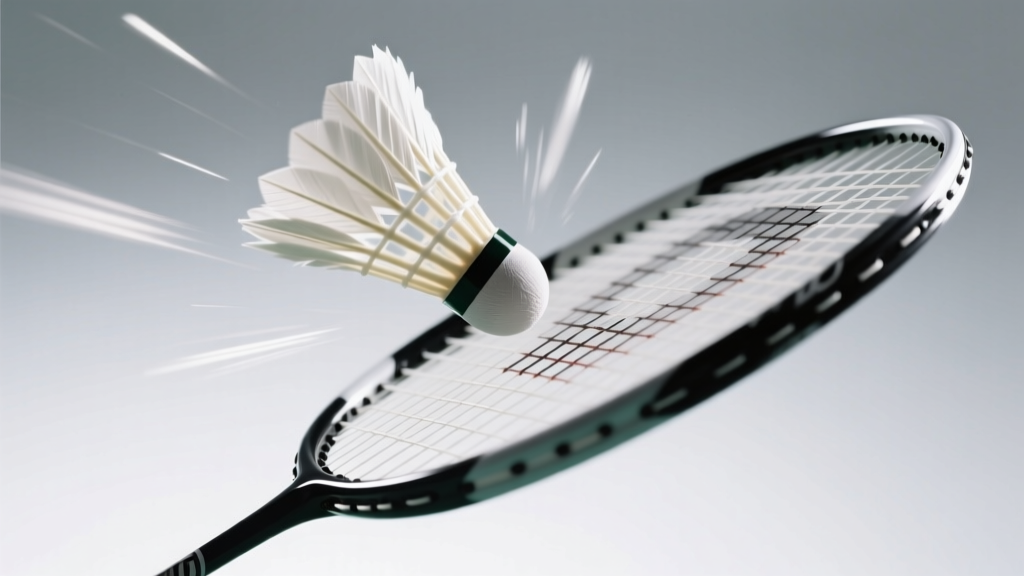
In badminton, the law of inertia—Newton’s First Law of Motion—explains how a shuttlecock remains at rest until struck by a racket and continues in motion until forces like air resistance, gravity, or another impact change its state. This principle governs every phase of play, from serve to smash.
Understanding Inertia in Badminton
The law of inertia states that an object at rest stays at rest, and an object in motion stays in motion with the same speed and direction unless acted upon by an external force. In badminton, this law is constantly demonstrated through the behavior of the shuttlecock and player movements.
How Inertia Affects the Shuttlecock
- The shuttlecock remains stationary on the court until a player serves it.
- Once hit, it travels in a specific trajectory until drag, gravity, or contact alters its path.
- Its unique conical shape causes rapid deceleration due to high air resistance, illustrating how external forces quickly overcome inertia.
Player Movement and Inertia
- A player at rest must exert force to start moving toward the shuttlecock.
- Changing direction quickly requires overcoming the body’s inertia, which elite players do efficiently using proper footwork.
- Sudden stops after a powerful smash demonstrate how players manage their own momentum.
Key Moments Where Inertia Plays a Role
Every stroke and movement in badminton involves overcoming or utilizing inertia. Here are critical phases:
Serve Execution
At the start of a rally, the shuttlecock is motionless. The server applies force via the racket to initiate motion, directly countering inertia.
Smash and Clear Shots
A smash generates high initial velocity. Despite strong forward momentum, the shuttlecock rapidly slows due to air resistance acting against its direction of travel—a clear example of external forces altering inertial motion.
Net Play and Drop Shots
Delicate drop shots rely on minimal force to barely overcome inertia, allowing the shuttlecock to just cross the net before descending quickly under gravity.
| Shuttlecock Type | Initial Speed (km/h) | Deceleration Rate (% loss per meter) | Time to Travel 6m (seconds) |
|---|---|---|---|
| Feather (Yonex Aerosensa) | 300 | 18% | 0.78 |
| Synthetic (Nanjing) | 240 | 12% | 0.85 |
| Practice Foam | 120 | 8% | 1.10 |
The data shows feather shuttlecocks achieve higher initial speeds but decelerate faster due to greater air resistance, confirming how quickly external forces disrupt inertial motion. Synthetic and foam variants maintain speed longer but respond differently to applied force, affecting gameplay dynamics.
Training Implications for Players
Understanding inertia helps athletes improve reaction time and shot precision. Training focuses on:
- Explosive starts to overcome personal inertia quickly.
- Anticipating shuttlecock deceleration due to drag forces.
- Optimizing swing mechanics to maximize force transfer while minimizing energy waste.
Frequently Asked Questions About Inertia in Badminton
How does Newton’s First Law apply to badminton?
Newton’s First Law, or the law of inertia, applies when the shuttlecock remains still until hit and continues moving until forces like air resistance, gravity, or a racket stop it. Players also experience inertia when starting, stopping, or changing direction during rallies.
Why does a shuttlecock slow down so quickly after being hit?
The shuttlecock slows rapidly due to high air resistance caused by its feathered cone and open structure. This external force acts opposite to its motion, quickly overcoming its inertia and reducing speed within meters.
Does the type of shuttlecock affect how inertia works?
Yes. Feather shuttlecocks have higher initial inertia when struck but decelerate faster than synthetic ones due to greater drag. Foam practice shuttles have low mass and inertia, making them slower and less responsive to force.
How do professional players use inertia to their advantage?
Elite players anticipate the rapid deceleration of the shuttlecock and position themselves accordingly. They also use quick bursts of movement to overcome their own inertia, enabling faster reactions and precise shot placement.
Can inertia explain why drop shots are effective?
Yes. Drop shots use minimal force to just overcome the shuttlecock’s inertia, sending it just over the net. The rapid effect of gravity and drag then causes it to fall steeply, making it hard for opponents to reach in time.
More Articles
 When Does the MLB Season End in 2025?
 Who Played Tennis Today? Top Matches & Results
 How Many Baseball Players Are on the Field? Full Breakdown
 How Many Super Bowl Rings Does Jason Kelce Have?
 Who Won Super Bowl 1992? Full Breakdown & Highlights
 How Many Years Did Michael Jordan Play Baseball?
 How Many Games to Win a Set in Tennis?
 Who Won the Super Bowl in 1988? Full Recap & Stats
 How Long Is a Game of Sevens Rugby?
 How Much Do Volleyball Players Make? (2025 Salaries)