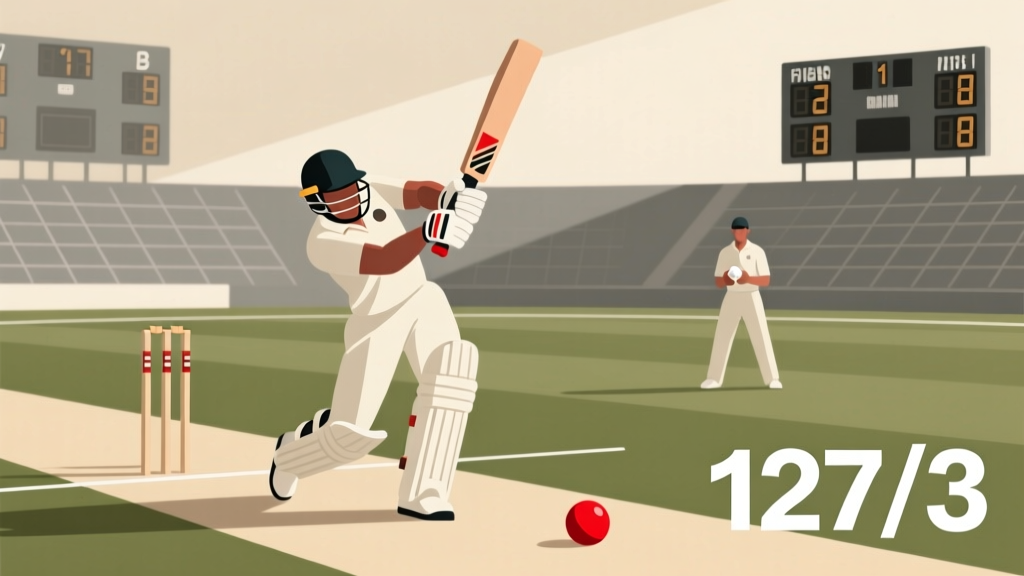
How Does Cricket Scoring Work? Explained
Cricket scoring works by accumulating runs through batting, where each run represents a complete exchange between the wickets, and by capitalizing on extras like wides, no-balls, and byes. Teams take turns to bat and bowl, with the team scoring more runs in their innings declared the winner.
Understanding the Basics of Cricket Scoring
Cricket scoring revolves around runs—the primary measure of offensive success. Runs are scored when batters safely cross each other from one end of the pitch to the other after hitting the ball. Each successful exchange counts as one run. Additionally, automatic runs (called "extras") can be awarded due to bowling errors or uncontrolled deliveries.
How Runs Are Scored by Batsmen
- A single run is completed when both batsmen swap ends without being dismissed.
- Two runs occur when the ball travels far enough to allow two safe exchanges.
- Boundaries: 4 runs if the ball touches the ground before crossing the boundary; 6 runs if it clears the boundary on the full.
- Batsmen may attempt additional runs even after hitting boundaries, though this is rare and risky.
Types of Extras (Bonus Runs)
Extras are runs added to the batting team's total without being hit by the bat. They reflect bowling or fielding mistakes.
- Byes: Awarded when the ball misses the bat and the batsmen run.
- Leg byes: When the ball hits the batter’s body (not arm) and they run, provided they attempted to play the ball.
- Wides: A delivery too far from the batter to be reasonably played; penalizes bowler with one run (or more in some formats).
- No-balls: Illegal deliveries (e.g., overstepping the crease); award one run plus an extra delivery. The next ball is a free hit in limited-overs cricket.
Innings Structure and Match Formats
Different formats dictate how many runs a team can score based on overs and innings limits.
| Format | Overs per Innings | Maximum Overs | Avg. Team Score (2025) |
|---|---|---|---|
| Test Match | Unlimited (per day) | 90 overs/day | ~350 in first innings |
| One Day International (ODI) | 50 | 50 | ~275 |
| T20 International | 20 | 20 | ~170 |
| The Hundred | 100 balls | 100 balls | ~150 |
The table shows that shorter formats prioritize faster scoring, with T20 and The Hundred averaging lower totals but at significantly higher run rates. In contrast, Test cricket allows deeper accumulation over days, leading to higher individual scores and longer partnerships.
Key Scoring Methods and Strategies
Boundary Hitting vs. Singles Rotation
Modern cricket emphasizes strike rotation—taking singles to keep the scoreboard moving. However, big-hitting dominates in limited-overs games. Batsmen now train specifically for power-hitting in the arc between deep midwicket and long-off.
Powerplays and Field Restrictions
- In ODIs and T20s, the first 10 overs (ODI) or 6 overs (T20) are powerplays with only 2 outfielders allowed.
- Teams often score 40–50% of their total during these phases.
- After powerplay, fielding restrictions ease, making aggressive shots riskier.
Frequently Asked Questions About Cricket Scoring
How many runs can you score off one ball?
Technically, there's no strict limit. While 4 or 6 is common, up to 8 runs have been recorded if multiple overthrows occur after a boundary. For example, a ball reaching the boundary after overthrows adds 4 + any additional runs taken.
What happens if a ball hits the helmet behind the wicketkeeper?
Five penalty runs are awarded to the batting side if the ball strikes a helmet left on the ground behind the keeper. This rule discourages careless equipment placement.
Do all players need to bat?
Yes, in most formats, all 11 players bat unless the innings ends early due to all-out dismissal or target achievement. Lower-order batsmen (Nos. 8–11) often lack strong batting skills but can contribute crucial runs.
Can runs be deducted in cricket?
No, runs cannot be deducted once awarded. However, penalties like five-run awards to the opposition exist for misconduct or equipment violations. These are additions, not deductions.
How is the winning team decided if scores are tied?
In case of a tie, outcomes depend on format: Test matches can draw; ODIs may go into a Super Over or use DLS method in knockouts; T20 leagues often use Super Overs or boundary countback rules.
More Articles
 How Many People in a Rugby Team? Full Breakdown
 How Many Super Bowl Rings Does Tom Brady Have?
 Super Bowl 2025 Date and Location
 Where Is Rugby From? Origins and History Explained
 How Much Does It Cost to Ship Golf Clubs?
 Super Bowl LVIII Score: Chiefs 25-22 49ers
 What Does Retired Mean in Tennis? Explained
 How Many Super Bowls Did Tom Brady Play In? (10 Appearances)
 Where Is the Orange Bowl Played? Venue Details
 Why One Player Wears a Different Color in Volleyball