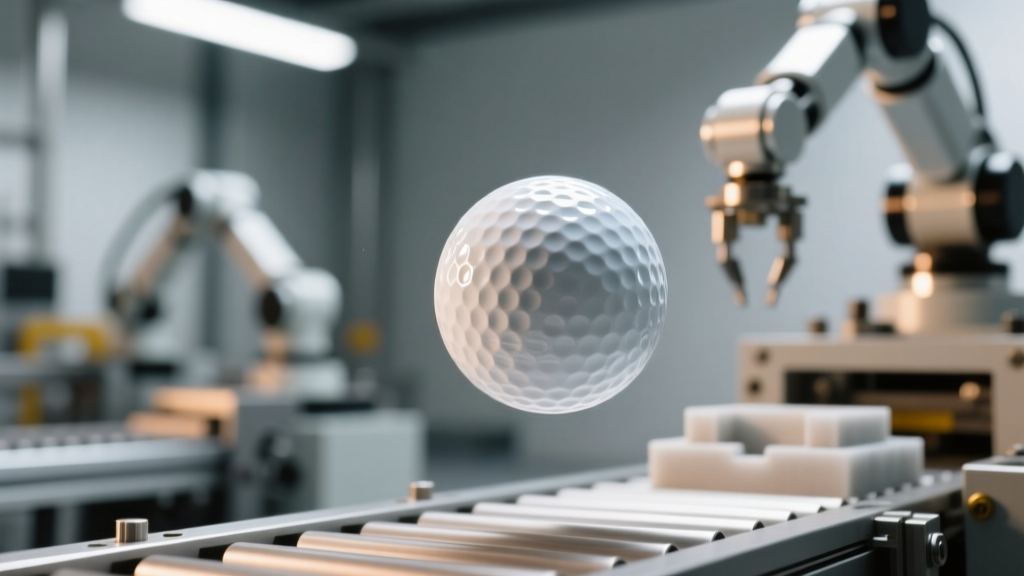
How Are Golf Balls Made? Manufacturing Process Explained
Golf balls are made through a multi-step manufacturing process involving core construction, layering with materials like Surlyn or urethane, and precision molding of dimpled covers to optimize aerodynamics, durability, and performance.
How Golf Balls Are Manufactured: A Step-by-Step Breakdown
The production of modern golf balls combines advanced materials science and precision engineering to deliver consistent performance across swing speeds and playing conditions. Whether two-piece or multi-layer models, all golf balls follow a structured fabrication process that ensures optimal flight, control, and feel.
Core Formation: The Heart of the Ball
The core is the engine of a golf ball, responsible for energy transfer upon impact. It's typically made from synthetic rubber compounds that are compressed and heated to form a high-resilience sphere.
- Cores start as raw rubber mixed with chemical activators and fillers
- The mixture is molded under high pressure and cured at temperatures around 300°F (149°C)
- Diameter ranges from 1.5 to 1.6 inches depending on design
- Firmness varies to influence compression and launch characteristics
Layering: Enhancing Spin and Feel
After the core is formed, additional layers are applied to fine-tune performance:
- Two-piece balls: Core + durable cover (ideal for distance and beginners)
- Three-piece balls: Core + mantle layer + cover (balanced spin and speed)
- Multi-layer (4–5 piece) balls: Advanced designs with gradient cores and multiple mantle layers for elite players
The mantle layer, often made of ionomer resins or thermoplastic urethane, controls spin rates and energy dispersion.
Outer Cover: Dimples and Durability
The final stage involves applying the outer cover and forming the signature dimples.
- Covers are typically made from Surlyn (ionomer resin) or urethane
- Surlyn offers cut resistance and distance; urethane provides superior spin and feel
- Liquid or solid cores are placed in molds, then covered with pre-formed hemispheres or liquid-injected materials
- Once sealed, the ball is imprinted with branding and serial numbers
Dimple Design and Aerodynamics
Dimples reduce aerodynamic drag and increase lift, allowing the ball to fly farther and more stably.
- Average dimple count: 300–500 per ball
- Dimple depth averages 0.010 inch (0.25 mm)
- Patterns vary by brand—Titleist uses spherically tiled tetrahedral, Callaway uses HEX aerodynamics
- Dimple symmetry affects stability in crosswinds
| Feature | Two-Piece Ball | Three-Piece Ball | Multi-Layer Ball |
|---|---|---|---|
| Compression | 70–90 | 80–100 | 85–110 |
| Spin Rate (RPM) | 2,800–3,200 | 3,200–3,800 | 3,500–4,200 |
| Driver Carry Distance (yards) | 240–260 | 230–250 | 235–255 |
| Typical Price (USD) | $20–$30/dozen | $30–$40/dozen | $40–$50/dozen |
| Best For | Recreational Players | Mid-Handicap Golfers | Low-Handicap & Pros |
The data shows a clear trade-off between spin, control, and ease of use. Multi-layer balls offer higher spin for shot shaping but require faster swing speeds to compress fully. Two-piece balls maximize distance with lower spin, ideal for average players seeking forgiveness.
Frequently Asked Questions About How Golf Balls Are Made
What materials are used in golf ball cores?
Golf ball cores are primarily made from polybutadiene, a synthetic rubber compound mixed with zinc oxide or other activators to enhance resilience. This blend is vulcanized under heat and pressure to create a high-energy core that efficiently transfers kinetic energy upon impact.
Why do golf balls have dimples?
Dimples create a thin turbulent boundary layer of air that clings to the ball’s surface, reducing wake drag and increasing lift. This allows the ball to travel up to 70% farther than a smooth ball would. The number, depth, and pattern of dimples are carefully engineered for optimal flight stability and trajectory control.
Are all golf ball covers the same?
No, golf ball covers differ significantly in material and performance. Surlyn covers are durable and resistant to cuts, making them ideal for recreational play. Urethane covers, used in premium balls, are softer and allow greater spin control around the greens, preferred by skilled players despite being less durable.
How long does it take to make a golf ball?
The full manufacturing process—from core molding to final inspection—takes approximately 24 hours. While individual steps like curing or coating may only last minutes, quality control, drying, and finishing processes extend the total production time to ensure consistency and compliance with regulatory standards.
Can golf balls be recycled?
Yes, though not commonly recycled curbside. Companies like First Cut and LostGolfBalls specialize in refurbishing used balls. Full recycling requires separating rubber, resin, and paint layers, which is complex. Some facilities now use pyrolysis to reclaim materials, but widespread industrial recycling remains limited.
More Articles
 Step Stool and Ladder Buying Guide: Safety First
 Rose Bowl 2026 on ABC: How to Watch
 How Much Does It Cost to Ship Golf Clubs?
 Who Bats First in Baseball? Clear Answer & Rules Explained
 Where to Buy a Bowling Ball Near Me | Local & Online Options
 Did Julio Jones Score in the Super Bowl? Final Answer
 How Many Games Left in Baseball 2025? Current Count
 Who Was the Best Tennis Player of All Time?
 When Did Broncos Last Win Super Bowl? Full History
 What Length Golf Clubs Do I Need? Find Your Fit