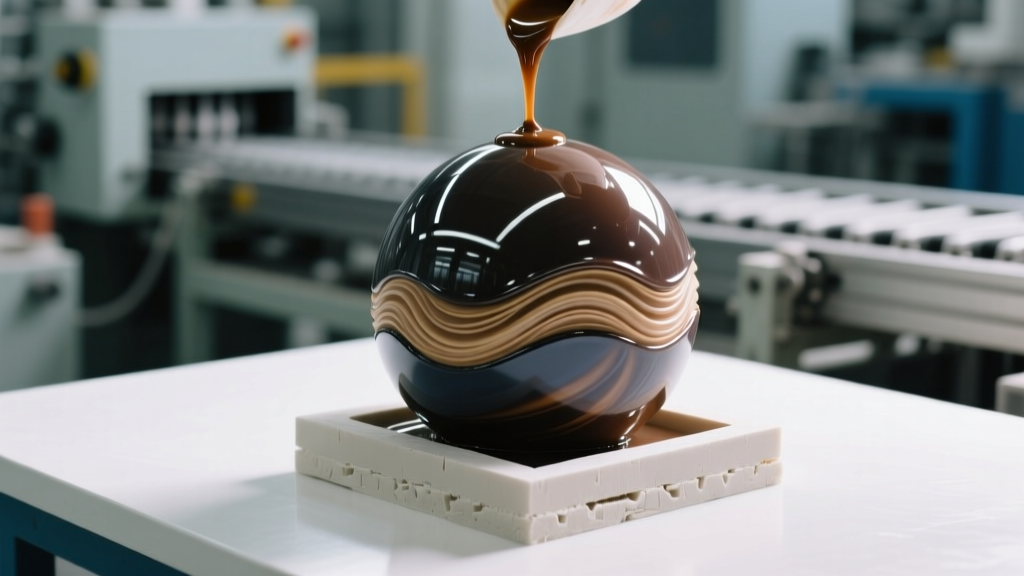
How Are Bowling Balls Made? Inside the Manufacturing Process
Bowling balls are made through a precise manufacturing process involving three main components: the core, the filler (or mantle), and the coverstock. High-density materials like urethane, reactive resin, or polyester are molded around a weighted core, which is then finished with surface treatments to control friction and hook potential on the lane.
The Core: Heart of the Bowling Ball
The core is the innermost part of a bowling ball and determines its weight distribution, balance, and overall motion. It's typically made from dense materials such as bismuth graphite, calcium carbonate, or powdered metals.
Types of Bowling Ball Cores
- Symmetric Cores: Uniform shape that provides predictable, smooth ball motion.
- Asymmetric Cores: Irregular shapes that create sharper, more aggressive hook potential.
- Pancake Cores: Flat, disc-like cores used in entry-level balls for minimal flare.
- High-Mass Bias Cores: Designed to increase track flare and backend reaction.
Coverstock: The Outer Layer That Matters
The coverstock is the outer shell of the bowling ball and directly affects how it interacts with the lane. Modern coverstocks are engineered for specific lane conditions and oil patterns.
Common Coverstock Materials
- Polyester (Plastic): Durable, low-friction surface ideal for straight shots and spare balls.
- Urethane: Offers more friction than plastic, providing moderate hook potential. \li>Reactive Resin: Porous material that grips the lane, delivering strong mid-lane and backend hook.
- Particle-Enhanced Reactive: Contains microscopic particles to increase traction on heavy oil.
Manufacturing Process Step by Step
Bowling ball production combines advanced molding techniques with strict quality control.
- Core Molding: The core is cast using liquid materials poured into molds and cured under heat.
- Core Placement: The cured core is placed into a larger spherical mold cavity.
- Filler Injection: Liquid resin or urethane is injected around the core to form the inner layer.
- Coverstock Application: The outer layer is applied via injection molding or casting.
- Curing & Demolding: The ball is heated to solidify all layers, then removed from the mold.
- Finishing: Sanding, polishing, and surface grit application (e.g., 500–4000 grit) fine-tune performance.
- Hole Drilling: Customized based on the bowler’s hand size and grip style.
Performance Factors Influenced by Construction
The design and materials used impact how a ball behaves on different lane conditions.
| Bowling Ball Type | Average Weight (lbs) | Surface Roughness (μin Ra) | Hook Potential (Degrees) | Price Range (USD) |
|---|---|---|---|---|
| Polyester (Plastic) | 14–16 | 8–12 | 5–10 | 40–80 |
| Urethane | 14–16 | 15–25 | 15–20 | 100–180 |
| Reactive Resin | 14–16 | 30–50 | 25–35 | 180–250 |
| Particle-Enhanced | 14–16 | 40–70 | 30–40 | 220–280 |
The table shows a clear correlation between surface roughness and hook potential—higher micro-inch surface finishes generate more friction. Particle-enhanced balls offer the highest hook but require more skill to control. Entry-level plastic balls remain popular due to affordability and consistency.
Customization and Drilling Techniques
After manufacturing, bowling balls are customized to fit individual players. Professional pro shops use precision drilling machines to align finger and thumb holes with the ball’s mass bias and preferred spin axis.
- Finger Tip Grip: Increases rev rate and hook potential.
- Semi-Fingertip: Balanced control and power.
- Conventional Grip: Full finger insertion for straighter shots.
Layouts are determined using dual-angle measurement systems to optimize ball reaction.
Frequently Asked Questions About How Bowling Balls Are Made
How long does it take to manufacture a single bowling ball?
From core casting to final finishing, the entire production process takes approximately 24 to 48 hours, depending on the brand and curing requirements of the coverstock material.
Are all bowling balls made with the same core design?
No, manufacturers use various core designs—symmetric, asymmetric, and pancake—to influence ball motion. Advanced cores are engineered using computer simulations to optimize track flare and RG (radius of gyration) values.
Can I change the surface of my bowling ball after purchase?
Yes, you can resurface your ball using sanding pads or professional buffing services. Adjusting the grit level (e.g., from 2000 to 500) alters friction and hook response, especially useful when adapting to dry or oily lanes.
What materials are used in eco-friendly bowling balls?
Some companies are experimenting with bio-based resins and recyclable coverstocks. While not yet mainstream, these innovations aim to reduce environmental impact without sacrificing performance.
Why do professional bowlers use multiple bowling balls?
Pros carry multiple balls to adapt to changing lane conditions. A plastic ball may be used for spares, while reactive resin balls handle strikes on oiled lanes. Each ball’s construction is tailored for specific roles during a game.
More Articles
 Who Plays in the Super Bowl? Teams, Rules & History
 What Does MVR Mean in Baseball? Explained
 Where Is the Orange Bowl Played? Venue Details
 How Many Golf Courses Are in The Villages? (2025 Data)
 How Long Is the Super Bowl Usually? Full Duration Explained
 Who Won Super Bowl LVIII? Chiefs Beat 49ers in OT
 A-10 Baseball Standings 2025: Final Rankings & NCAA Outlook
 How Much Do Baseball Umpires Make? MLB & Minor League Pay
 What Time Are the Baseball Games Today? (Oct 4, 2025)
 What Does 'B' Mean in Baseball? Clarifying the Term