Basketball Traveling Rules: What Counts and What Does Not (2026)
What Is Traveling in Basketball?
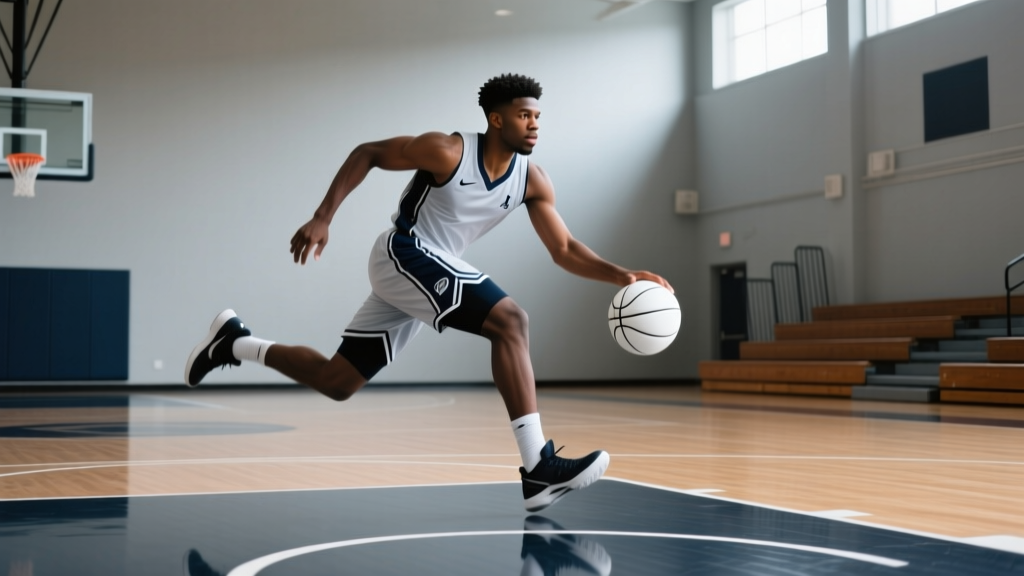
Traveling is a violation where a player holding the ball moves one or both feet illegally. The rule exists to prevent players from gaining an unfair advantage by moving without dribbling.
The Core Rules
Pivot Foot
When a player stops dribbling or receives the ball while standing, one foot becomes the pivot foot. That foot must remain on the floor until the ball is released (pass or shot). Lifting the pivot foot and returning it to the floor before releasing the ball is a travel.
Two-Step Rule
After gathering the ball while moving, a player may take two steps to come to a stop, pass, or shoot. The gather step (step 0) does not count. This means a player can legally take what looks like three steps if the first is the gather.
Gather Step Explained
The gather is the moment a player gains control of the ball. In the NBA, the gather step is not counted as step 1. In FIBA, the interpretation is slightly stricter.
Common Misconceptions
Euro Step
The euro step (a lateral sidestep after the first step) is perfectly legal as long as it occurs within the two allowed steps. James Harden and Giannis Antetokounmpo popularized this move.
Step-Back Jumper
A step-back is legal if the player gathers the ball, takes step 1 backward, then step 2 (or lifts the pivot) before shooting.
NBA vs FIBA vs NCAA Differences
NBA: Most lenient gather-step interpretation. FIBA: Stricter, fewer steps tolerated. NCAA: Similar to FIBA but enforcement varies by conference.
When Is It Definitely a Travel?
Dragging or sliding the pivot foot, falling to the floor with the ball, standing up while holding the ball (if you fell), and taking more than two steps after a legal gather are all clear travels.
More Articles
 When Did Mike Tyson Start Boxing? Full Career Start Timeline
 How Old Is Ben Shelton? Age, Career & Stats 2025
 When Is the Rose Bowl Game Played? 2026 Date & Schedule
 Who Has Lost the Most Super Bowls? Patriots Hold Record
 How Much Does It Cost to Golf at Pebble Beach?
 Who Plays in the Super Bowl? Teams, Format & History
 Why Tennis Scores Are 15, 30, 40 Explained
 Coach with Most Super Bowl Wins: Bill Belichick's Legacy
 Who Did Aaron Rodgers Beat in the Super Bowl?
 When Was Fencing Invented? Origins & Evolution