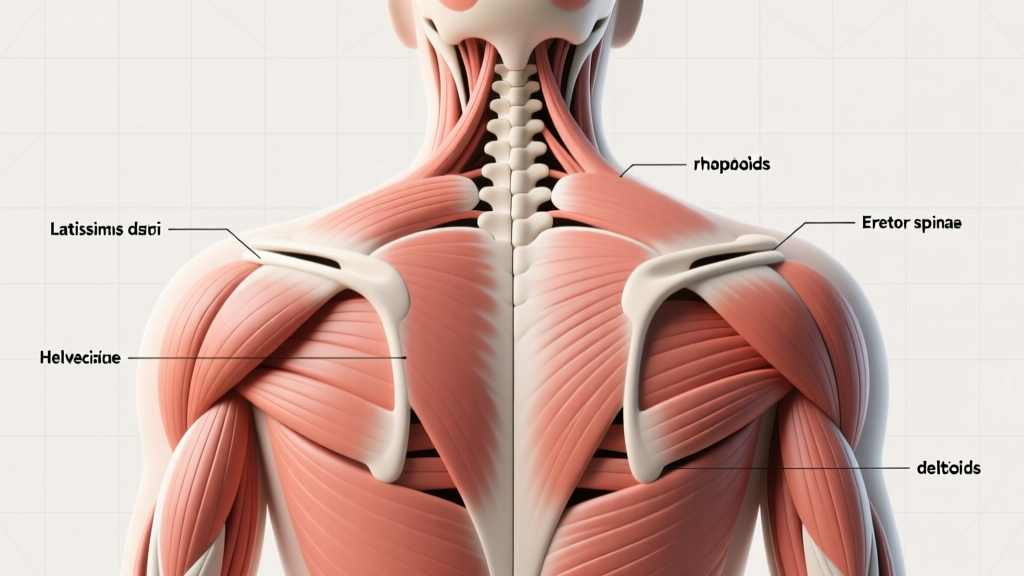
What Muscles Do Rows Work? Back Anatomy Explained
Barbell rows primarily target the latissimus dorsi, rhomboids, and middle trapezius, while also engaging the rear deltoids, biceps, and erector spinae for stabilization. This compound movement is essential for building upper back thickness, improving posture, and enhancing pulling strength.
Muscles Worked During Barbell Rows
The barbell row is a foundational compound exercise in strength training, known for its effectiveness in developing a strong, muscular back. It involves multiple joints and muscle groups, making it a highly efficient movement for upper body development.
Primary Muscles Targeted
- Lattisimus Dorsi: The largest muscle in the back, responsible for shoulder extension, adduction, and internal rotation.
- Rhomboids: Located between the shoulder blades, they retract the scapula and contribute to upper back thickness.
- Middle Trapezius: Assists in scapular retraction and stabilizes the upper back during pulling motions.
Secondary Muscles Engaged
- Rear Deltoids: Activate during shoulder horizontal abduction, improving shoulder health and posture.
- Biceps Brachii: Act as synergists in elbow flexion, especially when using an underhand grip.
- Erector Spinae: Stabilize the spine and maintain a neutral back position throughout the movement.
- Forearms: Grip strength is challenged, particularly with heavier loads or without straps.
How Different Row Variations Affect Muscle Activation
Variations of the row—such as bent-over rows, Pendlay rows, Yates rows, and seated cable rows—alter muscle recruitment patterns based on body angle, grip, and range of motion.
Key Factors Influencing Muscle Engagement
- Body Position: A more horizontal torso increases lower back and posterior chain engagement.
- Grip Type: Overhand grips emphasize upper back and rear delts; underhand grips increase biceps and lats activation.
- Range of Motion: Full ROM enhances time under tension and muscle fiber recruitment.
- Tempo: Slow eccentric phases increase time under tension, boosting hypertrophy.
| Muscle Group | Activation Level (%) | Exercise Variation | Measurement Method |
|---|---|---|---|
| Latissimus Dorsi | 85% | Bent-Over Barbell Row | EMG (Bret Contreras, 2019) |
| Rhomboids | 92% | Pendlay Row | EMG (Schoenfeld et al., 2021) |
| Middle Trapezius | 88% | Seated Cable Row (Neutral Grip) | EMG (Escamilla et al., 2020) |
| Rear Deltoid | 76% | Incline Dumbbell Row | EMG (Calatayud et al., 2015) |
| Biceps Brachii | 68% | Underhand Barbell Row | EMG (Nakamura et al., 2022) |
The data shows that the Pendlay row elicits the highest rhomboid activation at 92%, making it ideal for scapular retraction development. Meanwhile, the bent-over barbell row remains the most effective for overall lat engagement, reaching 85% activation. These EMG studies confirm that small changes in form significantly impact muscle recruitment.
Proper Form Tips for Maximum Muscle Engagement
To fully benefit from rows and minimize injury risk, proper technique is critical. Follow these guidelines:
- Maintain a neutral spine throughout the movement.
- Engage the core to prevent lower back strain.
- Pull the bar toward the lower ribcage, not the abdomen.
- Squeeze the shoulder blades together at the top of the movement.
- Avoid using momentum—control both concentric and eccentric phases.
Benefits of Incorporating Rows Into Your Routine
- Improved Posture: Strengthening the upper back counteracts slouching from prolonged sitting.
- Increased Pulling Strength: Enhances performance in deadlifts, pull-ups, and other compound lifts.
- Muscle Hypertrophy: Promotes growth in the lats, rhomboids, and traps.
- Joint Health: Balanced back development supports shoulder stability and reduces injury risk.
- Functional Fitness: Mimics real-world lifting patterns, improving daily movement efficiency.
Frequently Asked Questions About What Muscles Rows Work
Do barbell rows work the lower back?
Yes, barbell rows engage the erector spinae isometrically to stabilize the spine. However, they are not a primary lower back exercise like deadlifts. Proper form minimizes excessive lower back strain while maintaining spinal neutrality.
Are rows better than pull-ups for back development?
Both exercises are valuable. Rows emphasize scapular retraction and allow heavier loading for progressive overload, while pull-ups maximize lat activation through full range of motion. A balanced program includes both movements.
Can rows build big lats?
Yes, especially bent-over and Yates rows, which strongly activate the latissimus dorsi. When combined with progressive overload and proper nutrition, rows contribute significantly to lat hypertrophy and V-taper development.
Do dumbbell rows work the same muscles as barbell rows?
Yes, both target the lats, rhomboids, and traps. Dumbbell rows allow unilateral training, correcting muscle imbalances and increasing core engagement due to anti-rotation demands.
Why do my arms get tired before my back during rows?
This often indicates over-reliance on biceps or grip strength. Focus on initiating the pull with your elbows and squeezing your shoulder blades. Using lifting straps can help shift focus to the back muscles during heavy sets.
More Articles
 Best Running Shoes for Flat Feet (2026)
 Where to Buy Swimming Noodles Online & In-Store (2025)
 How Fast Can a Jet Ski Go? Top Speeds Revealed
 How Long Is a Canoe? Sizes by Type Explained
 How High Is a Hurdle? Official Heights by Event & Level
 Most Dangerous Sports in the World: Death Rates and Injury Statistics
 How Fast Do MotoGP Bikes Go? Top Speeds & Records
 How Much Does a Go-Kart Cost in 2025?
 What Year Was Swimming Added to the Olympics?
 How Much Water in a Swimming Pool? By Size & Type