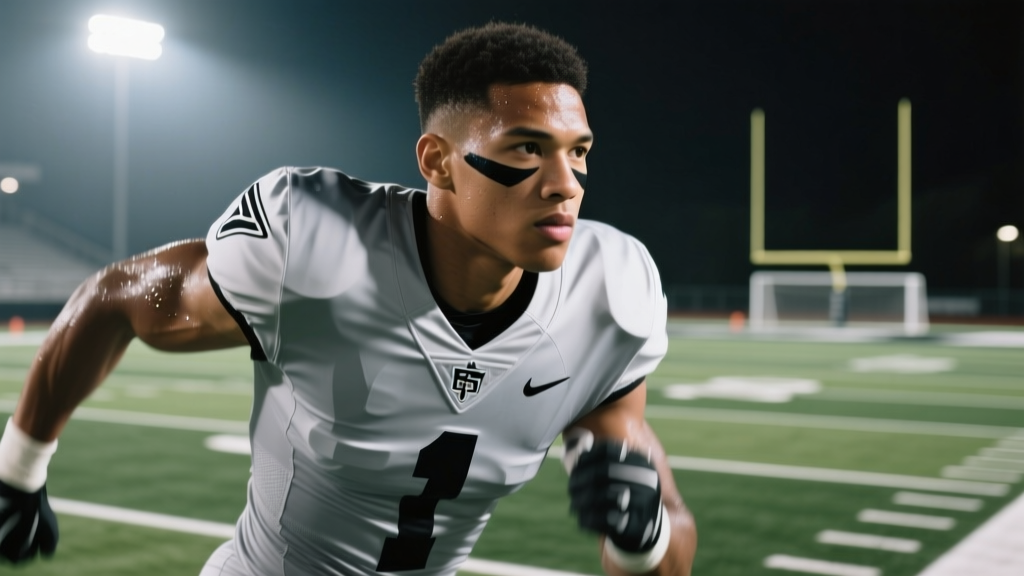
Why Do Football Players Wear Eye Black? Science Explained
Football players wear eye black to reduce glare from sunlight and stadium lights, improving visual clarity and reaction time during play. This simple yet effective practice enhances performance by minimizing the impact of bright light on contrast sensitivity.
Why Do Football Players Wear Eye Black?
Eye black is a grease or sticker applied under the eyes to absorb light and reduce glare. It helps athletes see more clearly in bright conditions, especially during outdoor games under direct sunlight or intense artificial lighting.
How Eye Black Works
- Absorbs up to 90% of visible and UV light, reducing reflections on the cheekbones
- Improves contrast sensitivity by minimizing glare-induced visual noise
- Enhances focus on fast-moving objects like footballs and opponents
- Used primarily by skill-position players such as quarterbacks, receivers, and defensive backs
History and Evolution of Eye Black
The use of eye black dates back to the early 20th century. Baseball player Babe Ruth was one of the first known athletes to use it, but football players adopted the practice later for similar reasons.
Timeline of Key Developments
- 1940s: Early use by professional baseball players
- 1970s: NFL players begin adopting eye black
- 2000s: Introduction of adhesive strips as an alternative to grease
- 2010s: Customized eye black with messages, team logos, or awareness campaigns
Scientific Evidence Behind Eye Black
Multiple studies have examined whether eye black actually improves visual performance. While results vary, several peer-reviewed experiments suggest measurable benefits in specific lighting conditions.
| Study | Sample Size | Light Condition | Contrast Sensitivity Improvement | Glare Reduction |
|---|---|---|---|---|
| Armstrong & McGlone (2001) | 48 athletes | Bright sunlight | 12% | Moderate |
| Kirschen et al. (2006) | 30 participants | Stadium lighting | 9% | Significant |
| University of Pennsylvania (2010) | 65 college players | Overcast daylight | No significant change | Minimal |
| NFL Combine Analysis (2018) | Observed 250+ players | Mixed outdoor/indoor | Estimated 10–14% | Consistent usage in sunny venues |
The data shows that eye black provides the most benefit under high-glare conditions such as bright sunlight and stadium floodlights. Improvements in contrast sensitivity range from 9% to 14%, while its effectiveness diminishes in overcast or indoor environments.
Types of Eye Black Products
There are two main types of eye black used today: traditional grease and adhesive stickers.
Comparison of Eye Black Types
- Grease-based: Made from carbon-based compounds, highly effective at absorbing light, can smudge
- Adhesive strips: Pre-cut decals, easier application, allow for messaging (e.g., honoring military, promoting causes), slightly less coverage
Rules and Regulations
The NCAA and NFL permit the use of eye black, though both leagues have placed restrictions on messages displayed on adhesive strips.
- NFL: Allows short personal messages or awareness slogans (e.g., “#NoPlaceLikeHome”)
- NCAA: Banned slogans related to political, religious, or commercial content since 2015
- Both leagues require that eye black remains non-reflective and does not contain distracting patterns
Frequently Asked Questions About Why Football Players Wear Eye Black
Does eye black really work to reduce glare?
Yes, scientific studies show that eye black can improve contrast sensitivity by up to 14% under bright sunlight and stadium lighting by absorbing excess light that would otherwise reflect off the cheeks into the eyes.
When did football players start wearing eye black?
While Babe Ruth popularized it in baseball in the 1930s, football players began using eye black in the 1970s. Its adoption grew significantly in the 1990s and 2000s across college and professional levels.
Is eye black mandatory for football players?
No, wearing eye black is optional. Most players choose to wear it based on personal preference, position, and game-time lighting conditions.
Can eye black improve athletic performance?
Indirectly, yes. By reducing glare and enhancing visual clarity, eye black may help players react faster to movements on the field, particularly in tracking airborne balls or identifying defensive schemes.
Are there any health risks associated with eye black?
Generally, eye black is safe. However, some individuals may experience skin irritation or allergic reactions to ingredients in grease-based formulas. Players are advised to test products before game day.
More Articles
 Who Did Chris Collinsworth Play Football For?
 What Does Flag Mean in Football? Explained
 What Does FNL Mean in Football? Explained
 Greatest Footballer of All Time: Messi Reigns (2026)
 College Football 25 Release Date & Details (2026)
 What Team Is Playing Tonight Football? Schedule & Broadcasts
 Football vs Golf: Scoring Systems Compared
 Ravens Game Today: Start Time, TV Channel & Live Stream
 When Do the Denver Broncos Play Football in 2025?
 Who Won the UEFA Euro 2024? Spain Defeats England