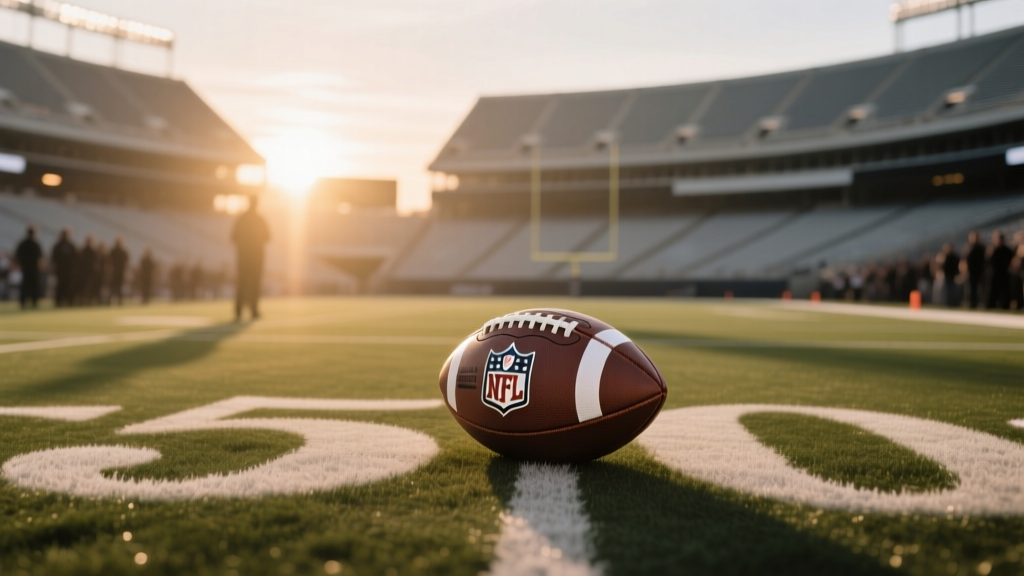
Who Owns the National Football League?
The National Football League (NFL) is not owned by a single individual or entity but is structured as a nonprofit trade association collectively owned by its 32 member teams. Each team owner holds an equal share in the league's operations, revenue streams, and strategic decisions, ensuring a collaborative governance model.
Understanding the Ownership Structure of the NFL
The NFL operates under a unique ownership model that distinguishes it from typical corporate or sports franchises. Rather than being controlled by one person or corporation, the league functions as a collective enterprise.
Key Characteristics of NFL Ownership
- Ownership is distributed among the 32 franchise owners.
- No single owner has controlling power over the entire league. \li>Major decisions require approval from at least 24 of the 32 owners (75%).
- The Commissioner serves as the chief executive officer, appointed by team owners to manage day-to-day operations.
This cooperative structure supports competitive balance and shared financial success across the league.
How NFL Teams Contribute to League Governance
Each NFL team owner participates in high-level decision-making through voting rights and committee involvement. These mechanisms ensure transparency and alignment with the league’s long-term interests.
Decision-Making Processes
Critical actions such as rule changes, expansion, relocation approvals, media rights deals, and disciplinary rulings are subject to team owner votes. The Commissioner enforces policies but cannot unilaterally implement major changes without consensus.
- Media Rights Agreements: Recent multi-billion-dollar contracts with networks like CBS, NBC, FOX, Amazon, and ESPN were approved collectively.
- Franchise Relocations: Moves like the Rams’ return to Los Angeles required supermajority approval.
- Expansion Considerations: Potential future expansion to 34 teams involves financial modeling and market analysis led by ownership committees.
Revenue Sharing and Financial Model
A cornerstone of the NFL’s success is its comprehensive revenue-sharing system, which includes national TV deals, digital rights, merchandise, and licensing income.
National revenues are divided equally among all 32 teams, promoting parity and enabling smaller-market franchises to remain competitive financially.
| Revenue Source | Annual Value (USD) | Shared? |
|---|---|---|
| National Television Contracts | $11.1 billion | Yes |
| Sunday Ticket (Google / YouTube) | $2.0 billion | Yes |
| Licensing & Merchandise | $1.8 billion | Yes |
| Ticket Sales (Home Games) | Varies (~$3M–$6M per game) | No |
| Stadium Naming Rights | Varies ($10M–$50M annually) | No |
The table illustrates how the NFL maximizes fairness through shared national revenue while allowing individual teams to profit from local sources like ticket sales and stadium sponsorships. This balance fosters both competition and cooperation across franchises.
Role of the NFL Commissioner
The Commissioner acts as the primary administrator and public face of the NFL. While not an owner, the Commissioner wields significant influence over league policy, discipline, and external relations.
Roger Goodell has served as Commissioner since 2006 and oversees departments including officiating, player safety, marketing, and international development. His authority stems from the mandate given by team owners, who can remove him with a three-fourths majority vote.
About NFL Ownership: Frequently Asked Questions
Who legally owns the National Football League?
The NFL is legally organized as a 501(c)(6) nonprofit trade association owned collectively by the 32 NFL franchise owners. No single person or company owns the league outright.
Does any single NFL owner control the league?
No single owner controls the NFL. All major decisions require approval from at least 75% of team owners (24 out of 32), ensuring no individual holds disproportionate power.
Can someone buy the entire NFL?
No, it is not possible to purchase the entire NFL. The league cannot be bought as a whole because ownership is structurally decentralized among the 32 teams.
How much does it cost to own an NFL team?
As of 2025, the average NFL team valuation exceeds $5 billion, with top franchises like the Dallas Cowboys worth over $10 billion. Buying a controlling stake typically costs between $4–6 billion depending on the market.
Is the NFL government-funded or publicly traded?
No, the NFL is neither government-funded nor publicly traded. It is privately funded through broadcasting deals, sponsorships, and ticket sales. Individual teams may have minority investors, but none are listed on stock exchanges.
More Articles
 Where Did Cooper DeJean Play College Football?
 When Is Football Halftime? NFL, NCAA & Soccer Break Times
 What Conference Is SMU Football In? (2025 Update)
 How Many Halves in Football? Full Breakdown
 Who Is the Highest Goal Scorer in Football History?
 Who Won the First World Cup Football Tournament?
 Soccer Shin Guard Fitting Guide
 Where to Watch Virginia Tech vs UVA Football 2025
 How Big Is an Acre in Football Fields?
 Where to Watch K-State vs BYU Football 2025