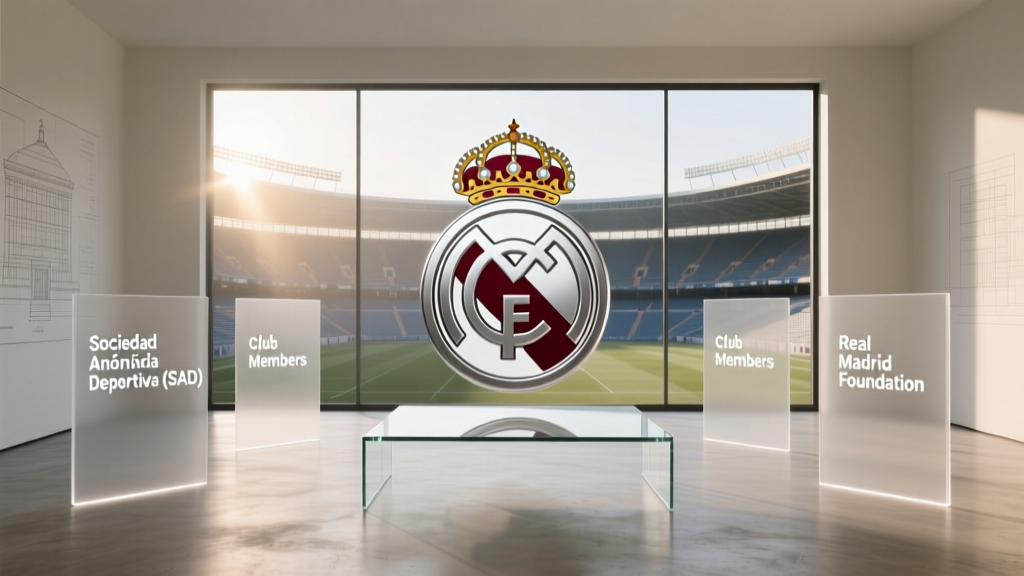
Who Owns Real Madrid? The Member-Owned Model Explained
Real Madrid Club de Fútbol is owned by its members, known as socios, under a unique democratic model that has been in place since the club's founding in 1902. Unlike most professional football clubs globally, Real Madrid is not controlled by an individual billionaire or corporate entity but operates as a membership-based non-profit association.
Understanding Real Madrid's Unique Ownership Model
Real Madrid is one of the few elite football clubs in the world that remains member-owned. This structure distinguishes it from clubs like Manchester City, Chelsea, or Paris Saint-Germain, which are backed by wealthy individuals or state interests.
How Does the Membership System Work?
- Any individual can become a socio (member) by paying an annual fee and meeting basic eligibility requirements.
- Members have the right to vote in presidential elections held every four years.
- The elected president leads the club's board and makes strategic decisions on football operations, finances, and commercial development.
- There are over 90,000 registered members, making it one of the largest fan ownership models in sports.
- The current president, Florentino Pérez, has served multiple terms and is widely credited with transforming Real Madrid into a global brand.
Florentino Pérez: The President and De Facto Leader
Florentino Pérez has been the dominant figure in Real Madrid's modern era. He first became president in 2000 and returned in 2009 after a brief hiatus. His leadership has shaped the club's identity through two distinct periods known for financial strength and sporting excellence.
Pérez's Key Achievements
- Initiated the "Galácticos" policy, signing global superstars like Zidane, Ronaldo, Beckham, and later Cristiano Ronaldo and Gareth Bale.
- Secured major sponsorship deals, including long-term partnerships with Emirates and Adidas.
- Overseen the redevelopment of the Santiago Bernabéu Stadium into a state-of-the-art entertainment complex.
- Guided the club to 14 UEFA Champions League titles, more than any other club in history.
- Maintained financial stability despite high transfer spending, leveraging commercial revenue and matchday income.
Comparison with Other European Football Clubs
Real Madrid's ownership model contrasts sharply with those of other top European clubs. Below is a comparison of ownership structures across leading teams:
| Club | Ownership Model | President/Owner | Founded | Estimated Value (2024) |
|---|---|---|---|---|
| Real Madrid | Member-owned (Socios) | Florentino Pérez | 1902 | $6.07B |
| FC Barcelona | Member-owned (Socios) | Joan Laporta | 1899 | $5.51B |
| Manchester United | Publicly Traded (NYSE: MANU) | Jamie Ratcliffe | 1878 | $4.9B |
| Liverpool FC | Private Ownership (Fenway Sports Group) | John W. Henry | 1892 | $4.75B |
| Paris Saint-Germain | State-Owned (Qatar Sports Investments) | Nasser Al-Khelaifi | 1970 | $4.2B |
The data highlights that member-owned clubs like Real Madrid and Barcelona rank among the most valuable in world football, demonstrating the sustainability and global appeal of their governance models. Despite lacking external investment, both Spanish giants outvalue many investor-backed clubs due to consistent on-pitch success, global branding, and stadium revenues.
Financial Performance and Global Influence
Real Madrid consistently ranks at the top of Deloitte's Football Money League. In the 2022–2023 season, the club reported €856 million in revenue, driven by broadcasting, commercial partnerships, and matchday sales. Its brand value exceeds $1.5 billion, according to Brand Finance estimates.
Revenue Breakdown (2022–2023)
- Broadcasting: 37%
- Commercial: 42%
- Matchday: 21%
This diversified income stream allows Real Madrid to remain financially independent while investing heavily in player acquisitions and infrastructure without relying on external equity funding.
Frequently Asked Questions About Real Madrid Ownership
Who legally owns Real Madrid?
Real Madrid is legally owned by its members (socios). It is structured as a sports association under Spanish law, where members elect a president who serves as the chief executive and public face of the club.
Is Florentino Pérez the owner of Real Madrid?
No, Florentino Pérez is not the owner. He is the elected president of the club. While he wields significant influence over strategy and operations, ultimate ownership rests with over 90,000 members who vote in presidential elections.
Can anyone become a member of Real Madrid?
Yes, any individual aged 14 or older can become a socio by completing an application and paying the annual membership fee, which ranges from €150 to €1,500 depending on the category.
Why doesn't Real Madrid get bought by a billionaire?
Under Spanish law, professional football clubs classified as sports associations cannot be privatized unless they convert to a joint-stock company, which requires a national legislative change. Most members oppose such a move to preserve the club’s democratic traditions.
How often are Real Madrid presidents elected?
Presidential elections are held every four years, or earlier if the incumbent resigns or loses a vote of confidence. The most recent election was in 2021, when Florentino Pérez was re-elected unopposed.
In summary, Real Madrid’s ownership structure is a rare example of democratic governance in modern football. Sustained success on the pitch, combined with strong financial management and global brand expansion, underscores the effectiveness of its member-driven model.
More Articles
 How Many Officials in an NFL Game? 7 Key Roles Explained
 Who Invented Fantasy Football? The True Origin Story
 How Many Days Till Football Season Starts in 2026?
 Did Kyle Shanahan Play Football? Facts & Career Breakdown
 John Madden NFL Career: Did He Play Football?
 What Channel Is Thursday Night Football On?
 Don Bosco NJ Football: Stats, Rivals & Rankings 2025
 Monday Night Football 2026: Time, Schedule & How to Watch
 What Percentage of Americans Like Football Most?
 Don Hutson: The Original NFL Super Receiver