
Who Has the Most College Football Championships?
Yale University holds the most college football championships with 18 claimed national titles, according to historical records from the NCAA and major selector organizations.
Understanding College Football Championships
Unlike modern sports with playoff systems, college football's national champion was historically determined by polls, mathematical rankings, and selector committees. Before the Bowl Championship Series (BCS) in 1998 and the College Football Playoff (CFP) in 2014, champions were awarded retroactively by various organizations, leading to multiple recognized champions in a single season.
How Are National Champions Determined?
- Poll-based selections like the AP Poll and Coaches Poll
- Mathematical ranking systems such as the BCS formula
- Historical selectors including the Billingsley Report, Sagarin Ratings, and others
- Consensus or "unclaimed" titles based on final undefeated records
Top Programs with the Most National Championships
A number of schools have dominated college football over the past century. The count varies depending on which selector organizations are recognized, but Yale, Alabama, and Princeton consistently rank at the top when considering all claimed and unclaimed titles.
| Rank | School | Claimed Titles | Major Selector Recognitions | Last Championship |
|---|---|---|---|---|
| 1 | Yale | 18 | 20 | 1927 |
| 2 | Alabama | 18 | 17 | 2020 |
| 3 | Princeton | 28* | 15 | 1950 |
| 4 | Michigan | 12 | 11 | 2023 |
| 5 | Notre Dame | 11 | 13 | 1988 |
| 6 | Ohio State | 8 | 9 | 2014 |
| 7 | Oklahoma | 7 | 7 | 2000 |
| 8 | USC | 7 | 8 | 2004 |
| 9 | LSU | 4 | 4 | 2019 |
| 10 | Georgia | 3 | 3 | 2022 |
The table shows that Yale and Alabama are tied at 18 claimed titles, though Yale’s championships were primarily earned before 1930. Alabama has won more consensus titles in the modern era, especially under coach Nick Saban. Princeton lists 28 total championships due to inclusion of early-era titles recognized by specific rating systems.
Historical Context of Early Football Dominance
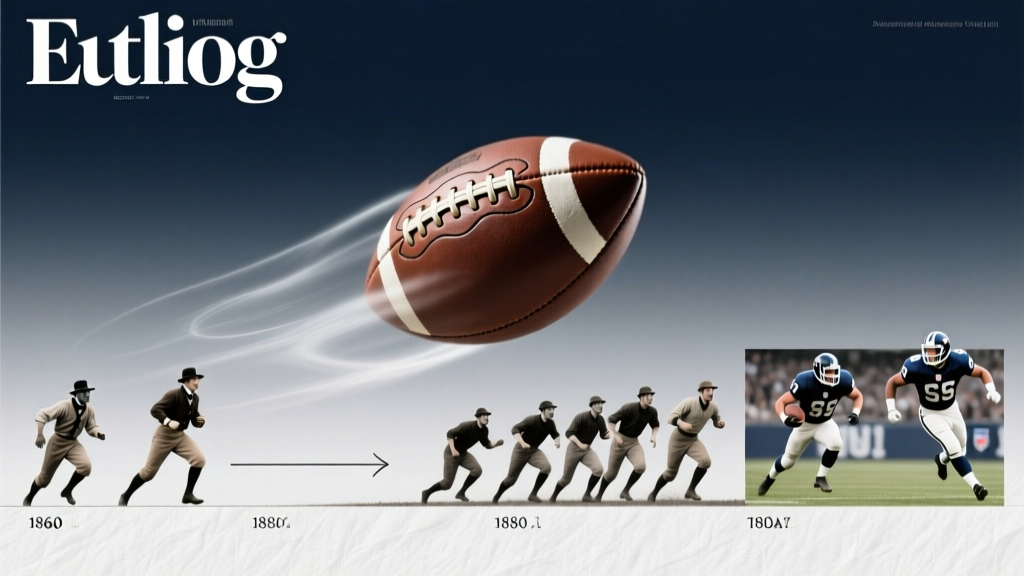
In the late 19th and early 20th centuries, college football was centered in the Northeast. Schools like Yale, Harvard, and Princeton competed in what was known as the "Big Three." During this time, the sport lacked standardized rules and a formal championship structure.
Why Did Ivy League Schools Dominate Early Football?
- Established athletic programs with institutional support
- Limited competition outside the Northeast
- Development of strategic gameplay innovations
- Long-standing rivalries that shaped national perception
Modern Era Champions and the Playoff System
Since the introduction of the BCS in 1998 and the College Football Playoff in 2014, national champions have been determined through structured postseason matchups. This system has reduced controversy and increased fairness in identifying the top team.
Championships Since 2000
- Alabama: 6 titles (2009, 2011, 2012, 2015, 2017, 2020)
- LSU: 3 titles (2003, 2007, 2019)
- Clemson: 2 titles (2016, 2018)
- Georgia: 2 titles (2021, 2022)
- Ohio State: 1 title (2014)
Frequently Asked Questions About College Football Championships
Who has the most NCAA-recognized college football championships?
The NCAA does not officially award a Division I FBS national championship. Instead, it compiles records from various polling and selector organizations. Based on this compilation, Yale and Alabama are tied with 18 recognized national titles each.
Does Alabama have the most national titles in college football?
Alabama claims 18 national championships, the most among active Power Five programs. However, Yale also claims 18, mostly from the 1870s to 1920s. In the modern era (post-1930), Alabama has the most consensus titles.
Why do some schools claim more titles than others?
Schools claim titles based on recognition from major selectors such as the AP Poll, Coaches Poll, or historical systems like the Helms Athletic Foundation. Some institutions include only consensus titles, while others claim every season they were ranked first by any recognized selector.
Has any team won three consecutive national championships?
No team has won three straight consensus national championships in the modern era. Minnesota (1934–1936) and Alabama (1978–1979, though not three-peat) came close. Alabama won back-to-back titles in 2011–2012 and 2017–2018 but did not complete a three-peat.
How are disputed championships resolved?
Disputed championships occur when different polls select different winners (e.g., 1991, 1997). These are not officially resolved, but the NCAA records all major selector outcomes. Over time, consensus forms around certain teams based on strength of schedule, margin of victory, and postseason results.
More Articles
 How Many Football Clubs Are in London? Full List 2025
 How Many Weeks of NFL Football Are There in a Season?
 Who Sings Sunday Night Football Theme 2025?
 How Many Downs in a Football Game? Explained
 What Does a Blitz Mean in Football? Definition & Strategy
 What Teams Play Sunday Football? NFL Schedule Explained
 Where Do the Chicago Bears Play Football?
 Michigan Football Game Today Start Time & How to Watch
 How To Organize Origins: A Practical Framework for Football Club Identity, Heritage, and Archival Integrity
 When Did American Football Begin? Origins & Evolution