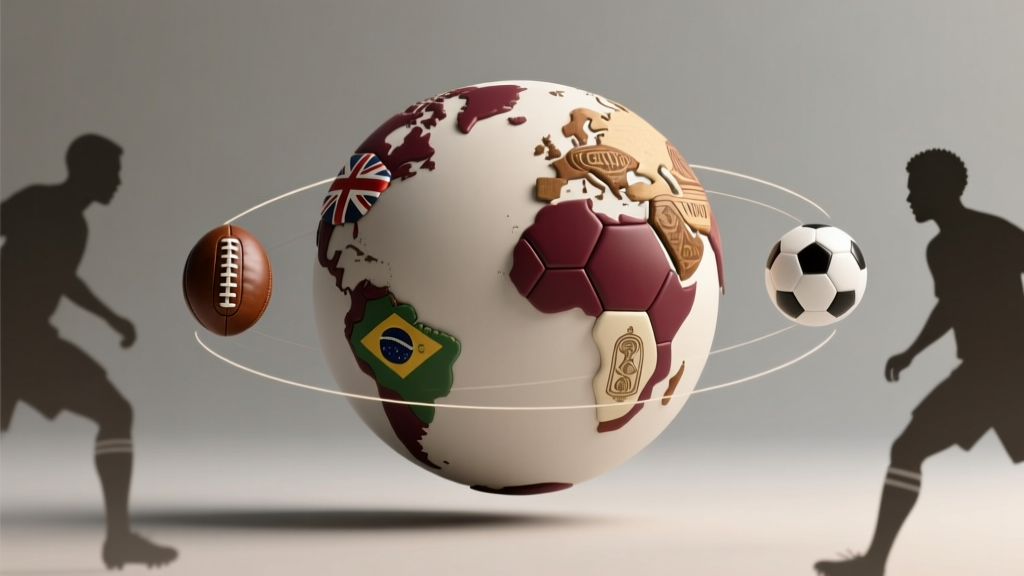
Where Was Football Invented? The True Origin Explained
Football, as known globally, was invented in England, where the modern rules were standardized in the 19th century.
The Origins of Modern Football
While various forms of football-like games existed in ancient civilizations such as China, Greece, and Rome, the sport we recognize today as football (or soccer in some regions) originated in England. The pivotal moment in football's development came in 1863 with the founding of the Football Association (FA), which established a unified set of rules that differentiated football from rugby.
Historical Evolution of Football
- Ancient versions: Cuju in China (2nd–3rd century BC) involved kicking a ball into a net.
- Medieval Europe: Folk football games were chaotic, village-based contests with few rules.
- 19th-century England: Schools played varying forms, prompting the need for standardization.
- 1863: The FA codified the first official rules, banning handling and hacking (kicking opponents).
Key Milestones in Football History
The institutionalization of football in England laid the foundation for its global spread. International matches began in the late 1800s, and FIFA was founded in 1904 to oversee the game worldwide.
Major Developments
- 1872: First official international match between England and Scotland ended in a 0–0 draw.
- 1900: Football became an Olympic sport (as a demonstration event).
- 1930: First FIFA World Cup held in Uruguay.
- 1954: UEFA formed to govern European football.
| Year | Event | Location | Significance |
|---|---|---|---|
| 1863 | Formation of The Football Association | London, England | Established first standardized rules of football |
| 1872 | First International Match | Glasgow, Scotland | England vs. Scotland, first official international |
| 1904 | Founding of FIFA | Paris, France | Global governing body created with 7 founding nations |
| 1930 | First FIFA World Cup | Montevideo, Uruguay | 13 teams participated; Uruguay won inaugural title |
| 1954 | UEFA Formation | Basel, Switzerland | Launched European competitions including Champions League |
The table highlights key institutional milestones that transformed football from a local pastime into a global phenomenon. England's role in codifying the rules was foundational, while FIFA's creation enabled international competition. The World Cup's inception marked football’s arrival as a premier world sport.
Global Spread and Cultural Impact
British sailors, traders, and engineers introduced football to South America, Europe, and parts of Asia in the late 19th century. Clubs formed rapidly in countries like Argentina, Italy, and Germany. By the 20th century, football had become the world’s most popular sport, uniting cultures and inspiring national pride.
Today, over 270 million people play football worldwide, according to FIFA. Major leagues such as the English Premier League, La Liga, and Bundesliga attract billions in viewership annually.
Frequently Asked Questions About Where Football Was Invented
Where was football invented?
Modern football was invented in England, where the Football Association established the first official rules in 1863.
Did China invent football?
Ancient China had a game called cuju, which involved kicking a ball through a goal, but it was not the same as modern football. While cuju is an early precursor, the organized sport we know today originated in 19th-century England.
Why is England considered the birthplace of football?
England is considered the birthplace because it was the first country to standardize the rules of football through the Football Association in 1863, separating it from other football codes like rugby.
When did football become a professional sport?
Football turned professional in 1885 when the FA legalized player payments. The first professional league, the English Football League, was founded in 1888.
How did football spread around the world?
Football spread globally through British expatriates, colonial influence, and international trade. The formation of FIFA in 1904 and the first World Cup in 1930 accelerated its worldwide popularity.
More Articles
 When Does College Football Practice Start? 2025 Dates
 Who Is Playing NFL Football Tonight? Schedule & TV Info
 Who Invented Football? The True Origins Revealed
 Best Football Team All-Time: Real Madrid (2026)
 Oldest NFL Teams: Cardinals and Bears Since 1920
 When Was American Football Started? History & Origins
 Why We Love Football: The Global Passion Explained
 Which Came First: Soccer or Football?
 What Conference Is USC Football In? Big Ten Details
 How Many Football Scholarships in Division I? Full Breakdown