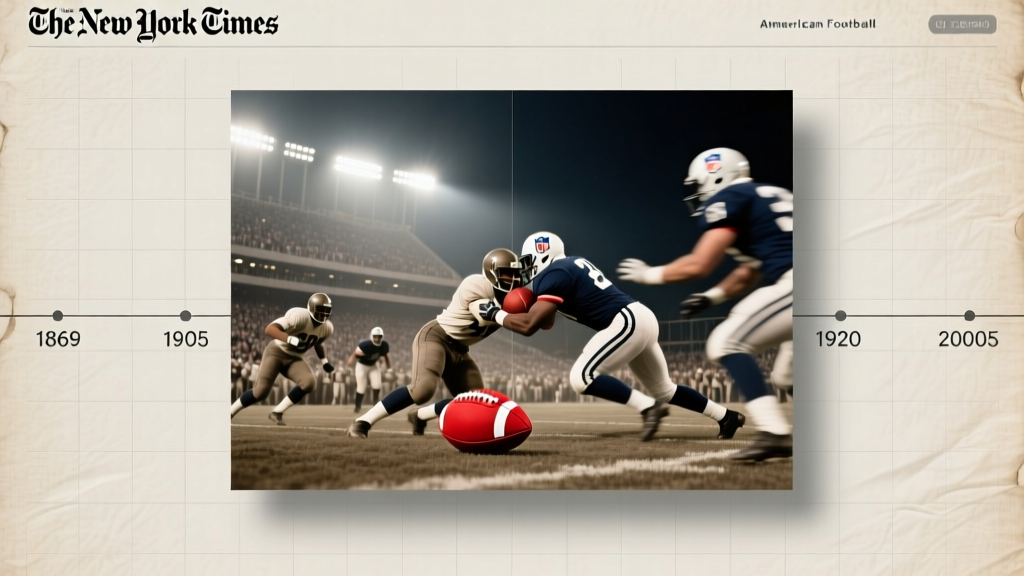
American Football Origins: First Invented When?
American football was first invented on November 6, 1869, when Rutgers and Princeton played the first intercollegiate football game using rules based on soccer, marking the origin of modern American football.
The Birth of American Football
The origins of American football trace back to a blend of rugby and soccer traditions brought to U.S. colleges in the 19th century. The sport evolved from early forms of mob football played in England and adapted by universities seeking organized competition.
Key Milestones in Early Development
- 1869: First intercollegiate game between Rutgers and Princeton.
- 1874: Harvard vs. McGill introduced rugby-style rules. \li>1876: Intercollegiate Football Association formed with standardized rules.
- 1880: Walter Camp introduces downs system and line of scrimmage.
- 1906: Forward pass legalized to improve safety and gameplay.
How College Games Shaped the Sport
Early American football was heavily influenced by British rugby and association football (soccer). However, it diverged significantly due to innovations led by Walter Camp, known as the “Father of American Football.” His rule changes, including the snap from center and the system of downs, distinguished the game from its predecessors.
Major Rule Changes That Defined the Game
| Year | Rule Change | Impact |
|---|---|---|
| 1874 | Adoption of rugby rules (running with ball, tackling) | Shifted gameplay from soccer-style to physical contest |
| 1880 | Introduction of line of scrimmage and snap | Created structured offensive formations |
| 1882 | Downs system (3 downs to gain 5 yards) | Encouraged strategic play over brute force |
| 1906 | Legalization of forward pass | Opened up field, reduced pile-ups, increased scoring options |
| 1933 | Introduction of hash marks and 10-yard first down | Standardized field dimensions and measurement |
This evolution shows how tactical innovation transformed a rough campus pastime into a structured, strategy-driven sport. The shift from soccer-like rules to a unique gridiron game was largely complete by the early 20th century.
From Campus Rivalries to Professional Leagues
By the 1920s, college football had gained massive popularity. This paved the way for professional teams, culminating in the formation of the American Professional Football Association (renamed NFL in 1922) in 1920. The league formalized professional play and expanded the sport nationally.
| Year | Event | Teams Involved | Significance |
|---|---|---|---|
| 1869 | Rutgers vs. Princeton | Rutgers, Princeton | First intercollegiate match; 6–4 final score |
| 1874 | Harvard vs. McGill | Harvard, McGill | Introduced handling and tackling rules |
| 1892 | First pro game | Pittsburgh Athletic Club vs. Allegheny | William Heffelfinger paid $500—first known pro player |
| 1920 | APFA founded | 10 founding teams | Laid foundation for modern NFL |
| 1922 | Renamed National Football League | N/A | Established brand identity and governance |
Data highlights the progression from amateur contests to professional organization. The 1892 game marked the turning point where skill was monetized, setting the stage for a multi-billion-dollar industry. By 1922, the NFL’s rebranding solidified its role as the premier league.
Frequently Asked Questions About the Invention of American Football
When was the first American football game played?
The first intercollegiate football game was played on November 6, 1869, between Rutgers and Princeton. Rutgers won 6–4, using rules similar to soccer, which is widely recognized as the birth of American football.
Who invented American football?
No single person invented American football, but Walter Camp is considered the “Father of American Football” for his key rule changes in the 1880s, including the line of scrimmage and downs system, which shaped the modern game.
Was American football derived from rugby or soccer?
American football originated from both soccer and rugby. The 1869 Rutgers-Princeton game used soccer-style rules, but after 1874, Harvard's adoption of rugby elements like running and tackling became central to the evolving sport.
When did the forward pass become legal?
The forward pass was legalized in 1906 by the Intercollegiate Rules Committee to reduce injuries and increase offensive variety. It revolutionized gameplay and eventually led to the modern passing-oriented NFL.
When was the NFL founded?
The NFL was founded as the American Professional Football Association (APFA) on August 20, 1920. It was renamed the National Football League in 1922 and has since grown into the most popular sports league in the United States.
More Articles
 How Long Is an NFL Football Game? (2025 Data)
 Where Can I Buy Football Cards? Top Sources 2025
 Who Did Jesse Palmer Play Football For? Florida Gators
 When Was the First Football Game Played?
 Who Is the Greatest Football Player of All Time?
 What Does INT Mean in Football Manager? Explained
 Where to Watch UCLA vs Iowa Football 2025
 College Football Rankings Update Schedule (2026)
 Florida Gators Football Ranking: 2026 AP Poll
 Who Created the Game of Football? History & Origins