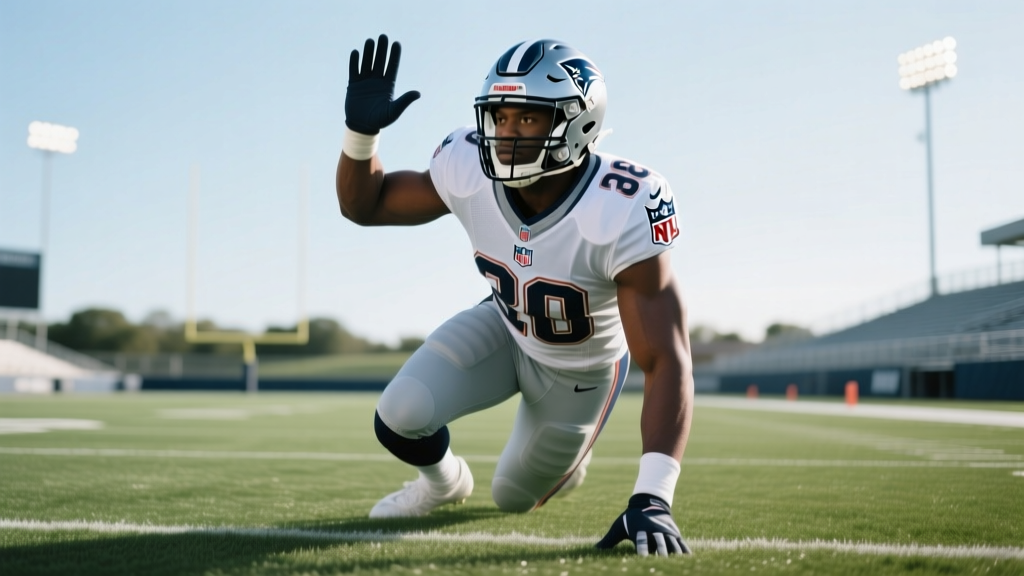
What Position Is a Safety in Football? Key Roles Explained
A safety in football is a defensive backfield position responsible for deep coverage, pass protection, and supporting run defense. There are two types: free safety (FS) and strong safety (SS), each with distinct roles based on field side and matchup responsibilities.
What Is a Safety in Football?
In American football, the safety is a key defensive position located in the secondary—the last line of defense. Safeties typically line up 10 to 15 yards behind the line of scrimmage and are responsible for preventing long pass plays, providing help over the top in man or zone coverage, and tackling ball carriers. Their positioning allows them to read the quarterback and react to both passing and running plays.
Core Responsibilities of a Safety
- Defend against deep passes and prevent big gains
- Support run defense by filling gaps when necessary
- Provide help in zone or man-to-man coverage
- Act as the 'last line of defense' if offensive players break through
- Occasionally blitz the quarterback on designed plays
Differences Between Free Safety and Strong Safety
While both safeties play in the back end, their roles differ significantly based on alignment and skill sets.
Free Safety (FS)
The free safety is typically the fastest and most instinctive defender in the secondary. Positioned toward the middle or weak side of the field, the FS focuses on deep coverage and reading the quarterback. This player often acts as the 'center fielder' of the defense.
Strong Safety (SS)
The strong safety lines up on the side of the field with the tight end (the 'strong' side). SS players are usually more physical and versatile—often involved in run support and covering larger receivers or tight ends. They’re generally stronger and slightly slower than free safeties but more involved in close-range tackling.
| Statistic | Free Safety (FS) | Strong Safety (SS) |
|---|---|---|
| Average Weight (lbs) | 195 | 215 |
| Average Height | 6'0" | 6'1" |
| 40-Yard Dash Avg (seconds) | 4.45 | 4.60 |
| Primary Coverage Zone | Deep Middle / Center Field | Strong Side / Tight End |
| Tackles per Game (Avg.) | 4.2 | 5.8 |
| Interceptions per Season (Avg.) | 3.1 | 1.9 |
The data shows that free safeties tend to be faster and intercept more passes due to their deep-coverage role, while strong safeties record more tackles, reflecting their involvement in run support. Height differences are minimal, but weight and speed favor the FS for coverage and the SS for physicality.
How Safeties Fit Into Defensive Schemes
Safeties are critical in both 4-3 and 3-4 defensive alignments. Their duties shift depending on whether the defense runs zone or man coverage.
Role in Zone Defense
In zone schemes like Cover 2 or Cover 3, safeties divide the deep portion of the field. In Cover 2, both safeties take half of the deep field. In Cover 3, they combine with cornerbacks to split the field into thirds, with one safety protecting the middle deep zone.
Role in Man-to-Man Defense
In man coverage, especially Cover 1 or Cover 3 Fire, one safety (usually the free safety) plays deep center as 'help,' while the strong safety may cover a tight end or slot receiver. Their ability to read and react prevents explosive plays.
Famous NFL Safeties
- Ed Reed (Baltimore Ravens) – Known for his range and ball-hawking skills, Reed recorded 64 interceptions in his career.
- Earl Thomas (Seattle Seahawks) – A centerpiece of the 'Legion of Boom,' excelled in deep coverage and range.
- Tyrann Mathieu (Kansas City Chiefs) – A modern hybrid safety known for versatility in coverage and run support.
- Derwin James (Los Angeles Chargers) – Blurs the line between safety and linebacker with elite tackling and coverage ability.
Skills and Attributes of Elite Safeties
Top-tier safeties combine physical traits with mental processing:
- Field Vision: Ability to read quarterbacks and anticipate routes.
- Speed and Range: Crucial for covering large areas of the field.
- Tackling Accuracy: Must reliably bring down ball carriers in space.
- Communication: Often direct secondary alignments pre-snap.
- Ball Skills: Includes interception timing and pass deflections.
Common Questions About the Safety Position in Football
What does a safety do in football?
A safety defends against deep passes, supports run defense, and serves as the final layer of protection in the secondary. They must read the offense quickly and respond to both pass and run threats.
What’s the difference between free safety and strong safety?
The free safety focuses on deep coverage and ball awareness, usually playing center field. The strong safety aligns near the tight end, is more involved in run support, and often covers bigger receivers or tight ends.
Can a safety blitz the quarterback?
Yes, safeties can and do blitz, especially in pressured schemes or on third down. While less common than linebacker or cornerback blitzes, a safety blitz can disrupt timing and force hurried decisions.
Who are the best safeties in NFL history?
Legendary safeties include Ed Reed, Troy Polamalu, Ronnie Lott, and John Lynch. These players combined elite instincts, hard hitting, and game-changing playmaking ability.
Is safety a hard position in football?
Yes, safety is one of the most mentally and physically demanding positions. It requires rapid decision-making, excellent spatial awareness, and the courage to deliver or absorb big hits in open space.
More Articles
 Dallas Cowboys Game Time Tomorrow: 3:25 PM CT
 When Do the New England Patriots Play Next? 2025 Game Date
 Will College Football 26 Be on PC? Yes, Here's What We Know
 Who Invented Football and Where Was It Created?
 Why Baseball Fields Are Attached to Football Fields
 Where Do the Dallas Cowboys Play Football?
 When Does College Football 26 Come Out? Release Date Info
 How Many College Football Players Are There? 2025 Stats
 How Long Does a Football Game Last? Full Breakdown
 Best Football Boots 2026: Data-Driven Picks