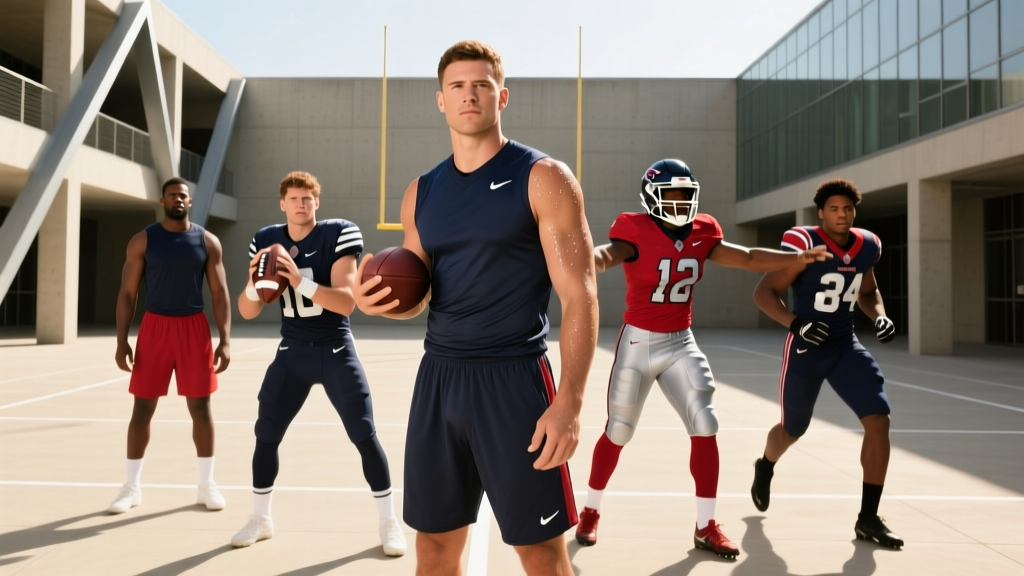
What Football Position Should I Play? Find Your Fit
If you're wondering what football position should I play, the best choice depends on your physical traits, skills, personality, and passion. Generally, faster, agile players excel in wide receiver or cornerback roles; strong, powerful athletes fit well at offensive or defensive line; intelligent, composed individuals often succeed as quarterback; and versatile, high-energy players thrive as linebackers or running backs.
Assess Your Physical Attributes
Your body type is one of the most reliable indicators of which football position suits you best. While heart and work ethic matter, natural physical advantages help determine positional fit at competitive levels.
- Height and Weight: Taller, heavier players typically perform better on the offensive or defensive line, tight end, or safety.
- Speed: Players with elite acceleration and top-end speed are ideal for wide receiver, running back, or cornerback.
- Strength: Linemen and fullbacks require significant lower- and upper-body strength for blocking and tackling.
- Agility: Positions like slot receiver, linebacker, and safety demand quick changes in direction and reaction time.
Key Physical Benchmarks by Position
| Position | Avg Height (in) | Avg Weight (lbs) | Avg 40-Yard Dash (sec) | Typical BMI |
|---|---|---|---|---|
| Quarterback | 76 | 220 | 4.80 | 27.1 |
| Running Back | 70 | 210 | 4.50 | 26.8 |
| Wide Receiver | 73 | 195 | 4.45 | 24.6 |
| Offensive Lineman | 78 | 310 | 5.30 | 34.2 |
| Linebacker | 74 | 245 | 4.70 | 29.5 |
| Cornerback | 70 | 190 | 4.40 | 24.0 |
| Defensive End | 76 | 275 | 4.75 | 31.0 |
The data shows clear physical distinctions between positions. For example, offensive linemen are significantly heavier and slower than cornerbacks, who prioritize speed and agility. Running backs combine moderate size with elite speed, while quarterbacks tend to be tall with average speed but above-average arm strength and cognitive processing.
Evaluate Your Skills and Mental Traits
Beyond physicality, your skill set and mental makeup play a crucial role in determining the right football position.
- Decision-Making: Quarterbacks and centers must read defenses quickly and make split-second decisions.
- Hand-Eye Coordination: Tight ends, receivers, and defensive backs need excellent catching and ball-tracking ability.
- Leadership: Quarterbacks, middle linebackers, and safeties often serve as on-field leaders.
- Toughness and Relentlessness: Linemen and linebackers must sustain physical contact and maintain intensity.
- Spatial Awareness: Safeties and outside linebackers must understand field coverage and gap responsibility.
Match Personality to Position
Your temperament can influence where you’ll thrive. Football demands emotional intelligence and self-awareness.
- Quarterback: Calm under pressure, confident, vocal leader.
- Running Back: Aggressive, decisive, loves physical contact.
- Wide Receiver: Competitive, fastidious about route precision, resilient after drops.
- Offensive Lineman: Quietly dominant, team-first mentality, enjoys blocking.
- Linebacker: Intense, instinctive, loves hitting and controlling the game.
- Cornerback/Safety: Confident, alert, enjoys one-on-one matchups.
Try Multiple Positions in Practice
Especially at youth or amateur levels, experimenting helps identify where you perform best. Coaches often spot potential you may not see. Consider rotating through:
- Scout team offense/defense drills
- Seven-on-seven passing leagues (ideal for QB, WR, DB)
- Controlled tackle scrimmages to test physicality
- Special teams opportunities (kick return, punt coverage)
Many NFL stars changed positions en route to success—e.g., Jimmy Garoppolo started as a walk-on safety, Julian Edelman played quarterback in college.
Frequently Asked Questions About What Football Position You Should Play
What football position should I play if I'm short but fast?
You’re ideally suited for running back, slot receiver, or cornerback. These roles value burst, agility, and quickness over height. Players like Darren Sproles (5'6") and Tyreek Hill (5'10") thrived despite being shorter due to elite speed and elusiveness.
Can I play quarterback if I've never played before?
Yes, especially at younger levels. Quarterback requires learning mechanics, reading defenses, and leadership—but these can be developed. If you’re coachable, have a strong arm, and good decision-making, it’s worth trying. Many high school and college QBs transitioned late.
What is the easiest football position for beginners?
Positions like fullback, backup tight end, or special teams gunner can be more straightforward initially, focusing on blocking or coverage without complex reads. However, “easiest” varies by individual strengths—some find linebacker’s physicality simpler than QB’s mental load.
What position should I play if I'm tall and athletic?
Consider wide receiver, tight end, or defensive end. Tall, athletic players often dominate in jump-ball situations or as edge rushers. Examples include Travis Kelce (6'5") and Chase Young (6'5"); their length and mobility make them disruptive forces.
Do I need to be the strongest guy to play defense?
No. While strength helps, especially for linemen, speed, technique, and instincts matter more for linebackers and defensive backs. Players like Devin McCourty (safety) succeeded through film study, positioning, and consistency—not just brute strength.
More Articles
 How Many Pro Football Teams Are There? (2025 Data)
 What Happens If You Tie in Fantasy Football?
 What Football Conference Is Navy In? (2025 Update)
 Who Invented Football and When Was It Created?
 How Long Is a Football Field in Meters?
 What Does EPA Mean in Football? Explained
 What Position Is LS in Football? Explained
 When Is Halftime in Football? Duration & Rules Explained
 How Big Is a Football Goal? Official Size & Dimensions
 Monday Night Football 2026: Time, Schedule & How to Watch