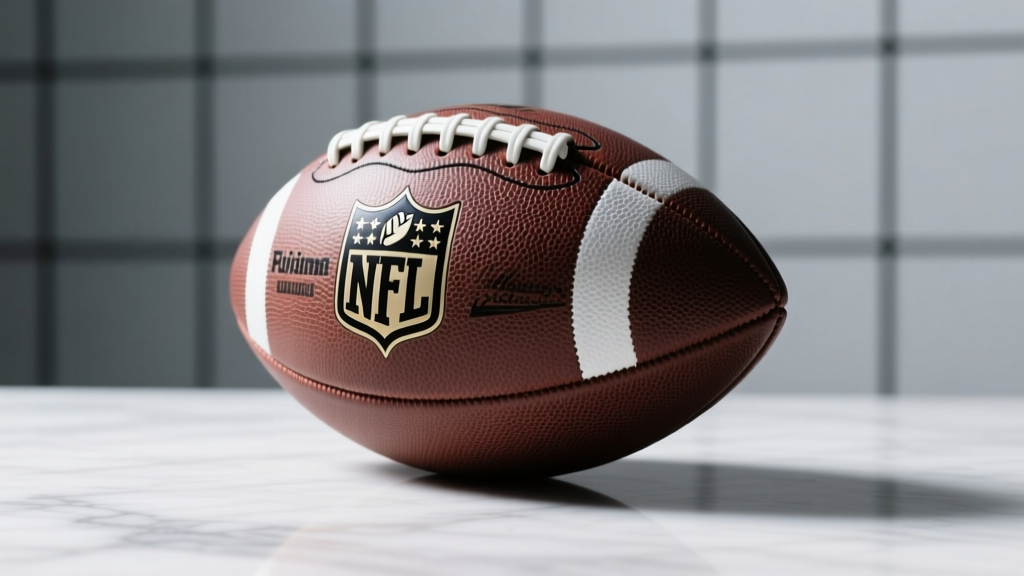
What Football Does the NFL Use? Official Ball Details
The NFL uses a specific type of leather football manufactured by Wilson, known as the "The Duke" model, which meets strict size, weight, and performance standards set by the league for all official games.
Overview of the Official NFL Football
The National Football League (NFL) has used Wilson Sporting Goods as its exclusive supplier of game balls since 1941. The official ball, officially named "The Duke", is a high-performance pigskin leather football engineered to meet rigorous professional standards. It is used in every regular-season and playoff game across the league.
Key Features of the NFL Game Ball
- Made from genuine Horween leather tanned in Chicago
- Meets exact NFL specifications for size, shape, and air pressure
- Handcrafted with meticulous stitching for durability and grip
- Used exclusively by quarterbacks, receivers, and kickers during games
History and Evolution of the NFL Football
The design of the modern American football has evolved significantly since the early 20th century. Early balls were made from inflated animal bladders wrapped in leather and varied greatly in shape and size. As the sport became more standardized, so did the equipment.
In 1941, Wilson signed an exclusive agreement with the NFL to supply game balls. This long-standing partnership ensures consistency and quality control. The nickname "The Duke" was originally given in honor of Wellington Mara of the New York Giants and was reintroduced in 2007 after a decades-long absence.
Milestones in NFL Ball Development
- 1941: Wilson becomes official ball supplier
- 1970s: Introduction of standardized inflation and inspection protocols
- 2006: Temporary switch to synthetic composite ball abandoned due to player feedback
- 2017: Implementation of RFID tracking chips in game balls for analytics
Specifications of the Official NFL Football
The NFL enforces strict physical and performance standards for its game balls. These are verified before each game by officials and must remain within regulated parameters throughout play.
| Specification | Value | Measurement Method |
|---|---|---|
| Length | 11 inches (27.9 cm) | End-to-end along longest axis |
| Circumference (long axis) | 28–28.5 inches (71.1–72.4 cm) | Tape around pointed ends |
| Circumference (short axis) | 21–21.25 inches (53.3–54.0 cm) | Tape around center stripe |
| Weight | 14–15 ounces (396–425 g) | Calibrated scale |
| Air Pressure | 12.5–13.5 psi | Digital pressure gauge |
| Material | Horween Leather Company cowhide | Supplier certification |
| Stitching | Hand-stitched with nylon thread | Visual and tactile inspection |
The data shows that the NFL maintains tight tolerances on ball dimensions and pressure to ensure consistent handling and flight characteristics. Small variations can affect quarterback grip, spiral efficiency, and receiver catchability—critical factors in high-stakes gameplay.
Notably, the use of natural leather over synthetic materials preserves traditional feel and traction, especially in wet or cold conditions, despite advances in alternative materials.
Game-Day Ball Management and Protocols
Each NFL game uses approximately 36 official footballs: 24 for outdoor games and 12 for indoor stadiums. These are inspected two hours before kickoff by referees and stored under controlled conditions.
Ball Preparation Process
- Each ball is inflated to between 12.5 and 13.5 psi
- Branded with the team name and game identifier
- Rubbed with a damp cloth to enhance grip
- Monitored continuously during the game
Home teams are responsible for providing balls, but visiting teams may approve or reject them. Kickoff and punt balls are marked differently and reserved for special teams use.
Frequently Asked Questions About the NFL Football
Why is the NFL football called "The Duke"?
The name "The Duke" honors Wellington Mara, the longtime owner of the New York Giants, whose father, Tim Mara, founded the team. The nickname was coined by legendary coach Vince Lombardi and reintroduced by the NFL in 2007 as the official name for game balls.
Are all NFL footballs made by Wilson?
Yes, Wilson has been the exclusive manufacturer of official NFL game balls since 1941. Every ball used in regular-season and postseason games is produced at Wilson’s facility in Ada, Ohio, using leather supplied by Horween Leather Company in Chicago.
Do NFL footballs have chips inside for tracking?
Yes, since 2017, all official NFL footballs contain RFID chips manufactured by Zebra Technologies. These chips enable real-time tracking of ball location, speed, and possession, supporting broadcast graphics and advanced analytics.
How many footballs are used in an NFL game?
The NFL mandates 24 game balls for outdoor venues and 12 for domed or indoor stadiums. Additional balls are available for kicking plays. Teams and officials closely monitor ball usage to prevent tampering and maintain compliance.
Why doesn’t the NFL use synthetic footballs?
A brief trial with synthetic composite balls in 2006 was discontinued due to poor player feedback. Natural leather offers superior grip, feel, and consistency, especially in adverse weather. Players overwhelmingly prefer the texture and break-in characteristics of real cowhide.
More Articles
 How Many D1 College Football Conferences Are There in 2025?
 Football at 1:00: NFL, College & HS Schedules (2026)
 Don Bosco Football: Youth Development & Global Impact
 Who Is the Best Football Player of All Time?
 Watch Football Today: Live Streams & Broadcasts
 Will College Football 25 Be on EA Play? Yes, Here's How
 Ravens Game Today: Start Time, TV Channel & How to Watch
 How Much Does a Football Helmet Cost? (2025 Prices)
 Texas Longhorns Rank No. 3 in 2025 College Football
 Can Players Decommit in College Football 25? Explained