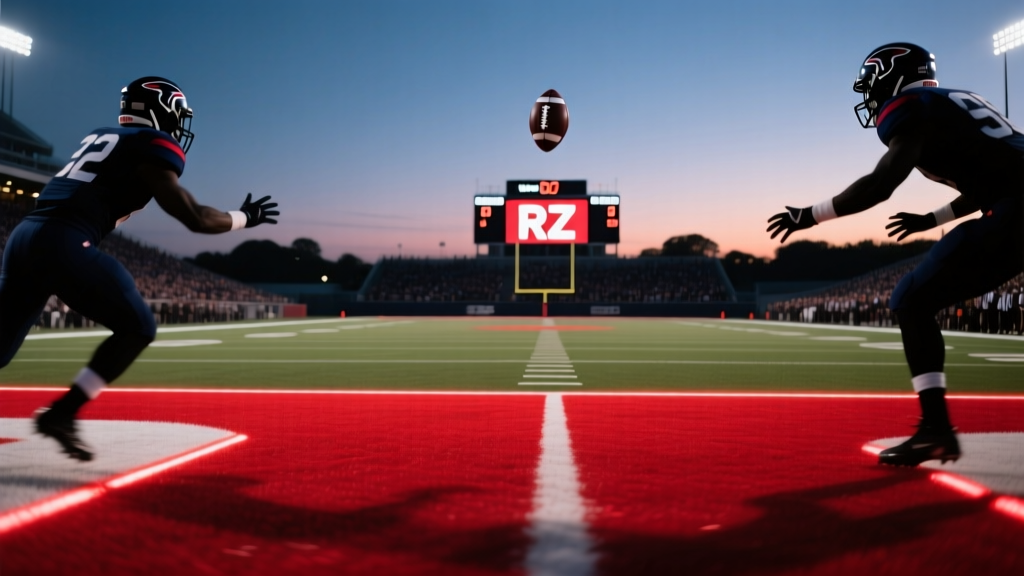
What Does RZ Mean in Football? Red Zone Explained
In football, RZ stands for Red Zone, referring to the area between the opponent’s 20-yard line and their goal line. Teams entering the red zone are in prime scoring position, typically aiming for a touchdown. Success in this area is measured by Red Zone Efficiency (RZE), a key performance metric tracked across NFL and college football.
What Is the Red Zone in Football?
The term “red zone” is used universally in American football to describe the final 20 yards of the field leading into the end zone. Once an offense crosses the opponent’s 20-yard line, they are said to be “inside the red zone.” This area is critical because defenses tighten coverage, space becomes limited, and offensive strategies shift dramatically.
Why Is It Called the Red Zone?
The name originated from coaching diagrams where the area was highlighted in red to emphasize its importance. Coaches use it to stress urgency, defensive pressure, and the need for precision passing and short-yardage execution.
Key Characteristics of the Red Zone
- Limited field space reduces options for long passes and deep routes
- Defenses prioritize preventing touchdowns over allowing field goals
- Running plays increase due to condensed field dimensions
- Tight coverage on receivers, especially near the goal line
- Increased use of play-action and misdirection
Why Is Red Zone Performance Important?
Scoring efficiency inside the red zone directly impacts game outcomes. A team can drive 80 yards but still fail to score if they stall within the final 20. The ability to convert red zone trips into touchdowns—rather than settling for field goals—is a hallmark of elite offenses.
Impact on Game Strategy
Coaches design specific red zone packages with shorter routes, tighter formations, and goal-line specialists. Quarterbacks must demonstrate accuracy under pressure, while receivers run precise slants, fades, and back-shoulder throws.
Common Challenges in the Red Zone
- Narrow throwing lanes due to stacked defenses
- Reduced time for QBs to make decisions
- Difficulty finding open receivers in tight coverage
- Pressure from blitzing linebackers and safeties
- Risk of turnovers or sacks in confined space
Measuring Red Zone Efficiency
Red Zone Efficiency (RZE) is calculated by dividing the number of touchdowns scored in the red zone by total red zone trips. Some metrics also track total scores (touchdowns + field goals) to evaluate overall effectiveness.
| Team (2024 NFL Season) | Red Zone TD% | Total RZ Trips | TDs Scored | Field Goals | Turnovers | League Rank (RZ TD%) |
|---|---|---|---|---|---|---|
| Kansas City Chiefs | 72.1% | 67 | 48 | 14 | 5 | 1st |
| Buffalo Bills | 69.4% | 62 | 43 | 16 | 3 | 3rd |
| San Francisco 49ers | 67.7% | 65 | 44 | 17 | 4 | 5th |
| Detroit Lions | 65.6% | 71 | 47 | 19 | 5 | 8th |
| Philadelphia Eagles | 62.3% | 69 | 43 | 21 | 5 | 12th |
| New York Jets | 51.4% | 58 | 30 | 24 | 4 | 24th |
| Chicago Bears | 46.7% | 60 | 28 | 26 | 6 | 30th |
Data shows a strong correlation between high red zone touchdown rates and playoff success. In the 2024 season, the Kansas City Chiefs led the league with a 72.1% conversion rate, reflecting their efficient short-yardage execution and Patrick Mahomes’ elite decision-making. Conversely, teams like the Chicago Bears (46.7%) struggled to finish drives, often relying on field goals that limited point production.
Strategies for Success in the Red Zone
Offensive Tactics
- Use of tight ends and running backs as primary targets near the goal line
- Slant routes, quick outs, and fade patterns to exploit tight windows
- Pre-snap motion to create mismatches
- Two-minute drill principles: tempo and simplicity
- Goal-line packages featuring extra linemen or fullbacks
Defensive Adjustments
- Playing two-high safety shells to protect against deep threats
- Zone coverage (e.g., Cover 2 or Cover 3) to limit explosive plays
- Man-to-man with safety help over the top
- Blitzing from unexpected angles to disrupt timing
- Forcing offenses to settle for field goals rather than touchdowns
Frequently Asked Questions About RZ in Football
What does RZ mean in football stats?
In football statistics, RZ refers to “Red Zone,” indicating when a team enters the opponent’s 20-yard line. Common stats include Red Zone Touchdown Percentage (RZ TD%), total trips, and scoring efficiency.
How is red zone efficiency calculated?
Red zone efficiency is typically calculated by dividing the number of touchdowns scored in the red zone by the total number of red zone trips. For example, 40 touchdowns in 50 trips equals an 80% red zone touchdown rate.
What is a good red zone touchdown percentage?
A red zone touchdown rate above 60% is considered excellent in the NFL. Top-tier offenses often exceed 65–70%. Rates below 50% indicate struggles in finishing drives.
Do college football teams track red zone stats?
Yes, NCAA football programs closely monitor red zone efficiency. The metric is used similarly to the NFL for evaluating offensive performance and coaching strategy in high-pressure situations.
Has the definition of the red zone ever changed?
No, the red zone has consistently referred to the 20-yard line to the goal line since its adoption in the 1980s. Broadcasters, analysts, and coaches use this standard definition across all levels of football.
More Articles
 Who Sings Sunday Night Football Theme 2025?
 How Many Footballs Are Used in an NFL Game?
 Why Is Football Called Football in the USA?
 How Many Division 1 Football Schools Are There? (2025)
 Did Raheem Morris Play Football? Career Details
 Where Was Football Founded? The True Origin Explained
 Who Won Last Euro Football? Spain Wins Euro 2024
 Where Do the Chicago Bears Play Football?
 Watch Football Today: Live Streams & TV Schedule
 Why Is It Called Football? Origins of the Name Explained