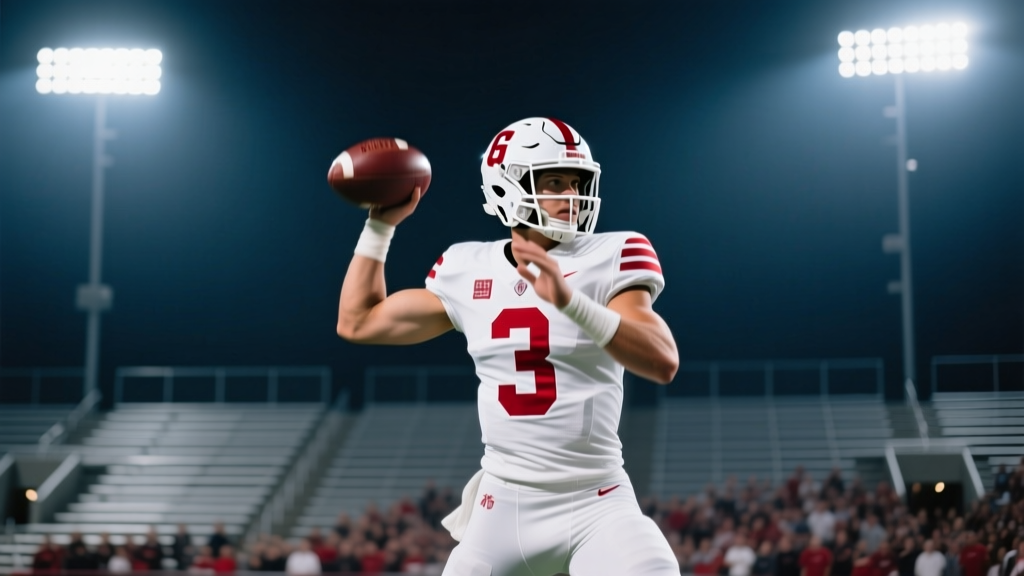
What Does It Mean to Redshirt in College Football?
In college football, to redshirt means a player participates in practice and team activities but does not compete in official games during a season, preserving a year of athletic eligibility. This allows athletes to develop physically and strategically without using one of their four permitted seasons of play over five academic years.
What Does Redshirting Mean in College Football?
Redshirting is a strategic decision used by college football programs and student-athletes to extend a player's eligibility timeline. When a player is redshirted, they can practice with the team, attend workouts, and receive scholarships, but they do not participate in more than four games in a season (as per current NCAA rules), allowing them to retain a year of eligibility.
Purpose of Redshirting
- To allow younger athletes time to mature physically before competing at the collegiate level
- To help players adapt to the speed and complexity of college football
- To recover from injury without losing a year of eligibility
- To manage depth charts and playing time when roster competition is high
- To maximize a player’s development under coaching staff guidance
Types of Redshirts in NCAA Football
The NCAA recognizes several types of redshirt statuses, each serving different purposes based on circumstances.
True Redshirt
A true redshirt refers to a freshman who does not play in any games during their first year. They train with the team but save all four years of eligibility for future use.
Medical Redshirt
A medical redshirt (or medical hardship waiver) is granted when a player suffers a season-ending injury early in the season. To qualify, the athlete must have participated in fewer than 30% of the team's games and not after the midpoint of the season.
Grayshirt
A grayshirt involves delaying enrollment until the second semester or summer, often to preserve scholarship space. The player then typically begins full participation the following fall, effectively adding an extra year before using eligibility.
Academic Redshirt
An academic redshirt applies to incoming freshmen who do not meet NCAA initial eligibility requirements. They can attend school and practice with the team but cannot compete in games during their first year.
Walk-On Redshirt
Sometimes preferred walk-ons are given redshirt status to develop without immediate pressure to contribute, enhancing long-term roster depth.
NCAA Redshirt Rules (2025 Season)
As of the 2025 season, the NCAA allows student-athletes to participate in up to four games in a season while still maintaining redshirt status. This rule change, introduced in 2018, provides greater flexibility for coaches and players.
- Players can appear in up to 4 games and still preserve a year of eligibility
- There is no requirement that the games be consecutive
- The player may redshirt only once during their career
- Medical redshirts require formal application and documentation
- Redshirt status does not affect scholarship status—players remain on scholarship
| Redshirt Type | Eligibility Impact | Game Participation Limit | Typical Use Case |
|---|---|---|---|
| True Redshirt | Preserves all 4 years | 0 games | Freshman development |
| Partial Redshirt | Preserves 1 year | ≤4 games | Strategic game exposure |
| Medical Redshirt | Regains lost year | <30% of games, pre-midpoint | Season-ending injury |
| Academic Redshirt | Delays eligibility start | 0 games | Non-qualifier freshmen |
| Grayshirt | Extends timeline | 0 games initially | Scholarship management |
The data shows how varied redshirt pathways accommodate different athlete needs—from injury recovery to academic readiness. With increased flexibility since the 2018 rule change, partial redshirts have become more common as coaches balance development and competitive necessity.
Benefits and Drawbacks of Redshirting
Advantages
- Physical Development: Extra time to build strength and conditioning
- Tactical Growth: Learn complex schemes without game pressure
- Injury Recovery: Rehabilitate fully before competitive return
- Roster Flexibility: Coaches can better manage depth and rotation
- Career Longevity: Extends peak performance window across five years
Challenges
- Limited Game Experience: Delayed real-game exposure may slow adaptation
- Motivation Risk: Sitting out can impact morale for some athletes
- Scholarship Uncertainty: Non-guaranteed scholarships may carry risk
- Team Dynamics: Older redshirt players may face integration challenges
Impact of Redshirting on Player Development
Top college programs strategically use redshirting to groom future NFL talent. For example, Joe Burrow (LSU) was a redshirt quarterback who used his extra year to refine skills, eventually winning the Heisman Trophy and being drafted No. 1 overall.
Studies show that redshirted players often outperform true freshmen in metrics like completion percentage, yards per carry, and tackles due to enhanced preparation. Additionally, offensive linemen and quarterbacks—positions requiring deep schematic understanding—commonly benefit from redshirt years.
Frequently Asked Questions About Redshirting in College Football
Can a redshirt player travel with the team and dress for games?
Yes, redshirt players can travel, dress, and sit on the sideline with the team. As long as they do not exceed four appearances in games during the season, they maintain redshirt status.
Does being redshirted affect a player’s scholarship?
No, being redshirted does not automatically affect scholarship status. Players remain on scholarship unless the coach decides not to renew it, subject to NCAA regulations.
How many years can a college football player play?
A student-athlete has five calendar years to complete four seasons of competition. The fifth year accounts for the redshirt opportunity, whether used due to injury, development, or other reasons.
Can a player choose to redshirt, or is it decided by the coach?
While the final decision often rests with the coaching staff, input from the player and medical or academic advisors plays a role—especially in medical or academic redshirt cases.
Do all colleges redshirt players?
Virtually all NCAA Division I programs utilize redshirting, though frequency varies. Power Five conferences tend to redshirt more recruits due to higher competition levels and deeper rosters.
More Articles
 How Many Players on Defense in Football?
 What Was the First Football Team? Oneida FC Explained
 Did Notre Dame Win Today? Final Score & Game Recap
 What Does PD Mean in Football? Point Differential Explained
 How Many Weeks in College Football Season?
 Oldest Football Player Ever: Who Holds the Record?
 Where Do the Navy Midshipmen Play Football?
 What Channel Is Thursday Night Football On in 2024?
 Football Field Dimensions: Official Size & Measurements
 How Many National Championships Has Alabama Football Won?