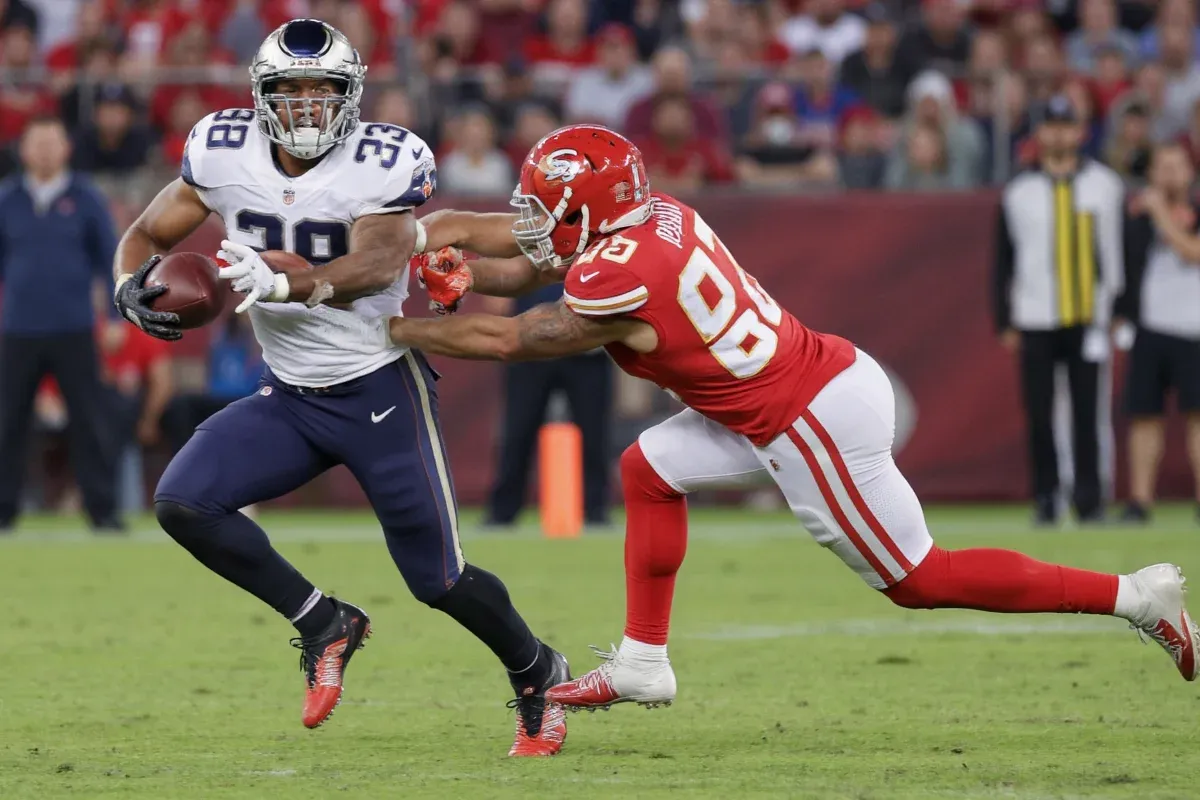
What Does a Football Tight End Do? Key Roles Explained
A football tight end is a hybrid player who combines the blocking skills of an offensive lineman with the receiving abilities of a wide receiver, primarily lining up on the offensive line's edge to catch passes, block defenders, and create mismatches against linebackers or safeties.
What Is a Tight End in Football?
The tight end (TE) is a key position in American football, positioned at the end of the offensive line. This role blends physicality and athleticism, requiring strength to block defensive players and agility to run precise pass routes. TEs are often used as both extra blockers in running plays and primary or secondary targets in passing plays.
Core Responsibilities of a Tight End
- Pass Receiving: Run defined routes to catch throws from the quarterback, especially in intermediate zones.
- Blocking: Provide protection for the quarterback on passing downs or open lanes for running backs.
- Creating Matchups: Exploit size and speed advantages over smaller linebackers or slower safeties.
- Line Play: Legally align on the line of scrimmage, contributing to formation legality and versatility.
Evolution of the Tight End Role
Historically, tight ends were primarily blockers. However, modern offenses—especially those using spread and tempo concepts—have transformed the TE into a central offensive weapon. Players like Rob Gronkowski, Travis Kelce, and George Kittle exemplify this shift, combining elite size, speed, and hands to dominate games.
How Offensive Schemes Utilize Tight Ends
Different systems maximize the TE’s value in unique ways:
- West Coast Offense: Uses TEs on short, quick routes to move the chains.
- Erhardt-Perkins System: Emphasizes TEs as reliable red-zone targets. \li>RPO-Based Attacks: Leverages TEs for immediate outlet options after handoffs.
- 12 Personnel Packages: Deploys one running back and two TEs to confuse defenses.
| Player | Team (2024) | Receptions (2023) | Yards (2023) | Touchdowns (2023) | Contract Value (Avg/Year) |
|---|---|---|---|---|---|
| Travis Kelce | Kansas City Chiefs | 110 | 1,338 | 12 | $14.6M |
| George Kittle | San Francisco 49ers | 78 | 1,081 | 5 | $15.0M |
| Mark Andrews | Baltimore Ravens | 77 | 849 | 6 | $14.0M |
| T.J. Hockenson | Minnesota Vikings | 61 | 579 | 3 | $10.3M |
| Sam LaPorta | Detroit Lions | 86 | 889 | 5 | $3.2M (Rookie) |
The data shows that top-tier tight ends consistently achieve over 75 receptions and 800+ receiving yards annually. Travis Kelce leads in all major categories, underscoring his status as the gold standard. Rookie Sam LaPorta’s performance highlights the rising trend of early-impact TEs in pass-heavy systems.
Skills Required to Excel as a Tight End
Success at the tight end position demands a rare combination of physical and mental traits:
- Size and Strength: Must engage larger defensive linemen in blocking situations.
- Route Running Precision: Requires crisp cuts and timing with the quarterback.
- Hand-Eye Coordination: Crucial for securing tough catches in traffic.
- Football IQ: Understanding defensive schemes to find soft spots in coverage.
- Endurance: Often involved in every offensive snap, both as blocker and receiver.
Common Questions About Football Tight Ends
What does a football tight end do differently from a wide receiver?
Tight ends typically line up on the offensive line and are expected to block defenders, unlike most wide receivers who focus solely on route running and catching. TEs are usually bigger and stronger than WRs but may lack elite speed.
Can a tight end throw the ball?
Yes, if they possess eligibility—meaning they are not covered by ineligible numbers and report as eligible to officials. While rare, some trick plays feature TEs throwing passes.
Why are tight ends so valuable in modern NFL offenses?
Tight ends create matchup problems: they’re too fast for linebackers and too strong for cornerbacks. Their dual-threat capability forces defenses to adjust, opening opportunities elsewhere on the field.
Who is considered the best tight end in NFL history?
Rob Gronkowski and Tony Gonzalez are frequently cited, but Travis Kelce has emerged as a top contender due to his sustained excellence, Super Bowl success, and record-breaking receiving stats.
Do college tight ends get enough development for the NFL?
Development varies. Power-conference programs with pro-style offenses (e.g., Alabama, Ohio State) often produce NFL-ready TEs, while others transition from H-back or hybrid roles needing refinement.
Conclusion
The tight end position has evolved from a niche blocking role to a cornerstone of dynamic offensive strategies. With their unique blend of power, speed, and skill, elite tight ends influence games in multiple ways—making them indispensable assets in today’s football landscape.
More Articles
 What Was the First NFL Football Team?
 How Many Football Fields Are in a Mile? Exact Calculation
 Cheap vs Premium Football Gear: Smart Picks
 What Does GHS Mean in Football? Explained
 IU Football Today: Game Time & How to Watch
 Steelers Game Tomorrow? Time, TV & Schedule for 2025
 Who Won Football Games Yesterday? Full Results & Highlights
 What Does D Mean in Fantasy Football? Explained
 Who Wins in Football? Rules, Stats & Champions Explained
 Did The Rock Play Football? College Career & NFL Facts