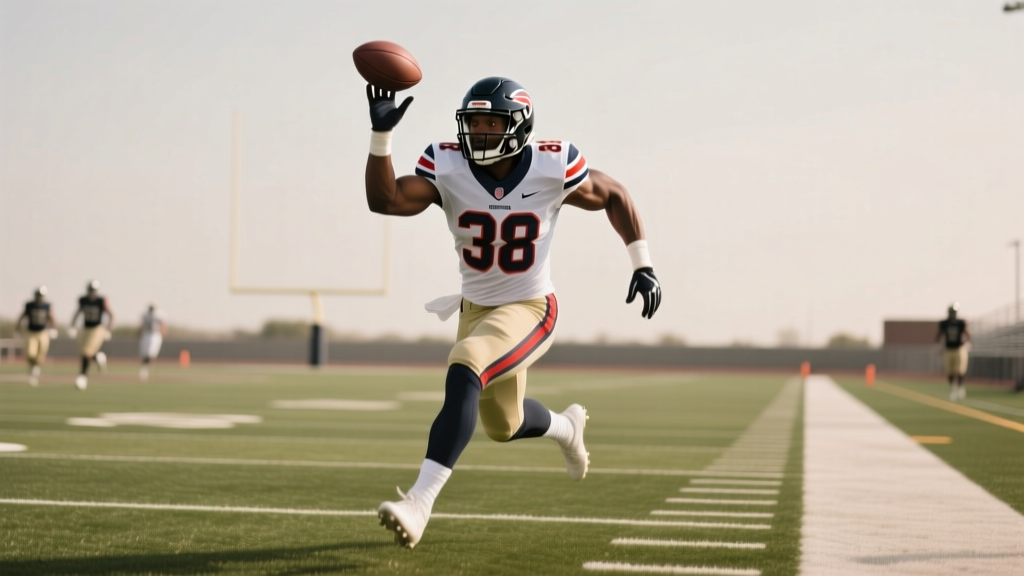
What Does a Defensive Back Do in Football?
In football, a defensive back is a key member of the secondary defense whose primary responsibilities include covering receivers, preventing pass completions, and providing deep support against the run and pass. They are typically among the fastest players on the team and must excel in man-to-man and zone coverage.
What Is a Defensive Back in Football?
A defensive back (DB) is a defensive player positioned in the secondary, behind the linebackers and defensive linemen. Their main role is to stop opposing offenses from completing forward passes and gaining yardage through the air. Defensive backs are essential in modern football, where passing plays dominate many offensive strategies.
Types of Defensive Backs
- Cornerback (CB): Lines up near the line of scrimmage, typically covering wide receivers on the outside.
- Safety: Positioned deeper in the secondary; split into free safeties (FS) and strong safeties (SS).
- Nickelback: A fifth defensive back used in nickel packages against three-receiver sets.
- Dimeback: A sixth defensive back in dime formations, often used in obvious passing situations.
Core Responsibilities of a Defensive Back
Defensive backs must master multiple skills to be effective. Their duties vary depending on the defensive scheme, down and distance, and offensive formation.
Pass Coverage
- Play either man-to-man or zone coverage.
- Stay with receivers throughout routes to prevent catches.
- Read the quarterback’s eyes and anticipate throws.
- Break on the ball quickly to intercept or deflect passes.
Run Support
- Fill gaps when the offense runs toward the sideline.
- Tackle ball carriers effectively, especially on reverses or screens.
- Set the edge to force runners inside toward help defenders.
Blitzing
- Occasionally rush the quarterback on designed blitzes.
- Use speed and surprise to pressure the QB.
- Must be timed precisely to avoid leaving coverage voids.
Skills and Attributes of Elite Defensive Backs
Top-tier defensive backs combine physical talent with mental discipline. Coaches look for specific traits when evaluating DBs at all levels.
Physical Traits
- Speed: Crucial for keeping up with elite wide receivers.
- Agility: Enables quick changes of direction during route coverage.
- Reaction Time: Helps in jumping routes and making interceptions.
- Strength: Needed for press coverage and tackling.
Mental & Technical Skills
- Football IQ: Understanding offensive schemes and route combinations.
- Backpedal Technique: Maintaining balance while dropping into coverage.
- Hand Usage: Legal jamming at the line of scrimmage (especially for cornerbacks).
- Eye Discipline: Watching the quarterback, not just the receiver.
Defensive Back Statistics and Performance Metrics
Beyond tackles and interceptions, advanced metrics now evaluate DB performance more accurately. The table below highlights key stats for top NFL defensive backs in the 2024 regular season.
| Player | Team | INT | PASS DEF | YPC Allowed | AVG PFF Grade |
|---|---|---|---|---|---|
| Marlon Humphrey | Baltimore Ravens | 5 | 14 | 9.2 | 89.3 |
| Derek Stingley Jr. | Houston Texans | 4 | 16 | 9.8 | 87.1 |
| Xavier McKinney | New York Giants | 6 | 12 | 10.1 | 88.7 |
| Jaire Alexander | Green Bay Packers | 3 | 15 | 9.5 | 86.4 |
| CeCe Jefferson | Tampa Bay Buccaneers | 2 | 9 | 11.3 | 76.8 |
The data shows that elite DBs like Marlon Humphrey and Xavier McKinney combine high interception totals with strong pass deflection numbers and low yards per catch allowed. A higher PFF grade correlates with consistent coverage and tackling. Players allowing over 11 YPC, like Jefferson, often struggle in deep coverage or lack support help.
Common Formations Featuring Defensive Backs
Defensive coordinators adjust backfield personnel based on offensive threats.
- 4-3 Defense: Four down linemen, three linebackers, two cornerbacks, two safeties.
- 3-4 Defense: Three linemen, four linebackers, seven DBs rotated based on situation.
- Nickel (5 DBs): Adds a fifth DB to cover third receivers.
- Dime (6 DBs): Used in obvious passing downs; sacrifices run defense for coverage.
- Quarter (7 DBs): Rare, used only in extreme pass situations.
Frequently Asked Questions About Defensive Backs in Football
What does a defensive back do in football?
A defensive back is responsible for covering receivers, defending against pass plays, and supporting the run. They play in the secondary and include cornerbacks and safeties who must read quarterbacks, break on passes, and make tackles in open space.
What's the difference between a cornerback and a safety?
Cornerbacks line up near the line of scrimmage and cover wide receivers man-to-man or in zones. Safeties play deeper, provide last-line pass defense, and assist in run support. Free safeties focus more on coverage, while strong safeties often cover tight ends and blitz.
How fast should a defensive back be?
Elite defensive backs typically run the 40-yard dash in under 4.5 seconds. Speed is critical to keep up with NFL and college-level receivers, especially on deep routes like go routes and posts.
Can a defensive back blitz the quarterback?
Yes, defensive backs can and do blitz, especially on delayed or zone-blitz schemes. While less common than linebacker or defensive line pressure, DB blitzes use surprise to disrupt the quarterback’s timing.
Who are some of the best defensive backs in NFL history?
Legends include Deion Sanders, Champ Bailey, Ed Reed, and Charles Woodson. These players excelled in coverage, had high interception totals, and impacted games through turnovers, tackles, and leadership in the secondary.
More Articles
 How Many People Are on a Football Field? Full Breakdown
 Who Plays Football at 1:00 Today? Schedule & Matchups
 Where to Watch BYU vs Oklahoma State Football 2025
 Where Do Texas Longhorns Play Football? Stadium Info
 Why Is Sunday Night Football Delayed? Causes Explained
 Where Is Giants Football Stadium? Location & Facts
 How Many Football Players on a Team? Full Breakdown
 Where Is the Patriots Football Stadium Located?
 How Many Football Championships Does Notre Dame Have?
 What Does DB Stand For in Football? Explained